
Belize’s Maya sites pack big history into compact visits: Xunantunich and Caracol for grand architecture, Lamanai for riverside atmosphere, Cahal Pech for a quick San Ignacio stop, and Altun Ha for easy coastal access—each site suits a different kind of traveler.
At-A-Glance Comparison
| Site | Best for | Access difficulty | Best time to visit | Typical visit length | Top highlight |
|---|---|---|---|---|---|
| Xunantunich | Panoramic temples, short drive from San Ignacio | Easy (short ferry crossing) | Dry season (Nov–Apr) for clearer views | 2–3 hours | The large El Castillo pyramid and valley views |
| Caracol | Serious explorers and adventure seekers | Challenging (long, bumpy road; guided day trip recommended) | Dry season for easier access | Full day | Vast site with large carved monuments |
| Cahal Pech | Quick stop from San Ignacio; family history lovers | Very easy (close to town) | Year round; mornings are cooler | 1–1.5 hours | Hilltop plaza overlooking the valley |
| Lamanai | Birdwatchers and river-journey lovers | Moderate (boat access via New River) | Dry season for smoother boat travel | Half to full day | Riverside temples and long occupational history |
| Altun Ha | Short trips from Belize City or coast stays | Easy (close to coast) | Dry season or early morning to avoid heat | 1–2 hours | Important trade-center ruins and tombs |
A Short Planning Checklist
- Morning visits beat the heat and mid‑day crowds—bring water and sun protection.
- For Caracol and Lamanai consider a guided trip; both involve long drives or boat transfers—see our adventure & safety guide for packing and transport tips.
- If basing in the Cayo district, use San Ignacio as your hub for Xunantunich, Caracol and Cahal Pech.
- Book popular guided day trips 2–4 weeks ahead during high season (Dec–Feb).
Site Snapshots And Practical Tips
Xunantunich — Panoramic Temple & Easy Day Trip
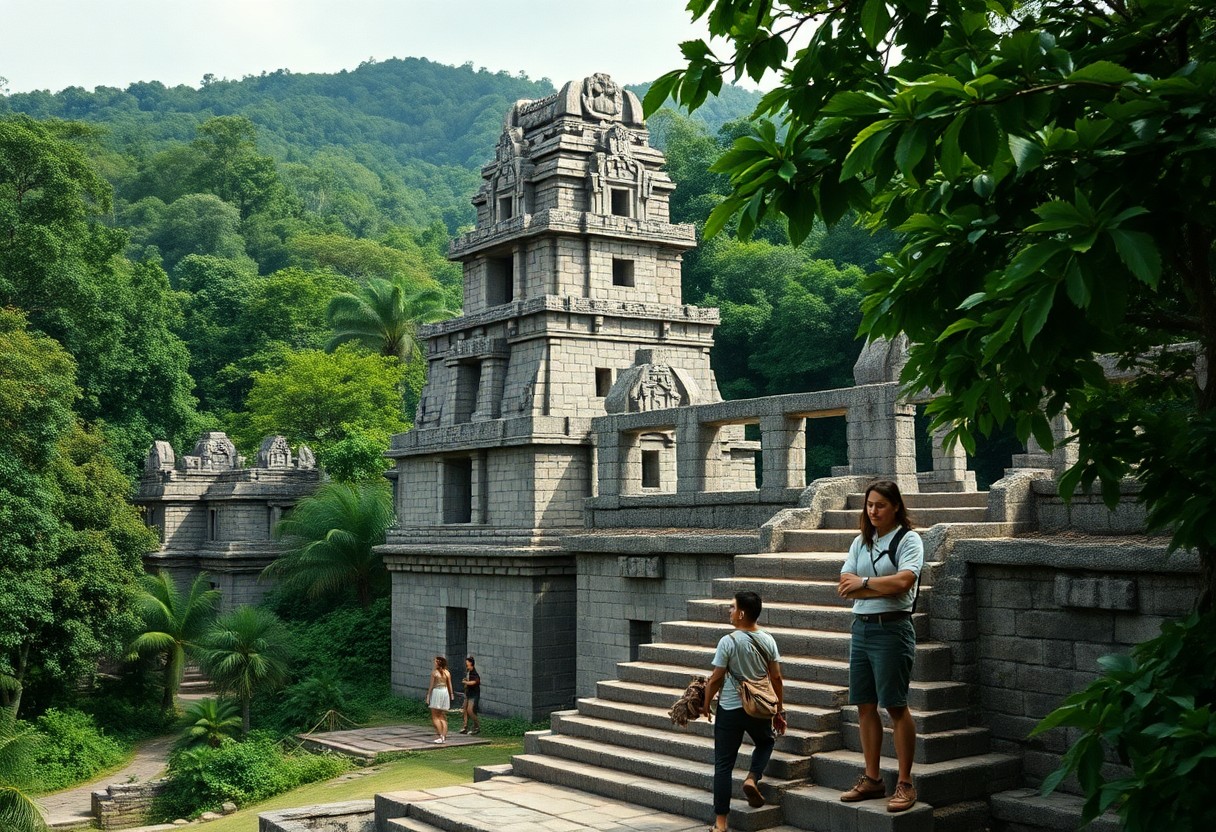
A short drive from San Ignacio followed by a hand‑cranked ferry crossing, Xunantunich’s El Castillo offers dramatic valley views and photo opportunities; expect a 2–3 hour visit. Morning light is best for photos and less dusty trails.
Caracol — Belize’s Largest Inland City (Plan For A Full Day)
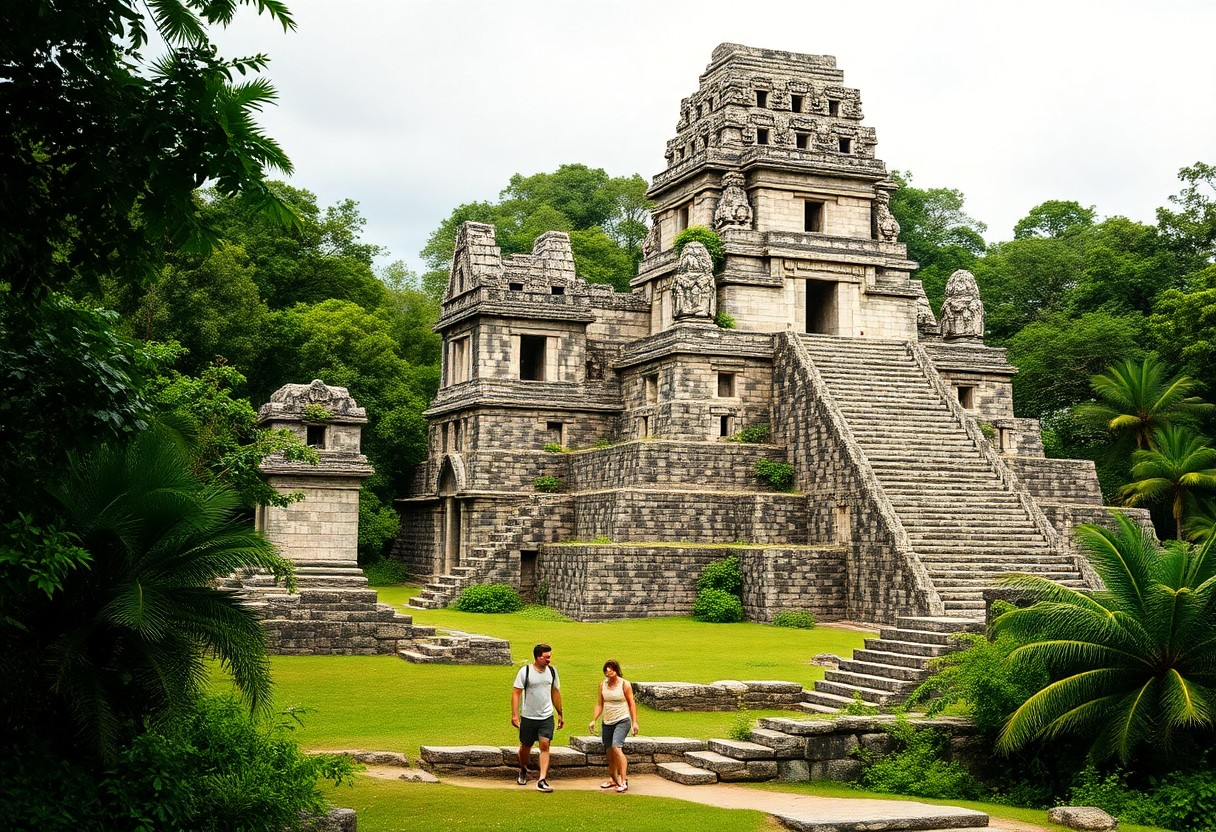
Caracol rewards travelers with extensive plazas and carved monuments but requires a long, often bumpy road transfer—many visitors take a guided day trip from San Ignacio. Bring insect repellent and sturdy shoes and be prepared for an early start.
Cahal Pech — Quick Stop With Hilltop Views
Located on a hill overlooking San Ignacio, Cahal Pech is ideal for a short half‑hour to one‑hour visit and pairs well with town exploration or museum time. It’s family‑friendly and very accessible from local accommodations.
Lamanai — Riverside Site Reachable By Boat
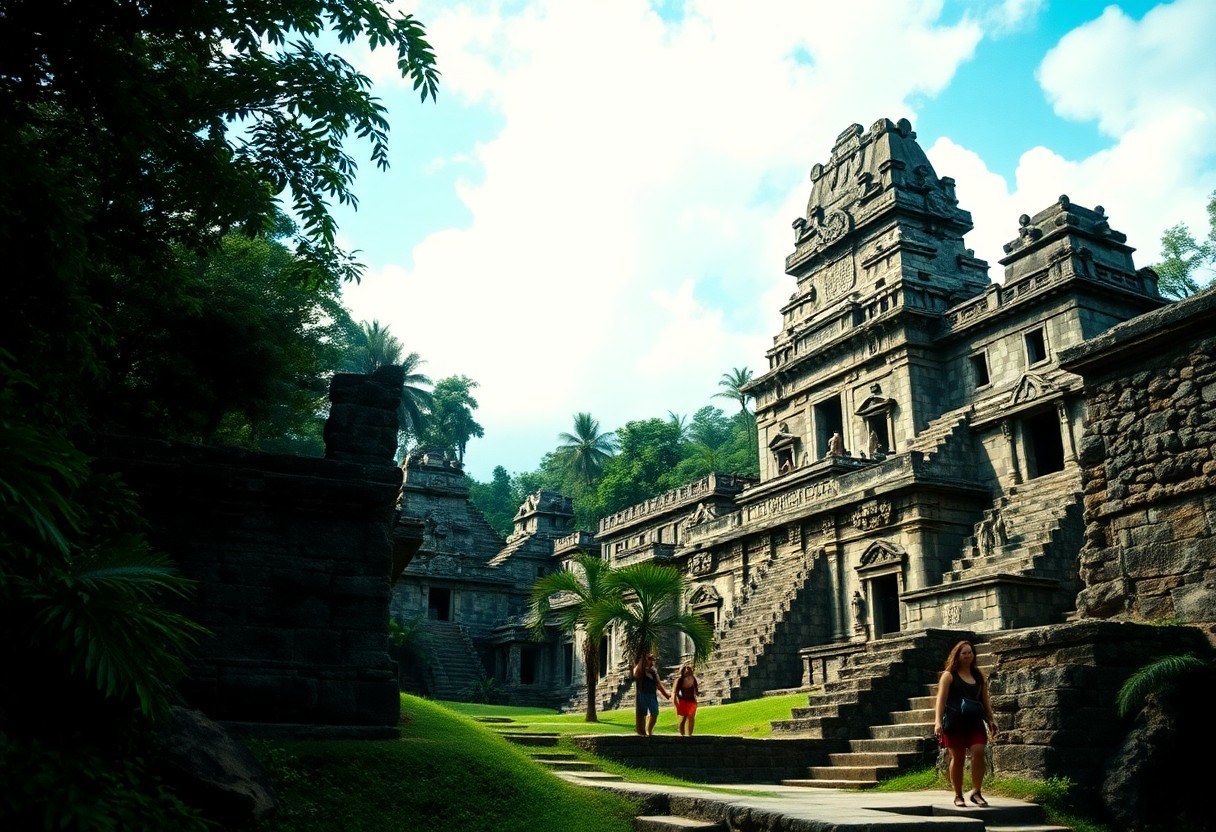
Lamanai’s long occupation and riverside setting make the boat journey part of the experience—expect wildlife sightings and a half‑ to full‑day excursion. Consider a guided boat tour for comfortable transfers and better interpretation.
Altun Ha — Easy Coastal Access And Short Visit
Altun Ha is the simplest ruin to combine with coastal stays or a Belize City stopover—good for travelers with limited time who still want a significant archaeological visit.
Dry season (roughly November–April) is generally best for clearer trails and easier road access; December–February is busiest. For Caracol and guided boat trips to Lamanai, reserve tours 2–4 weeks ahead in high season; Xunantunich, Cahal Pech and Altun Ha are often available with shorter lead times.
How To Choose (Short Decision Guide)
Match the site to your priorities: choose Altun Ha for time‑limited travelers, Caracol for an all‑day archaeology adventure, Lamanai for a nature + river trip, and Xunantunich or Cahal Pech if you’re based in the Cayo district.
For a fuller itinerary and nine more archaeological sites, see the complete guide to ancient Maya ruins in Belize and our broader planning tips.
Practical Safety & Packing Notes
Wear sturdy shoes, bring sunscreen, insect repellent and water, and carry a small first‑aid kit. For safety and logistics on active trips (Caracol, boat transfers to Lamanai), consult our adventure & safety guide for detailed recommendations.
Frequently Asked Questions
Which Maya Ruins In Belize Are Best For History And Adventure?
The top picks are Xunantunich, Caracol, Cahal Pech, Lamanai and Altun Ha — together they cover panoramic temples, large inland cities, quick town stops, riverside journeys and easy coastal visits.
Where Should I Base Myself To Reach Many Of These Sites?
San Ignacio is the easiest base for Xunantunich, Caracol and Cahal Pech; see our San Ignacio guide for accommodation and activity options.
How Long Should I Plan For Ruin Visits?
Quick sites (Cahal Pech, Altun Ha): 1–2 hours. Xunantunich: 2–3 hours. Lamanai and Caracol generally take a half‑ to full‑day, depending on transfer times.
Related: Complete 9-site Maya ruins guide · Belize adventure & safety guide · San Ignacio travel guide

Sophie Daniels is an accomplished travel writer and expert on Belize, dedicated to sharing the beauty and culture of this Central American gem. With a passion for adventure and a deep understanding of the local landscape, she crafts insightful and engaging guides that inspire travelers to explore Belize’s vibrant ecosystems and rich heritage. Through her writing, Sophie aims to connect readers with the heart of Belize, offering practical tips and personal anecdotes that enhance their travel experiences.

I love how you highlighted the different types of Mayan ruins in Belize! Each site has such unique characteristics that tell a story of the civilization’s diversity. I’ve had the chance to visit Xunantunich, and standing on top of the main temple overlooking the valley was surreal—it felt like stepping back in time.
It’s great to hear about your experience at Xunantunich. That view from the top of the main temple really gives you a sense of the landscape the Mayans inhabited and dominated. It’s fascinating how each site can convey a different aspect of Mayan life and culture.
It’s great to hear that you’ve had the chance to experience Xunantunich firsthand. Standing atop the main temple really does provide an incredible perspective, doesn’t it? The way the landscape unfolds before you must feel like a tangible link to the past, allowing you to imagine what daily life was like for the ancient Maya.
Experiencing Xunantunich was truly something special. Standing at the top of the temple, it’s hard not to feel connected to the stories that place holds. You can almost hear the echoes of daily life from centuries ago, with the vibrancy of a community that thrived there.
I love how you highlighted the rich history of the Maya civilization in Belize! Each of these sites has such unique stories and architectural styles. When I visited Xunantunich, I was stunned by how majestic the structures looked against the backdrop of the jungle. It’s incredible to think about how long ago the Maya thrived there.
I completely agree with your feelings about Xunantunich. Standing in the presence of those ancient structures really does give you a sense of connection to the past. It’s interesting how nature has intertwined with the ruins, almost reclaiming them, which adds to the mystique.
I completely agree—there’s something truly special about the stories behind those ancient ruins, and I found this article to be a great resource for discovering more cultural experiences that celebrate the Maya heritage in Belize.
‘Local Cultural Experiences’
https://xamanekbelize.com/local-cultural-experiences/.
I’m glad you connected with the article! Standing among those ancient structures at Xunantunich really gives you a unique perspective on the passage of time, doesn’t it? You can almost feel the echoes of the past in the stones. And you’re spot on about nature weaving itself into the ruins—those thick vines and trees add a layer of beauty that feels both enchanting and a little wild.
It’s great to hear that you had such a profound experience at Xunantunich. That juxtaposition of ancient architecture and lush jungle really does create a unique atmosphere. What’s fascinating is how diverse the architectural styles can be across different sites in Belize, each reflecting the distinct cultures and eras within the Maya civilization.
I completely agree about the unique atmosphere at Xunantunich. There’s something truly special about standing among those ancient ruins surrounded by the jungle; it feels as if time has paused for a moment. The way the architecture intertwines with nature is striking. Each structure has its own story and reflects different facets of Maya life, from the grand ceremonial centers to the more practical residential areas.
I couldn’t agree more about the unique atmosphere at Xunantunich. There’s something incredibly grounding about standing in the midst of such ancient structures, immersed in nature. The way the jungle integrates with the ruins really adds to the sense of history and timelessness.
I feel you on the majesty of Xunantunich! It’s like stepping into a time machine but without all the awkward time-traveling dilemmas. The way those structures peek through the jungle feels like nature is giving them the VIP treatment. Did you get to climb that main pyramid, El Castillo? When you reach the top and catch that panoramic view, it kind of makes you want to bust out a “Maya for a Day” Instagram moment, right?
Your exploration of the ancient Maya civilization in Belize truly captures the essence of what makes this region so compelling. I’ve long been fascinated by the intricate connections between history, culture, and the natural beauty that surrounds these ruins. Visiting places like Xunantunich and Caracol allows travelers to not only witness the stunning architectural feats but also to appreciate the ingenuity behind the agricultural systems that sustained such a sophisticated civilization.
The exploration of Maya ruins in Belize truly provides a unique opportunity to immerse oneself in the rich tapestry of ancient history. Having visited Altun Ha myself, I found it fascinating how the site served as a hub for trade, which highlights the Maya’s advanced understanding of commerce and community structure. Each of these locations offers distinct architectural features that reflect their specific purposes within the civilization—like Xunantunich’s ceremonial significance and Caracol’s stunning monuments.
Visiting Altun Ha must have been an eye-opening experience. That site, in particular, showcases the Maya’s capability in trade and commerce, which is often overshadowed by their monumental architecture and traditions. It’s interesting to think about how these trade routes connected various city-states, allowing goods, ideas, and cultural exchanges to flourish despite the geographical challenges they faced.
I’m glad to hear about your experience at Altun Ha! If you’re looking to dive even deeper into the wonders of the Maya civilization, check out this link for more insights and tips on exploring these incredible sites.
https://xamanekbelize.com/caye-caulker
Visiting Altun Ha was certainly a fascinating experience, and you make a great point about the lesser-known aspects of Maya civilization. The intricate trade networks they established reveal so much about their ingenuity and adaptability. It’s remarkable to see how they managed to connect diverse regions despite the geographical barriers they faced.
Your post beautifully captures the allure of the ancient Maya civilization in Belize, and it’s fascinating to think about the remarkable sophistication of their society. I had the opportunity to visit some of these sites last year, and the experience was truly transformative. Standing in the shadow of the towering temples at Xunantunich, I was struck not only by the architecture but also by the sense of community and culture that these ruins represent.
Your post really highlights the incredible depth of the Maya civilization in Belize. I was particularly fascinated by the mention of Lamanai, as it’s one of the few sites that showcases continuous occupation for over 3,000 years. It’s incredible to think about the layers of history that exist at each site.
It’s really intriguing to consider the layers of history at Lamanai and other Maya sites. That continuous occupation speaks volumes about how resilient and adaptive the Maya civilization was. It’s fascinating how they managed to thrive for so long in that environment, especially when you think about their agricultural practices and how they adapted to changing climatic conditions.
You really hit the nail on the head with Lamanai! It’s like the Maya version of a long-running series that never got canceled. Three thousand years of continuous occupation is like an epic multi-generational family saga, complete with new characters showing up every few chapters.
I’m glad you found the post intriguing! If you’d like to dive even deeper into the fascinating history of Lamanai and other remarkable Maya sites, check out this detailed guide that explores their rich stories and cultural significance.
https://xamanekbelize.com/blue-hole
Your exploration of the ancient Maya civilization in Belize certainly highlights how rich and diverse their legacy is. Each site you mentioned not only showcases remarkable architectural achievements but also serves as a testament to the advanced societal structures they built over thousands of years.
I really appreciate this overview of the Mayan ruins in Belize! When I had the chance to visit a couple of years ago, I was genuinely amazed by the sheer scale and ingenuity of these ancient sites. The craftsmanship of the stone monuments at Caracol really stood out to me; it felt like stepping back in time, surrounded by remnants of a civilization that thrived so long ago.
Exploring the Mayan ruins in Belize sounds like a truly enriching experience. Each site you mentioned offers such a unique glimpse into the sophistication of the Maya civilization, and it’s fascinating to consider how their architectural prowess and societal structures have influenced subsequent cultures in the region.