Official currency: the Belize dollar (BZD), pegged at 2 BZD = 1 USD; U.S. dollars are widely accepted but vendors usually return change in BZD—carry both for convenience.
For quick ATM and withdrawal tips, see our detailed guide: ATM tips for Belize.

How To Decide: USD, Bzd, Cards Or ATM?
Use the table below to match payment method to the situation — practical, traveler-first guidance so you spend less time worrying about money and more time exploring.
| When | Use | Why / tip |
|---|---|---|
| Airport arrival / taxi | Small USD or BZD (US$20–50) | Convenient; vendors often accept USD but give change in BZD |
| Hotels / tours / restaurants | Card (Visa/Mastercard) or USD | Cards accepted in tourist areas; paying in USD often priced using the 2:1 peg |
| Markets, buses, remote villages | BZD cash | Local vendors may not accept cards or USD; exact change helps |
| Low-fee long stays or larger withdrawals | Withdraw from ATMs (BZD) | Better rates than hotel exchanges; pick bank ATMs to reduce skimming risk |
Quick Conversion Examples (Peg 2 Bzd = 1 USD)
- $10 USD = 20 BZD — small meals, phone top-ups.
- $20 USD = 40 BZD — taxi fares, market shopping.
- $50 USD = 100 BZD — dinner for two at a mid-range restaurant.
- $100 USD = 200 BZD — one or two full days of tours for many visitors.
Where To Exchange And Smart Tactics
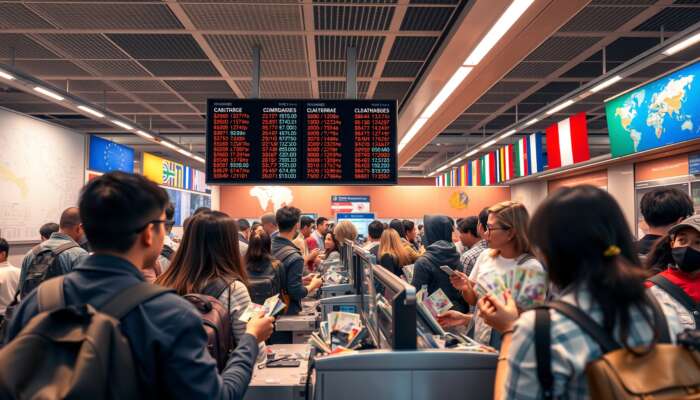
Best venues: banks (best rates, low fees), ATMs (good rates, convenient), currency kiosks (easy but higher spread), hotels (convenient, highest fees). If you plan to change cash at a hotel, compare the rate first or withdraw smaller amounts instead — for hotel recommendations and bookings, check our Belize hotels guide.
Use a combination: bring small USD for arrival, withdraw BZD as needed, and use cards for larger purchases. For safety and ATM behavior on the ground, see our safety notes in solo travel tips.
Timing: When To Exchange Or Book
Rates are stable because of the peg, but fees and availability change with seasonality. High season (roughly November–April) brings more tourists — book ATMs, tours, and hotels earlier and carry a little extra cash. For month-by-month planning and peak travel windows see our when to visit guide.
Decision Checklist Before You Travel
- Carry US$20–50 for immediate arrival needs.
- Bring a no-foreign-transaction-fee card if possible and notify your bank.
- Plan ATM withdrawals in towns and check daily withdrawal limits with your bank.
- Keep small BZD for markets and tips; vendors may prefer exact change.
For flight, hotel and package planning we recommend starting on our site: XamanekBelize — plan your Belize trip or book flights to Belize.
Frequently Asked Questions
Should I Bring Us Dollars? Yes—bring small USD for arrival and emergencies; most tourist businesses accept USD but will return change in BZD.
Are Cards Accepted? Widely in hotels, tour operators and restaurants; bring cash for markets, buses, and remote areas.
Where Is The Best Place To Get Bzd? Bank branches and ATMs in major towns; avoid large hotel exchanges unless necessary.
Are ATM Fees And Safety A Concern? Expect your bank and ATM operator fees; use ATMs at banks in daylight and inform your bank before travel—see our full ATM guide.
Last checked: peg and practical advice reflect customary practice in Belize; rates and local acceptance can change—confirm specifics with your bank and tour operator before you go.

Vanessa Carter is a passionate travel writer and expert on Belize, dedicated to sharing the wonders of this beautiful Central American destination. With years of experience exploring Belize’s diverse landscapes, vibrant culture, and rich history, she provides readers with insightful tips and guides that inspire adventure. Through her engaging narratives, Vanessa aims to connect travelers with the heart of Belize, making it an accessible and exciting destination for all.

It’s interesting how you highlight the role of currency in travel, especially in a place as vibrant and diverse as Belize. From my own experience traveling in Central America, I’ve found that understanding the local currency can really enhance the experience. For instance, knowing how to budget effectively not only helps in managing expenses but also allows for more spontaneous adventures, like trying that local dish at a street market or joining a last-minute tour.
The discussion on the role of currency in travel is indeed crucial, especially in a context as vibrant and diverse as Belize. In my experience, understanding the nuances of a destination’s currency not only impacts financial transactions but also profoundly affects the overall travel experience. When I traveled to Belize last year, I found that being informed about the Belizean dollar and the nuances of exchange rates greatly enhanced my experience, allowing me to navigate local markets and dining options with much more confidence.
I completely resonate with your thoughts on the role of currency in travel, especially in a vibrant place like Belize. When I traveled there a couple of years ago, I found that understanding the Belizean dollar was key in fully appreciating local culture and experiences. I remember strolling through the markets, and knowing the exchange rates made haggling much more comfortable for me. It felt less like a stressful negotiation and more like a friendly exchange.
I love that you had such a positive experience in Belize! The Belizean markets really are a unique slice of local life. It’s amazing how understanding the currency can shift the whole vibe of haggling. It’s not just about the numbers; it’s about connecting with the vendors and appreciating the culture behind what they sell.
“I’m glad to hear you had a similar experience! To help future travelers navigate the local currency and enhance their Belize adventures, check out this helpful guide on understanding the Belizean dollar.”
https://xamanekbelize.com/belize-flights
I totally get what you’re saying about currency playing a key role in travel. When I traveled to Belize, I found that understanding the local currency and exchange rates really helped me enjoy the experience without constantly worrying about spending too much or running out of cash. It’s fascinating how much of an impact currency can have on a trip—like, it shapes not just how much you can do, but also how you interact with the local culture.
Your insights on the role of currency in travel resonate deeply with me, especially considering how often it can dictate our experiences in a new destination. When I traveled to Belize last year, precise financial planning was essential. The local currency, the Belize dollar, has a fixed exchange rate against the US dollar, which made transactions clearer for me. However, I still encountered those delightful surprises—like the unexpected local markets where prices are often negotiable, creating a tangible connection with the culture.
In considering the role of currency in travel, it’s fascinating how often the subject is overlooked in favor of more glamorous aspects such as destinations and activities. However, the financial framework within which travelers operate can fundamentally shape their experiences and, ultimately, their perceptions of a place.
You make a really interesting point about the often-overlooked role of currency in travel. I’ve noticed how financial considerations can really shift the way we see a destination. For instance, when I traveled to Southeast Asia, the exchange rate meant that I could indulge in some luxurious experiences that would be far beyond my budget back home. That financial cushion made the trip feel more generous and gave me the freedom to explore more local dining options and stay in charming accommodations that enhanced my overall experience.
Your exploration of the role of currency in travel highlights a nuanced aspect that many overlook. The way currency influences not only budgeting but also the overall travel experience is significant. For instance, understanding currency exchange rates can shift a traveler’s perspective on where to stay or what activities to pursue.
Your insights on the role of currency in travel really resonate with me. It’s fascinating how the choice of currency can shape not just budgetary considerations but also the overall travel experience. When I traveled to Belize last year, I found that understanding local currency and exchange rates was crucial in planning my itinerary—it helped me stretch my budget and avoid those pesky surprise fees that can derail plans.
The role of currency in travel truly cannot be overstated. When planning a trip, understanding local currency and budget management instills confidence, allowing for a more immersive experience. In Belize, where the culture is rich and diverse, knowing how to navigate financial aspects can open doors to hidden gems, local cuisine, and unique interactions with the community.
Ah, the intricacies of currency and travel—surely these two topics can feel more tangled than a pair of earbuds in a pocket! You make an excellent point about the foundational role that currency plays, not just as a medium of exchange, but as a stress-reliever (or maker) on a journey. Anyone who’s exchanged currency while sweating in line at a bustling airport knows that it can be a whole experience in itself. And don’t even get me started on those exchange rates that seem to fluctuate more than my daily caffeine intake!
You make a solid point about currency being the unsung hero of travel! Without it, we’d all just be wandering around like lost puppies, admiring the scenery while our wallets gather dust. I remember my first trip to Belize; I thought I could just barter my way through it with charm and poorly spoken Spanish. Spoiler alert: the locals weren’t too impressed with my “negotiation skills” over a plate of rice and beans!
Currency indeed plays a crucial role in shaping travel experiences, as you mentioned. However, it also introduces complexities that can sometimes overshadow the joy of exploration. For instance, when traveling throughout Belize, I found that the fluctuating exchange rates directly impacted my budgeting for activities and accommodations. It’s interesting how economic factors like currency influence not just the practicality of a trip but also the cultural immersion.
It’s fascinating to consider how currency plays such a pivotal role not only in travel logistics but also in shaping our experiences in new cultures. When I traveled to Belize last year, I found that understanding the local currency was essential for fully immersing myself in the environment. Beyond merely facilitating transactions, it enabled me to connect with local vendors, engage in authentic exchanges, and ultimately appreciate the richness of the culture.
I completely agree with your perspective on the importance of currency management while traveling, especially in a place like Belize. From my experiences, I’ve found that understanding the local currency can significantly enhance your trip. For instance, knowing the exchange rates can help you avoid those last-minute surprises, like inflated prices in tourist traps.
I found your insights on the Belize dollar and its practicality for travelers particularly helpful. The pegged exchange rate of 2 BZD to 1 USD gives such a sense of stability, especially for those of us who may be a little apprehensive about navigating foreign currencies. It’s interesting how the acceptance of U.S. dollars helps simplify transactions, but I can definitely see the value in carrying both currencies to avoid potential mix-ups, especially when vendors tend to return change in BZD.
I found your detailed breakdown of the currency situation in Belize quite enlightening, especially the emphasis on carrying both BZD and USD. It’s interesting how the currency dynamics play such a crucial role in the travel experience. When I was in Belize last year, I didn’t realize just how common it was for vendors to accept USD while returning change in BZD. I ended up with a pocket full of both currencies, trying to make sense of it all!
It’s great to hear that you found the breakdown of the currency situation in Belize helpful. It can definitely be a bit of a whirlwind when you’re there, trying to navigate both the Belizean dollar and the US dollar. The way vendors switch between accepting both currencies can catch anyone off guard. It’s almost like a little game you have to play, figuring out how much things really cost when you get change back in a different currency.
I’m glad you found the breakdown helpful! To navigate the currency landscape in Belize with ease on your next trip, check out this helpful guide.
https://xamanekbelize.com/great-blue-hole-of-belize-essential-diving-tips-for-enthusiasts
It’s interesting how the currency situation can really shape the way you experience a place, isn’t it? I totally get that feeling of juggling both BZD and USD. It’s like a little dance that you have to get used to. When I was in Belize, I remember my first time trying to pay for something in a local market. I handed over a USD bill and got change back in BZD, which threw me for a loop.
It’s fascinating how currency management can significantly shape the travel experience, especially in a vibrant destination like Belize. The pegging of the Belize dollar to the USD certainly adds a layer of stability, making it easier for travelers to budget. I’ve found that having both currencies on hand is crucial, especially when exploring local markets where cash is king.
It’s interesting to see how the Belize dollar operates alongside the U.S. dollar, especially since I recently spent some time in Belize myself. I found it super helpful to have both currencies on hand, especially in more remote areas where some vendors were a bit picky about which currency they preferred. I remember one instance at a local market where I tried to pay with USD, and I got my change back in BZD even though I didn’t ask for it—I guess they were just following the local norm!
This is an excellent overview of Belize’s currency dynamics and provides practical advice for travelers. As someone who recently navigated the currency situation in Belize, I found your insights particularly helpful, especially the emphasis on carrying both Belize dollars and U.S. dollars. The mixed acceptance of both currencies at various establishments can indeed lead to some confusion for first-time visitors.
It’s interesting how the currency situation in Belize reflects its blending of cultures. I remember when I visited, I had to make sure I had enough BZD for local markets, which felt like a more authentic experience than just using USD all the time. It was great to chat with vendors about prices in BZD—it added a personal touch. I also learned the hard way to always keep some small notes for tips and taxis. Has anyone else experienced the same? It seems like understanding the local currency can really deepen your travel experience. Would love to hear more tips from others who have been to Belize!
I really appreciate the insights you’ve shared about the currency landscape in Belize. It’s so practical to point out the significance of carrying both Belize dollars and U.S. dollars, especially for travelers who may not be familiar with the local system. It brings back memories of my own travels to Belize, where I learned the hard way that having the right cash on hand is essential, especially in more remote areas.
It’s great to hear your perspective on the currency situation in Belize, and I can relate to the lessons learned while traveling. Many visitors often underestimate the importance of knowing how to navigate the local currency until they’re faced with a situation where it matters most. Your experience is a common one, especially in the more remote areas where cash tends to be king.
I’m glad to hear you found the insights helpful! If you’re planning another trip to Belize, check out this great resource for tips on managing currency and ensuring a smooth travel experience.
https://xamanekbelize.com/belize-adventure-tours
Your insights on managing currency in Belize are really helpful, especially for those unfamiliar with the region. Having traveled there recently, I found the hybrid approach of using both BZD and USD to be quite practical. It’s interesting how the local economy has adapted, with many vendors accepting U.S. dollars while still emphasizing the importance of BZD. This creates a unique blend of convenience and cultural experience.
I appreciate the breakdown of currency use in Belize! During my trip there last year, I found it super helpful to mix both BZD and USD. It made transactions smoother, especially in local markets where vendors often favored cash.
The intricacies of currency management while traveling, especially in a vibrant locale like Belize, reveal so much about the broader experience of exploration. It’s fascinating how something as fundamental as currency can shape our interactions and understanding of a destination. I particularly resonate with the advice on carrying both BZD and USD—it’s a practical reminder of how important it is to be adaptable when navigating a new culture.
The focus on currency and the practical tips you provided are really essential for anyone planning a trip to Belize. I remember when I visited a few years back, I didn’t think much about the currency difference at first. I happily pulled out my USD at one market, only to be taken by surprise when I realized I was getting change back in BZD. It definitely helped to have a mix of both currencies since smaller vendors were much more accommodating to BZD.
It’s interesting to read about the Belize dollar and how it’s pegged to the US dollar. This kind of currency stability can make travel planning a bit easier, especially knowing that many prices are quoted in USD. I can definitely relate to the tip about carrying both currencies—when I traveled to Belize a couple of years back, I found myself wishing I’d had more BZD for smaller vendors or markets, where they often didn’t accept cards. I remember wandering around a local market, trying to figure out the currency dynamics while haggling for handmade crafts.
This is an insightful examination of the currency dynamics in Belize. The pegging of the Belize dollar to the U.S. dollar provides a sense of stability for travelers, and it’s practical to note the common acceptance of USD in tourist areas. From personal experience, navigating currency in a foreign country can often be a source of confusion, so the emphasis on carrying both BZD and USD is particularly relevant.
It’s intriguing to see the nuances of the Belize dollar and its practical implications for travelers. The pegging of the BZD to the USD undeniably simplifies financial transactions, particularly for those accustomed to U.S. currency. It’s fascinating how this relationship not only stabilizes pricing but also influences how travelers manage their finances while navigating local markets and experiences.