
Yes — Belize uses the same 110–120V system and Type A/B outlets as the United States, so most American chargers will work without a voltage converter.
Quick Decision Table: Adapter Vs Converter (Practical Guide)
Why Belize Is Usually Plug-And-Play For Us Travelers
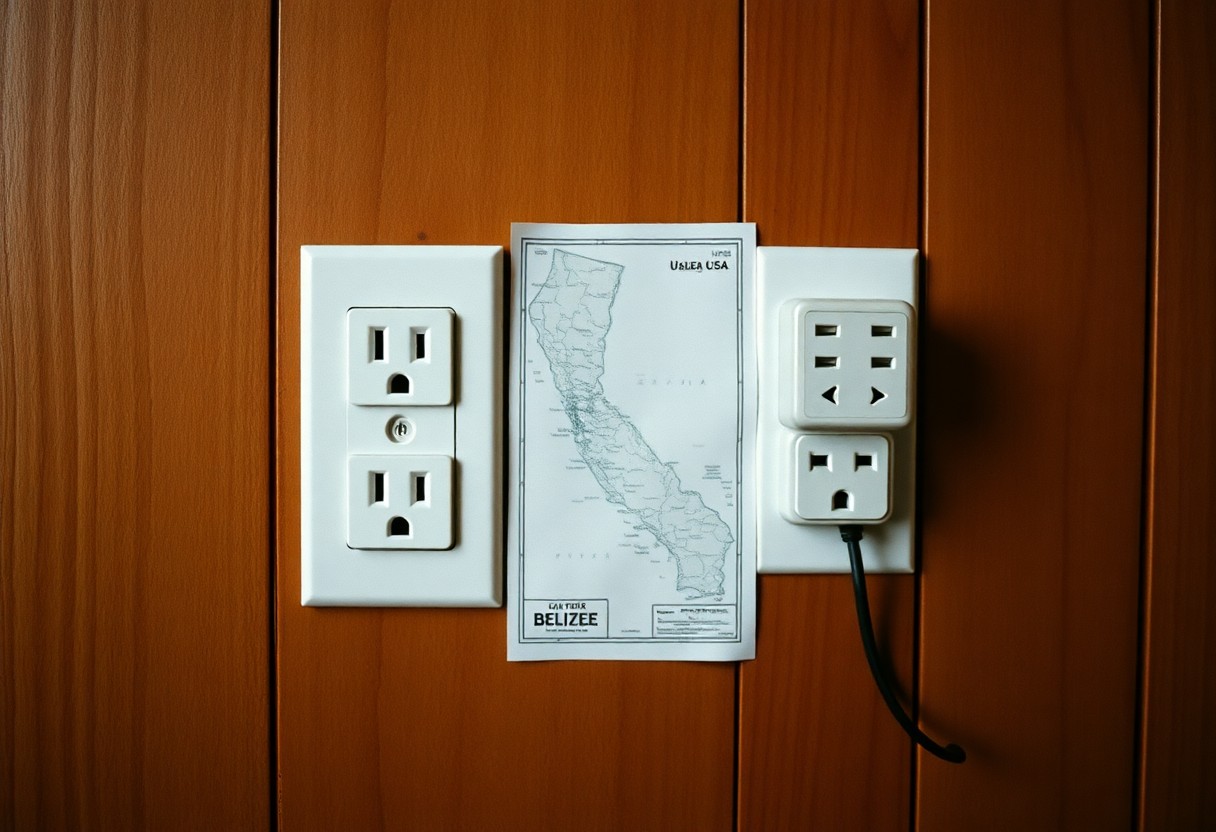
Belize uses 110–120 volts at 60 Hz and the same Type A (two flat prongs) and Type B (two flat prongs + ground) sockets you find in the U.S. That means phones, tablets, laptops, and most modern USB-powered devices work directly with a simple plug adapter or nothing at all if your charger already fits the socket.
When You Need A Converter — Wattage Rules And Clear Examples
Converters change voltage; adapters only change plug shape. Use this practical rule of thumb:
- Low-power electronics (under ~200W) are usually safe with an adapter only if the device is marked 100–240V.
- High-wattage items (hair dryers, straighteners, kettles — often 1,000W+) require either a heavy-duty converter rated above the device’s wattage or, smarter still, use the appliance provided by hotels or buy a local dual‑voltage travel tool.
Example: a common hair dryer at 1,200W will overload a 200–300W travel converter. If you need styling tools, bring a dual‑voltage model (switchable 110/220) or plan to use hotel equipment.
Packing Checklist & Surge-Protection (Quick)
- 1–2 compact plug adapters (Type A/B)
- A small multi-USB charger or power strip with built-in surge protection (check local outlet rating before plugging high-wattage items)
- Dual‑voltage hair tool if you must style (or plan to use hotel dryer)
- Portable power bank for day trips and islands
- Label chargers with your name if traveling in a group (common in hostels)
Where To Buy Or Borrow Adapters In Belize
Buy adapters before you go for peace of mind. If you forget, airport shops, larger hotels, and hardware stores in Belize City, San Ignacio, and Placencia commonly stock plug adapters and basic surge protectors. For a smoother travel plan, pair packing advice with practical arrangements when you book flights to Belize or choose accommodations.
For packing, safety, and regional advice, see the Belize 2026 travel guide for Americans. If you want to confirm flights or dates, book flights to Belize, and review local electrical safety tips in our safety guide.
Frequently Asked Questions
Will My Phone, Laptop, Or Camera Charger Work In Belize?
Yes — most modern chargers are labeled 100–240V and will work on Belize’s 110–120V; bring an adapter or a multi‑USB charger and use surge protection for valuable gear.
Do I Need A Voltage Converter?
Only for high‑wattage devices that are single‑voltage. If an appliance is above ~200W and not labeled 100–240V, you will need a converter rated for that wattage or use local/hotel appliances instead.
Are Power Surges Common In Belize?
Occasional fluctuations can occur, especially in rural or island areas. A compact surge protector for sensitive electronics is a smart, low-cost precaution. For longer stays or remote travel, keep backups like a power bank.
See also: Belize 2026 travel guide for Americans and our safety guide for region-specific advice when packing electronics.

Clara Beckett is a passionate travel writer specializing in the vibrant culture and breathtaking landscapes of Belize. With a keen eye for detail and a love for adventure, she provides insightful and engaging content that guides readers through the best experiences Belize has to offer. Clara’s work not only highlights the country’s stunning natural beauty but also its rich history and diverse communities, making her Belize Travel Guide an essential resource for anyone seeking to explore this magnificent destination.


This is such an important point to highlight! I’ll never forget the time I traveled to a country with a completely different voltage and almost fried my favorite gadget because I didn’t do my homework beforehand. I agree, packing a universal travel adapter and checking voltages really pays off in the long run.
It’s great to hear you’ve had a firsthand experience that highlights this! Traveling to new places often comes with surprises, and tech mishaps can turn a fantastic trip into a stressful one. The difference in voltages and plugs is something many travelers overlook, but it can truly make or break your electronic gear.
I can definitely relate to your experience with voltage differences. It can be surprising how something as simple as an adapter can make such a big difference on a trip. I remember traveling to Europe and almost forgetting my adapter too—it’s one of those things you think you’ll remember but can easily slip your mind.
It’s interesting how something as small as an adapter can have such a significant impact on our travel experiences. I remember when I went to Japan a few years back; I was so preoccupied with planning my itinerary that I almost forgot about my charger and the adapter. Moving between different countries with their own voltage and plug styles really makes you appreciate how interconnected our world is—yet how small differences can cause such big headaches.
I totally get where you’re coming from. It’s surprising how something as simple as voltage can create such a huge hassle during travel. I once had a similar experience when I was in Europe and forgot to check the power requirements for my camera. Thankfully, I found an adapter at a local shop, but it definitely made me realize how essential it is to prepare for those kinds of details.
I can definitely relate to that experience. I once made the mistake of underestimating the voltage differences when I traveled to Europe, and thankfully, my gadget survived but it was a close call. Investing in a good universal travel adapter has become a non-negotiable item in my packing list since then.
It’s so true that the frustration of incompatible chargers can really dampen the excitement of traveling! I experienced this firsthand during a trip to Costa Rica a few years back—even though the voltage was similar to what I’m used to in the U.S., the plug styles were completely different, and I ended up having to hunt for an adapter in the middle of my vacation.
You’re not alone in that experience. It’s remarkable how something as simple as a charger can turn a fun trip into an unexpected hassle. I think a lot of travelers underestimate the importance of keeping an eye on plug shapes and voltage differences, even when the countries seem similar on the surface.
It’s so true that dealing with electrical compatibility can be a major hassle when traveling, especially to a place as beautiful as Belize, where you want to focus on the experience rather than tech issues! The mention of voltage is key; I once assumed a destination’s similarities with the U.S. electrical standards were enough, only to find elusive socket designs that turned my charging journey into a mini-adventure of its own.
I can completely relate to the frustration of arriving in a new destination only to discover that my electronics are in jeopardy. It’s surprising how often we overlook the small details that can turn into big headaches while traveling. Your insight about the 110-volt standard in Belize is incredibly helpful, especially for those of us hailing from the U.S.; it’s a huge relief to know that most of our devices should work without a hitch.
Your insights on the electrical setup in Belize are incredibly useful for anyone planning a trip there. Having traveled to several places with varying electrical standards, I can definitely relate to the headache that comes from realizing your devices won’t charge. It’s so easy to assume that because a country is close to the U.S., they’ll have the same outlets and voltage specifications.