Belize is geographically in Central America, but culturally and politically it has strong Caribbean ties — a hybrid identity that matters for travelers and regional context. For a direct comparison with a nearby eco‑travel rival, see Belize vs Costa Rica.
Decision Table — How To Label Belize
| Geographic location | Northeastern coast of Central America (borders Guatemala and Mexico). |
| Cultural & political ties | Strong Caribbean links: English as the official language, CARICOM membership, Caribbean coastal culture and reef-based tourism. |
| How to present it (travelers) | Call it a Central American country with a Caribbean identity — useful shorthand for guides, marketing, and trip planning. |
Geography At A Glance
Belize sits on the eastern edge of the Central American isthmus. Its mainland terrain includes low coastal plains, jungled interior and limestone hills; offshore, the Belize Barrier Reef (roughly 190 miles long) is the defining marine feature. Those physical facts place Belize squarely in Central America on maps and in continental groupings.
Culture, History And Political Links
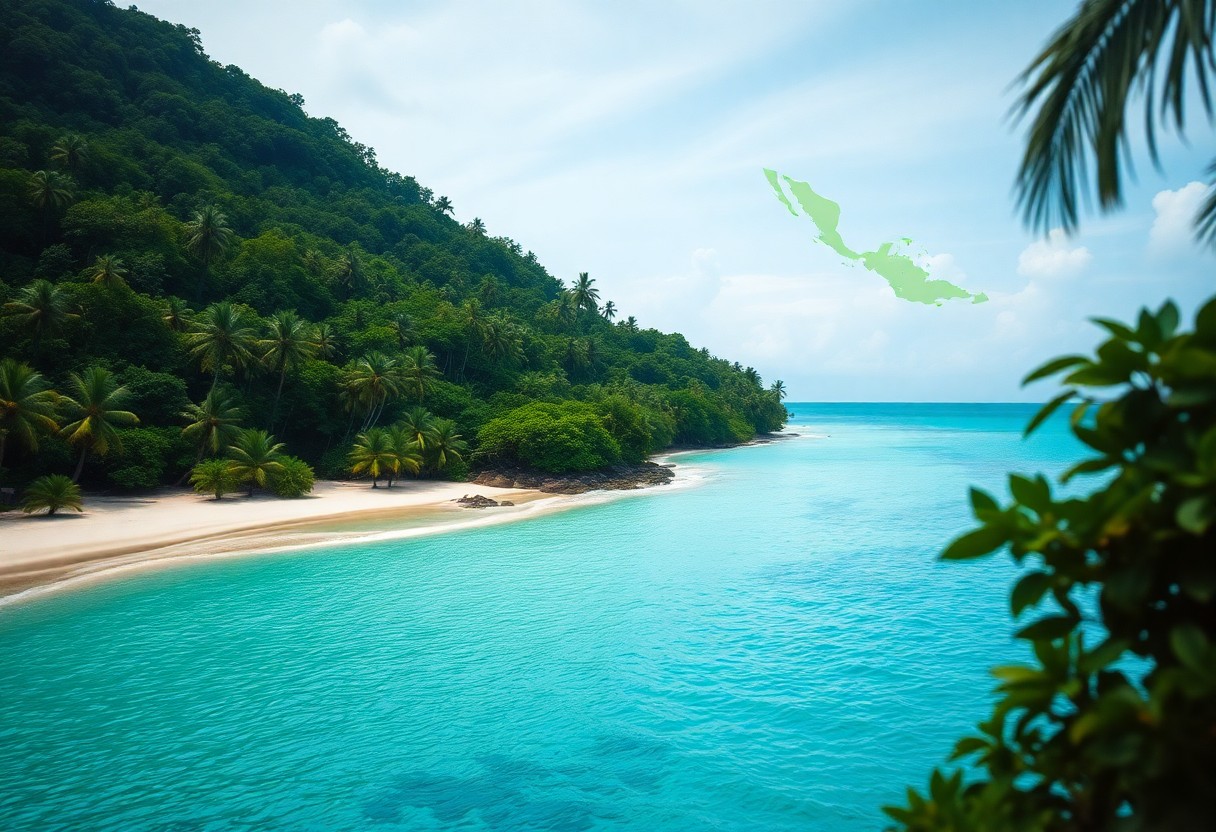
Culture and history are where Belize’s Caribbean identity becomes visible. English is the official language because of British colonial history; Belize is a full CARICOM member and retains strong cultural ties to the wider Caribbean (Garifuna, Creole, island music and coastal ways of life). At the same time, daily interactions with Spanish-speaking neighbors — Guatemala and Mexico — shape language use, trade and cross‑border customs.
For a deeper look at how those geographic and cultural threads combine, see our detailed overview of Belize’s geography and culture: Belize — a closer look at geography and culture.
Why The Hybrid Identity Matters (For Travelers & Planners)
Labeling Belize correctly affects practical decisions: visas, language expectations, transport and the kinds of experiences you’ll find. Expect English to be widely spoken, Caribbean-influenced food and festivals on the coast, and ecosystem-driven tourism focused on reef and rainforest conservation.
If you’re planning a trip and want practical logistics, our location and travel guide summarizes entry rules, transport and where to base yourself: Belize location and travel guide.
- Maps & Continental Groupings Call it Central America.
- Culture, Festivals & Language Expect Caribbean influences along the coast.
- Tourism Marketing Use both labels: “Central American country with Caribbean culture.”
If you’re deciding between similar Central American options — for example, Costa Rica — see our side-by-side analysis of environment, costs and travel style in Belize vs Costa Rica.
Frequently Asked Questions
Is Belize Geographically Part Of Central America Or The Caribbean?
Geographically, Belize is part of Central America (it borders Guatemala and Mexico).
That continental placement is unambiguous on political maps and in international classifications; the Caribbean identity comes through culture, language and maritime ties rather than continental location.
Why Does Belize Feel Caribbean When It Sits In Central America?
Belize’s British colonial history made English the official language, and coastal communities share music, food and institutions with Caribbean island nations.
CARICOM membership and a reef-based tourism economy strengthen those cultural and political links, so coastal life in Belize often resembles Caribbean island culture more than inland Central American norms.
Should I Expect Visa Or Travel Differences Because Of Belize’s Hybrid Identity?
Practical travel rules follow Belize’s national policies, not its cultural label — check entry and visa guidance before you go.
Language and transport expectations will differ by region (coastal, cayes, inland). For logistics and suggested bases, consult our travel guide at Belize location and travel guide.
This piece is a focused supporting article in our Belize geography cluster. For broader planning, comparisons and itineraries, visit our main comparison and travel pages — especially the Belize vs Costa Rica comparison and the Belize location and travel guide.

Benjamin Turner is a passionate travel writer specializing in exploring the beauty and diversity of Belize. With a keen eye for detail and a knack for storytelling, he provides readers with insightful guides that encompass everything from the country’s stunning landscapes to its rich cultural heritage. Drawing on his extensive travels throughout Belize, Benjamin aims to inspire fellow adventurers and facilitate immersive experiences for all who seek to discover this tropical paradise.
Your exploration of Belize’s complex geographic identity truly resonates with me, especially as someone who has always found it fascinating how boundaries can be intertwined not just geographically, but culturally and historically as well. The notion that Belize straddles both Central America and the Caribbean is a powerful reminder of the rich tapestry of identities that can exist within a single nation. I think this speaks volumes about the fluidity of cultural heritage in our increasingly globalized world.
I completely relate to your thoughts on Belize’s unique geographic identity. It’s intriguing how borders often do more than just segment places—they weave together diverse histories, languages, and traditions into a single narrative. Belize is a perfect example of this, acting as a bridge between the vibrant cultures of the Caribbean and the rich indigenous heritages of Central America.
You bring up some essential points about Belize’s geographic identity, which often feels like a living canvas painted with layers of history and culture. It’s interesting to consider how borders—both natural and political—aren’t just lines on a map, but reflections of deeper connections and divisions that shape our experiences.
Isn’t it wild how Belize is like that friend who shows up to a party dressed for a beach vacation but casually drops in that they’ve just returned from a jungle adventure? I mean, how many places can claim to be both Caribbean and Central American in one delightful package? I think it’s the only country where you can sip coconut water while discussing the Mayans in the same breath as reggae!
You nailed it with that description! Belize really does feel like that friend who effortlessly switches gears between chill beach vibes and thrilling jungle escapades. One minute you’re lounging under a palm tree, sipping on coconut water, and the next you’re exploring ancient Mayan ruins surrounded by that incredible rainforest. It’s wild how those contrasts coexist so harmoniously.
You really captured the essence of Belize perfectly. It’s incredible how such a small country can pack so much variety into its landscapes and experiences. One moment you’re basking in the sun, letting the sea breeze wash over you, and the next, you’re deep in the jungle, surrounded by towering trees and the sounds of exotic wildlife. That transition feels almost magical, right?
“I’m glad you felt that vibe! If you’re ready to experience Belize for yourself, check out this link for some amazing trips that capture all those perfect contrasts.”
https://xamanekbelize.com/browse-tours
You’ve nailed it perfectly. Belize really does blend those contrasting vibes seamlessly. You can be lounging in a hammock by the beach, enjoying the sound of waves, and then just an hour away, you’re surrounded by lush jungles and ancient ruins. It’s fascinating how Belize holds onto its rich cultural heritage while embracing the Caribbean flair.
“Absolutely! Belize truly is the ultimate blend of cultures and adventures. If you’re ready to experience this unique vibe for yourself, check out this link for more on what Belize has to offer!”
https://xamanekbelize.com/nature-and-wildlife-encounters
It’s such a fun analogy—Belize really does have that unique vibe. One minute, you’re lounging with a stunning ocean view, and the next, you’re immersed in the lush jungles, surrounded by ancient Mayan ruins. It’s like nature and culture had a friendly competition to see who could outdo the other.
“Absolutely! Belize really knows how to blend relaxation and adventure. If you’re curious to explore this unique destination further, check out this insider’s guide to uncover all the hidden gems!”
https://xamanekbelize.com/caye-caulker
It’s so true how Belize captures that perfect blend of elements. I remember my visit there—it felt like every corner turned led to a new adventure. One moment, we were diving in the Barrier Reef, completely enchanted by the vibrant marine life, and the next, we were climbing the steps of an ancient temple at Xunantunich, soaking in the incredible history.
Your examination of Belize’s geographic identity really sheds light on the complexities that often go overlooked in discussions about nations at cultural crossroads. The interplay between its Caribbean influences and Central American roots raises important questions about how we define identity itself—are these classifications simply geographical, or do they also encompass cultural, historical, and social dimensions?
You bring up an interesting point about Belize and the way we classify identity. It’s true that with countries like Belize, things get pretty layered when you dive into the different influences that have shaped its character over time. When we talk about Caribbean influences and Central American roots, it’s like peeling back the layers of an onion; every layer reveals something new, from the historical connections to the diverse cultures that coexist there today.
Thank you for your insightful comment! If you’re interested in exploring these themes further, check out this related piece that delves deeper into the rich tapestry of Belize’s identity.
https://xamanekbelize.com/lamanai
Your exploration of Belize’s geographic identity raises intriguing points about its multifaceted nature. The nation’s blend of Central American and Caribbean influences not only affects its geography but also deeply enriches its cultural fabric. One aspect that particularly stands out is Belize’s commitment to preserving its diverse cultural heritage, evidenced by the coexistence of various communities, including the Garifuna, Creole, and Maya populations.
Your thoughts on Belize’s geographic identity resonate deeply, especially when considering how such a blend of Central American and Caribbean influences shapes not just the landscape but also the everyday lives of its people. The coexistence of communities like the Garifuna, Creole, and Maya illustrates a beautiful tapestry of cultural heritage that seems increasingly rare in our globalized world.
Your exploration of Belize’s geographic identity raises intriguing questions about how we define borders—not just in a physical sense but culturally and historically as well. The way Belize straddles Central America and the Caribbean offers a powerful reminder of the complexities of identity in a globalized world. This duality is particularly apparent in the nation’s rich cultural tapestry, which is a product of its diverse influences ranging from the Maya to British colonialists.
You bring up a fascinating point about Belize’s unique position. It’s true—standing at the intersection of Central America and the Caribbean really does shape the cultural landscape. The influences are like layers in a rich cake, with the Maya roots offering deep historical context, while British colonialism adds a distinct flavor that can be spotted in everything from language to customs.
Your exploration of Belize’s geographic identity presents an intriguing perspective that resonates deeply with the complexities of regional classification. I’ve often found that the divisions we impose—such as those between Central America and the Caribbean—can oversimplify the rich tapestry of cultural and historical influences that shape a nation.
Your exploration of Belize’s geographic identity is indeed thought-provoking and raises important questions about how we conceptualize borders and cultural intersections. I find it fascinating that Belize challenges the traditional notions of regional classification, primarily because this reflects a broader conversation about identity in our increasingly interconnected world.
Your analysis of Belize’s unique geographic identity resonates deeply with me, especially as someone who has always been fascinated by the interplay of culture, geography, and identity. The notion that Belize occupies an intriguing space between Central America and the Caribbean raises important questions about how we classify nations and cultures in an increasingly interconnected world.
Your exploration of Belize’s geographic identity is particularly resonant, as it highlights the intricate tapestry of cultural and geographic influences that shape not only the nation but also the experience of those who visit or reside there. The way you describe Belize as a blend of Central American and Caribbean traits truly captures its unique essence — it’s something I’ve often pondered during my own travels.
I found your take on Belize’s geographic identity really thought-provoking. You know, it’s one of those places that often gets lumped together with its Central American neighbors, yet there’s so much more going on beneath the surface. Belize really is that fascinating intersection of cultures and influences.
Your exploration of Belize’s geographic identity resonates deeply with me, particularly the notion of its cultural and geographical complexity. It’s fascinating how a small nation can encompass such a rich tapestry of influences, straddling the line between Central America and the Caribbean. This duality not only shapes its identity but profoundly impacts its societal norms, cultural practices, and even its economic activities.
I really appreciate how you highlighted Belize’s unique position at the crossroads of Central America and the Caribbean. It’s interesting to see how its English-speaking heritage influences not just the language but also the culture and education system.
It’s fascinating, isn’t it? Belize’s unique blend of cultures really makes it stand out in Central America. The English-speaking heritage does play a significant role, not just in language but in shaping a wide array of cultural aspects, from music to cuisine. I’ve noticed how this multicultural environment fosters a sense of community and inclusiveness, which is often reflected in their education system as well.
I love how you highlighted Belize’s unique position straddling Central America and the Caribbean! It really is fascinating how this geographic complexity fosters a rich cultural tapestry. I’ve always felt that Belize’s English-speaking heritage, coupled with its vibrant Caribbean culture, creates a fascinating dialogue between diverse influences. It reminds me of how other countries, like Panama, also challenge typical regional boundaries with their blend of cultures.
The exploration of Belize’s geographic identity is indeed a thought-provoking journey. As you articulated, it highlights the complexity of place and identity in our increasingly interconnected world. Belize offers such a rich tapestry of cultural influences, not only due to its geographical position but also because of its historical context. When I think about the vibrant blend of languages, traditions, and practices, it reflects an ongoing dialogue between the diverse cultures that have shaped Belize over centuries.
Your exploration of Belize’s geographic identity is both insightful and thought-provoking. I’ve always found it fascinating how geography can shape not just the landscape but also the cultural and social fabric of a nation. Belize’s position at the crossroads of Central America and the Caribbean is a perfect example of how complex and interconnected our world is.
It’s interesting to reflect on the ways geography weaves itself into the very essence of a place and its people. Belize stands out distinctly for its geographic positioning, where the influences of Central America seamlessly overlap with Caribbean culture. This unique intersection creates a mosaic of identities, traditions, and ways of life that might not be as prevalent in other nations.
You make a really insightful point about how geography shapes not just a place, but its people and culture. Belize’s unique position is fascinating. It’s like a living tapestry where the threads of Central American and Caribbean influences intertwine, giving rise to something truly special.
You’ve touched on something really intriguing there. The idea of geography shaping not just the land but the culture and society is something we often overlook. Belize is this fascinating patchwork of influences—Mayan, Garifuna, Creole, and so many others—it’s a real microcosm of how different cultures can coexist and enhance each other.
I really appreciate how you bring out Belize’s unique position at the crossroads of Central America and the Caribbean. It’s interesting to think about how this geographical overlap doesn’t just affect where it lies on a map but also shapes its culture, economy, and even politics. For instance, the English-speaking aspect really sets it apart compared to many of its neighbors, right?
You’ve touched on a fascinating realization about Belize that often gets overlooked. Its geographical position certainly plays a pivotal role in shaping not only its identity but the lived experience of its people. The blend of Central American and Caribbean influences creates a tapestry that is rich and multifaceted—especially when it comes to its culture.
Your exploration of Belize’s complex geographic identity is truly thought-provoking. It’s interesting to consider how Belize’s English-speaking heritage and Caribbean influences create a unique cultural tapestry that sets it apart from its Central American neighbors. This blend not only enriches the local culture but also influences aspects like tourism and education, as visitors often come seeking both adventure and a glimpse into its diverse cultural heritage.
It’s interesting how Belize seems to sit in this unique cultural crossroad, blending influences from both the Caribbean and Central America. I’ve always been fascinated by places that defy easy labels. For instance, the way the Garifuna culture has woven its way into the fabric of Belize adds another layer to this complexity. This blending of histories and identities really reflects the idea that borders aren’t just geographical but cultural too. It makes you think about how so many regions in the world are experiencing this same kind of identity evolution. Has anyone else had experiences in Belize that highlighted its unique blend? I’d love to hear more personal stories about how this manifests day-to-day!
You’ve touched on such an important point about Belize’s identity. The way the culture here blends different influences is truly amazing. It’s not just about geography; it reflects the stories and histories of the people who call this place home. The Garifuna culture is a perfect example of that—its roots run deep, and you can hear it in the music, see it in the food, and feel it in the community spirit.
Your exploration of Belize’s geographic identity resonates with my own experiences there. During my visit, I was immediately struck by how its vibrant culture reflects influences from both Central America and the Caribbean. The way the local cuisine melds flavors—like the Belizean rice and beans seasoned with coconut, combined with the spice of nearby Mexican dishes—really illustrates this blend.
Your exploration of Belize’s geographic identity truly captures its multifaceted essence. I find it fascinating how Belize operates as a cultural bridge between Central America and the Caribbean. For instance, the influence of Garifuna culture is a perfect example of this blend, showcasing Afro-Caribbean heritage while also reflecting the region’s diverse history intertwined with Indigenous and European identities.
I’m glad you found the piece resonant. Belize really is this fascinating intersection of cultures, isn’t it? The Garifuna people, with their rich traditions, music, and dance, are a prime example of that blend. It’s incredible how they’ve maintained such a strong sense of identity while weaving in elements from different cultures.
I really appreciate how you highlighted the complexities of Belize’s geographic identity—it’s such an interesting topic! When I first visited Belize a couple of years ago, I remember being struck not only by its stunning landscapes but also by the way its culture seemed to embody this blend of influences. The vibrant music, food, and even the language reflect a rich tapestry of Caribbean and Central American heritage, which makes Belize feel like a microcosm of regional diversity.