San Ignacio is one of the best bases in Belize for travelers who want to put Maya history and archaeology at the center of their trip. From town, you can reach four very different windows into the Maya past: the early settlement and palace architecture of Cahal Pech, the monumental temples and carved friezes of Xunantunich, the regional power center of Caracol, and the ritual cave archaeology of Actun Tunichil Muknal (ATM).
This is not a general list of things to do in San Ignacio. It is a history-first guide designed to help you understand what makes each archaeological site different, which sites complement one another, and how to plan a visit without treating every ruin or cave as the same experience. For a broader activity-based trip, start with our complete guide to things to do in San Ignacio.
| Site | Best reason to visit | Visit style | Best for |
|---|---|---|---|
| Cahal Pech | Early Maya settlement and residential architecture | Short visit from town | Chronology, families, limited time |
| Xunantunich | Monumental Classic-period architecture and friezes | Half-day archaeological visit | First-time visitors |
| Caracol | Political power, urban scale and regional Maya history | Full-day remote excursion | Serious archaeology enthusiasts |
| ATM Cave | Ritual archaeology preserved inside a cave | Guided, physically demanding full day | Ritual history + adventure |
Why Is San Ignacio Such A Strong Base For Maya History?
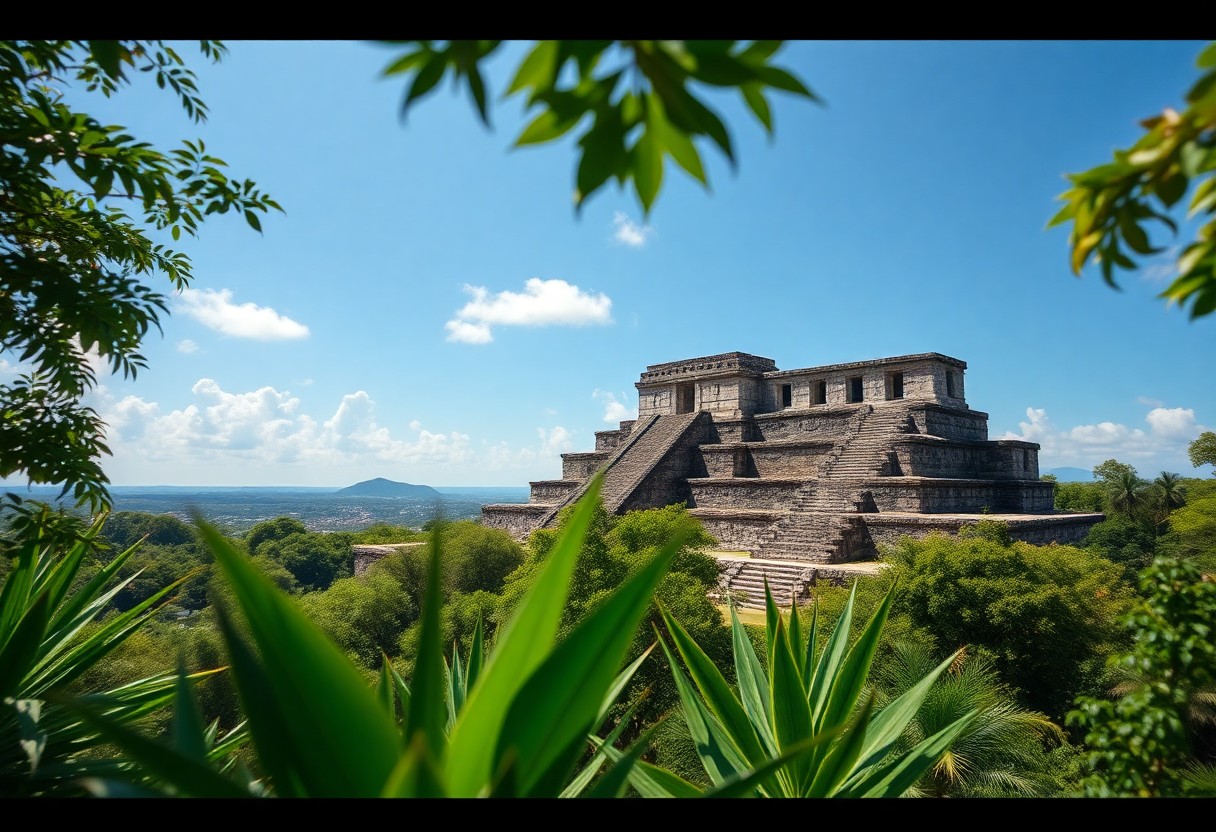
San Ignacio works unusually well for archaeology because several important Maya landscapes can be explored from one inland base while still representing very different periods, functions and types of evidence. Cahal Pech is immediately associated with the town; Xunantunich lies west near San Jose Succotz; Caracol sits much deeper in the Chiquibul region; and ATM preserves archaeological material within a cave environment rather than a monumental urban center.
Together, the sites help answer different questions about Maya civilization: how communities developed, how elites organized monumental centers, how powerful cities interacted politically, and how caves were incorporated into ritual life. That makes a San Ignacio archaeology trip more useful than simply visiting several similar-looking temple complexes.
If you want the wider Belize context before choosing individual sites, see our guide to ancient Maya ruins in Belize.
Cahal Pech: Start With The Early Maya Story
Cahal Pech is particularly valuable for history-focused travelers because its importance is not based only on monumental size. Archaeological evidence places the site’s first settlement around 1200–1000 B.C., making it one of the oldest known settlements in the lowland Maya world.
The central precinct contains temples, palaces, plazas and ballcourts, but the site’s residential architecture is especially useful for understanding how elite Maya spaces were organized. Belize Tourism Board highlights its interconnected rooms as an important example of Late Classic palace architecture.
Visit Cahal Pech before the larger sites if you want a chronological foundation. Its long occupation gives context to the later monumental and political landscapes you encounter at Xunantunich and Caracol.
Its position close to modern San Ignacio also makes Cahal Pech the easiest archaeological site to fit around an arrival day, departure day or other activities in town.
Xunantunich: Monumental Architecture, Friezes And The Classic Maya World
Xunantunich is the strongest first major Maya site for many visitors staying in San Ignacio. The journey begins with the hand-cranked ferry across the Mopan River near San Jose Succotz before reaching the hilltop archaeological reserve.
The site contains six plazas and more than 25 temples and palaces. Its dominant monument, El Castillo, rises about 130 feet above the plaza. The structure’s east and west sides include carved friezes, adding an iconographic layer that visitors do not get from scale alone.
For a history-focused visitor, Xunantunich is useful because monumental architecture, ceremonial space and political symbolism can all be read within a relatively compact site. It is therefore a better choice than Caracol when you have only part of a day but still want a substantial archaeological experience.
Current opening hours, tickets and visitor requirements should be checked directly with the National Institute of Culture and History (NICH) shortly before visiting.
Caracol: Understand Maya Political Power At Regional Scale
Caracol is the site to choose when you want to understand a Maya city as a regional political power rather than simply see impressive ruins. NICH describes Caracol as Belize’s largest archaeological reserve, covering approximately 25,000 acres about 50 miles from San Ignacio.
At the height of its political power, the ancient city extended across roughly 38 square miles and supported a population estimated by NICH at about 80,000–100,000 people. Carved monuments and archaeological research also place Caracol within the larger geopolitical struggles of the Classic Maya world, including relationships and conflicts involving Calakmul, Tikal, Naranjo and other polities.
The Caana complex—its name commonly translated as “Sky Place”—rises about 139 feet according to NICH. Its importance, however, is better understood as part of the wider city than as an isolated pyramid to photograph.
Choose Caracol over Xunantunich if archaeological scale, political history and a more remote landscape matter more to you than convenience. Choose Xunantunich if time is limited or this is your first Maya site.
For the site-specific background and trip planning details, continue to our complete Caracol archaeology guide.
Actun Tunichil Muknal: Maya Ritual Archaeology Inside A Cave
ATM is fundamentally different from Cahal Pech, Xunantunich and Caracol because its archaeological context is a cave rather than an open-air civic or residential center. NICH records Maya use of Actun Tunichil Muknal during the Early Classic period, A.D. 300–600, and the protected cave contains in-situ ceramics, stone objects and human skeletal remains associated with ancient ritual activity.
That context matters. The archaeological value of ATM is not simply that objects were found inside a cave; it is the relationship between material remains, chambers, water, darkness and the natural landscape in which ritual activity took place.
ATM is also the most regulated and physically demanding experience in this guide. Under current NICH rules, visitors must enter with an ATM Certified Tour Guide. Groups are limited to six visitors per guide, visitors must be at least 40 inches tall, be in good physical health and be able to swim. Cameras, video equipment and recording devices are prohibited inside the cave.
Because access rules can change, verify them shortly before the trip on the official NICH ATM Cave page.
Before booking, read our ATM Cave tour guide for the full activity, safety and preparation context. For the cultural meaning of caves beyond ATM, see why caves held sacred significance in Belize.
Xunantunich vs Caracol vs Cahal Pech vs ATM: Which Is Best For You?
There is no single “best” archaeological site near San Ignacio because the four major experiences answer different historical questions. The best choice depends on whether you value chronology, monumental architecture, political scale or ritual archaeology.
| If you want to understand… | Choose | Why |
|---|---|---|
| Early settlement and architectural development | Cahal Pech | Long occupation sequence and important residential architecture |
| Classic monumental architecture and visual symbolism | Xunantunich | El Castillo, plazas, palaces and carved friezes |
| Regional power and Maya geopolitics | Caracol | Large urban landscape and evidence of political relationships and warfare |
| Ritual practice in a natural sacred landscape | ATM Cave | In-situ ritual material and human remains within the cave environment |
How Should History Buffs Combine The Sites?
Build the trip around complementary archaeological contexts rather than trying to visit the largest number of sites. Cahal Pech and Xunantunich pair particularly well because they provide an accessible introduction to settlement history and monumental architecture. Caracol and ATM each deserve substantially more time and attention.
If You Have One Archaeology Day
Visit Xunantunich + Cahal Pech. The combination gives you two contrasting sites without making your entire day about transportation.
If You Have Two Archaeology Days
Day 1: Xunantunich + Cahal Pech. Day 2: choose Caracol for political and urban history or ATM for ritual cave archaeology.
If Archaeology Is The Main Reason For Your Trip
Give yourself enough time for Cahal Pech, Xunantunich, Caracol and ATM without stacking two physically or logistically demanding excursions on the same day. Use the remaining time for local museums, cultural context and rest.
For transportation between regions and archaeological sites, use our Belize transportation guide. For the larger trip rather than only the history segment, see how many days to spend in Belize.
When Does An Archaeology Guide Add The Most Value?
A good guide should add interpretation, not merely transportation. At a Maya site, useful interpretation connects architecture to chronology, political organization, ritual use, excavation evidence and the wider landscape. It should also distinguish what archaeologists can support with evidence from what remains uncertain or interpretive.
ATM requires an ATM Certified Tour Guide under current NICH rules. At open-air sites such as Xunantunich and Cahal Pech, a knowledgeable guide becomes most valuable when you want to understand why a building was placed where it was, how different construction phases relate to one another, or what carvings and archaeological finds tell us about the people who used the site.
If you want to combine several archaeological experiences with transport from San Ignacio, see our Belize adventure tours or build the sequence through our customized itinerary service.
Archaeological Site Etiquette And Conservation
Archaeological reserves are protected cultural resources, not adventure playgrounds. Stay on designated routes, follow site and guide instructions, do not remove natural or cultural material, and do not touch artifacts, human remains or sensitive cave formations.
Rules differ by reserve. NICH publishes current ticketing information, access requirements and codes of conduct, so check official information again shortly before your visit rather than relying on an old blog post for time-sensitive restrictions.
Start with the archaeological experience you most want to understand, then build the rest of the Cayo itinerary around it instead of trying to squeeze every ruin and cave into the shortest possible trip.
Frequently Asked Questions About Maya Archaeology Near San Ignacio
What Is The Best Maya Ruin Near San Ignacio?
Xunantunich is the strongest first choice for many visitors because it combines monumental architecture, carved friezes and relatively straightforward access from San Ignacio. Caracol is the better choice when archaeological scale and regional political history are the priority.
Should History Buffs Visit Xunantunich Or Caracol?
Visit Xunantunich if you have limited time or want an accessible introduction to Classic Maya monumental architecture. Visit Caracol if you can devote a full day and want to understand a much larger Maya political and urban landscape. If archaeology is a major reason for visiting Belize, the two are complementary rather than substitutes.
Is Cahal Pech Worth Visiting If You Are Already Going To Xunantunich?
Yes, particularly for a history-focused trip. Cahal Pech contributes something different: evidence of very early Maya settlement and important residential architecture. Its proximity to San Ignacio also makes it easy to combine with another day rather than treating it as a substitute for Xunantunich.
Is ATM Cave An Archaeological Site Or Just An Adventure Tour?
ATM is an archaeological reserve as well as a physically demanding cave experience. Its in-situ ceramics, stone objects and human remains provide evidence of ancient Maya ritual activity within the cave landscape. Current NICH rules require visitors to enter with an ATM Certified Tour Guide.
How Many Days Should A History Buff Spend In San Ignacio?
Allow at least two archaeology-focused days if you want more than a superficial visit. One day can combine Xunantunich and Cahal Pech; additional full days can then be devoted to Caracol and ATM. Travelers who want all four major experiences should avoid compressing them into back-to-back schedules without accounting for travel and physical demands.
Can You Take A Camera Into ATM Cave?
No under current NICH visitor rules. Cameras, video equipment and recording devices are prohibited inside ATM Cave. Verify the rule with NICH or your certified operator before travel because access policies can change.
Official Archaeology And Visitor Sources
Historical summaries on this page are based primarily on information published by Belize’s National Institute of Culture and History and Belize Tourism Board. For opening hours, prices, closures and visitor restrictions, always check current official information before travel.
Looking for San Ignacio beyond archaeology? Continue to our San Ignacio things-to-do and 1–3 day planning guide. That page covers the wider destination; this guide is intentionally focused on Maya history and archaeological experiences.

Vanessa Carter is a passionate travel writer and expert on Belize, dedicated to sharing the wonders of this beautiful Central American destination. With years of experience exploring Belize’s diverse landscapes, vibrant culture, and rich history, she provides readers with insightful tips and guides that inspire adventure. Through her engaging narratives, Vanessa aims to connect travelers with the heart of Belize, making it an accessible and exciting destination for all.

I really appreciate how you highlighted the unique blend of history and culture in San Ignacio. The way ancient Mayan societies are intertwined with the natural landscape makes it a fascinating destination. During my last visit, exploring the ruins of Xunantunich was like stepping back in time. I was struck by the architecture and the stories behind each structure. It’s incredible how places like these can spark a deeper understanding of ancient civilizations.
It’s great to see that you connected so deeply with the history and culture of San Ignacio during your visit. Xunantunich has this incredible ability to transport visitors back to an age when the ancient Maya thrived, and it’s fascinating to think about how these stones have witnessed centuries of human experience.
“I’m thrilled to hear that you had such an immersive experience at Xunantunich! If you’re looking to plan your next adventure in this captivating region, check out this guide for more insights and tips to make the most of your visit.”
https://xamanekbelize.com/cultural-tours
San Ignacio truly seems to have so much to offer beyond just its stunning landscapes. The prominence of archaeological sites like Xunantunich and Caracol speaks volumes about the deep-rooted history of the Mayan civilization, and it’s fascinating to think about how these ruins connect us to such a vibrant past.
I’ve always been fascinated by the connection between archaeology and nature, and San Ignacio sounds like the perfect blend of both. There’s something magical about walking through ancient sites like Xunantunich, feeling the weight of history in the air. It’s not just about the ruins themselves, but also about understanding how the Mayans lived in harmony with their environment.
I really appreciate how you highlighted San Ignacio’s rich tapestry of history and culture, especially regarding ancient Mayan civilizations. Having traveled to Belize myself, I can confirm that the sites like Xunantunich and Caracol are nothing short of captivating. Each visit feels like stepping into a time machine, where you can almost hear the echoes of the past amidst the ruins.
Your post beautifully highlights the allure of San Ignacio as a nexus of history and culture, and it resonates deeply with my own traveling philosophy. As someone who has always been captivated by ancient civilizations, the idea of wandering through the remnants of the Mayan world sends chills of excitement down my spine.
I’m really intrigued by the emphasis on the historical aspects of San Ignacio! I’ve always found it fascinating how places like Xunantunich and Caracol let us step back in time and connect with ancient cultures. It’s like each stone has a story to tell.
Your post about San Ignacio beautifully captures the essence of a destination that transcends mere aesthetics. As someone who has always gravitated towards places with profound historical narratives, I couldn’t agree more with your assertion that the stories told by the ancient Mayan ruins are a treasure waiting to be uncovered.
I really resonate with your insights on San Ignacio and its historical significance. As a travel enthusiast, I always look for places that offer hidden stories, and it sounds like San Ignacio is a treasure trove for anyone with a love for history. I had the chance to visit a few Mayan sites in Mexico, and the sense of connection to past civilizations is something that lingers with you long after you’ve left.
San Ignacio truly feels like a time capsule, allowing us to walk in the footsteps of the ancient Mayans. When I visited Xunantunich, the sheer scale of the structures was awe-inspiring, but what struck me even more was the connection to our shared human history. It’s fascinating how, despite the passage of time, the stories and rituals of these civilizations resonate beyond their ruins.
I’m really drawn to the way you highlighted San Ignacio’s rich historical tapestry, especially with sites like Xunantunich and Caracol. It’s fascinating to think about how these places were bustling centers of Mayan civilization, brimming with life and culture thousands of years ago.
Thank you for shedding light on the rich tapestry of history and culture that San Ignacio offers. As someone who has a deep appreciation for the stories that ancient civilizations leave behind, I find the mention of Xunantunich and Caracol particularly intriguing. Each of these archaeological sites carries a unique narrative that speaks to the ingenuity and complexity of Mayan society, from their advanced agricultural practices to the architectural prowess of their temples and palaces.
Reading your blog post about San Ignacio truly struck a chord with me as a fellow history enthusiast. Your emphasis on the significance of its archaeological sites, such as Xunantunich and Caracol, really highlights how rich the area is in stories waiting to be uncovered. The idea of ancient Mayan civilizations whispering their tales through the ruins is poetic and adds an enchanting layer to the very act of exploring these sites.
I couldn’t agree more with your insights about San Ignacio as a treasure trove for history enthusiasts! Having visited Belize a few years ago, I found myself enchanted by the way the landscape carries the echoes of the past. Exploring Xunantunich felt like stepping back in time; the intricate carvings and the sheer scale of the ruins are remarkable. I remember climbing to the top of El Castillo and being awestruck by the panoramic views of the surrounding jungle and the distant mountains—a perfect setting to ponder the lives of the ancient Maya.
This post on San Ignacio truly resonates with my experiences as a history enthusiast. I visited a few years back, and the archaeological sites like Xunantunich and Caracol left a lasting impression on me. The steep climb up the temples at Xunantunich rewarded me with not just breathtaking views but also a profound connection to the ancient Mayan civilization that thrived there.
Ah, the climb at Xunantunich! It’s like an ancient Mayan StairMaster, right? You go up thinking, “This will be easy,” and then halfway up, you’re pretty sure you can hear the temples laughing at you. But those views really do make you feel like you’re standing on top of the world, and I can’t blame you for feeling that connection to the Mayans. They sure knew how to pick a spot.
San Ignacio truly stands out as a treasure trove of history, and your insights into its archaeological significance resonate deeply with me. Having explored several Mayan sites in Central America, I can attest to the powerful connection one feels when walking among the remnants of these ancient civilizations. Xunantunich, with its impressive structures and captivating legends, left me pondering the lives of those who once thrived there.
What a thoughtful exploration of San Ignacio and its rich historical tapestry! I truly resonate with your depiction of the town as an archaeological wonderland. The Mayan heritage is not only intriguing but also offers vital lessons about resilience and the complexities of ancient civilizations.
As a history enthusiast, I wholeheartedly resonate with your insights about San Ignacio as an unmissable destination for cultural exploration. The allure of ancient civilizations is something that draws many of us into the tapestry of the past, and you’ve captured the essence of that beautifully with your mention of the archaeological sites like Xunantunich and Caracol.
Your exploration of San Ignacio and its rich tapestry of historical narratives is not only informative but also resonates deeply with anyone who shares a love for uncovering the layers of our past. As someone who has traveled to numerous archaeological sites, I can wholeheartedly attest to the magnetic pull of a location steeped in history. The stories held within the stone and earth are often more captivating than any modern attraction could offer, and places like San Ignacio exemplify this beautifully.
San Ignacio truly is a treasure trove for history enthusiasts! I recently visited and was captivated not just by the stunning ruins of Xunantunich and Caracol, but also by the rich tapestry of stories that accompany them. Standing amidst the remnants of ancient Mayan civilization, I found myself reflecting on how these sites illustrate the evolution of human society through time.
It’s great to hear about your experience in San Ignacio. The way you describe your connection to the ancient ruins really captures what makes those sites so special. Xunantunich and Caracol both have this remarkable ability to make visitors pause and think about the lives and cultures that thrived there so long ago. It’s one thing to read about history in books, but standing in an ancient ceremonial plaza or gazing up at a pyramid really brings the past to life.
“I’m thrilled to hear about your experience! If you’re looking to dive even deeper into the fascinating history of San Ignacio, check out this guide that highlights more incredible sites and stories.”
https://xamanekbelize.com/nature-and-wildlife-encounters
Reading your post about San Ignacio really resonates with my own experiences and aspirations as a history enthusiast. There’s something truly captivating about destinations that are steeped in history, and it appears that San Ignacio embodies this spirit beautifully. The notion of walking through the remnants of ancient Mayan civilizations like Xunantunich and Caracol is profoundly moving. Such sites do more than offer visual splendor; they serve as gateways to understanding the intricacies of a civilization that thrived long before our time, with its own unique narratives, beliefs, and cultural expressions.
Ah, the allure of San Ignacio! I must confess, I am part of the rabidly devoted clan of history buffs who could spend countless hours wandering through the echoes of the past, often to the dismay of any companions who might be more inclined towards shopping or lounging by a pool. But really, who needs a cocktail when you can be contemplating the lives of ancient Maya while perched on a monumental temple?