
Darasa is a comforting Garifuna dish — a steamed green-banana tamale wrapped in banana leaves — and this hands‑on recipe shows you how to make it at home, packet by packet.
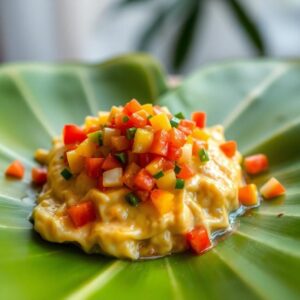
If you want context on Garifuna culture, recipes and where to taste dishes like darasa in Belize, see our guide to Garifuna culture and recipes for local experiences and events.
Ingredients
- 7 slightly green (unripe) bananas — peeled
- 1/2 cup coconut milk
- 1/4 cup fresh orange juice
- 2 tbsp fresh lime juice
- 1/2 tsp kosher salt (adjust to taste)
- 1/2 tsp freshly ground black pepper
- 6 banana leaves, cut into ~9″ squares and lightly wilted (see notes)
- Water for the steamer
Preparation — Step By Step
- Grate Or Mash The Bananas. Use a coarse grater or food processor to grate the peeled green bananas into a coarse mash; a fork or hand-grater works well. Transfer to a bowl.
- Mix The Wet Ingredients. Stir coconut milk, orange juice and lime juice into the banana mash; add salt and pepper and mix until combined. The mixture should be moist but hold its shape.
- Make Packets. Place about 3/4 cup of the banana mixture in the center of each banana-leaf square. Fold the sides over and tuck the ends under to form a compact packet (~5″ x 3″). If the leaves are stiff, pass briefly over an open flame or blanch to make them pliable.
- Steam. Bring 2″ of water to a simmer in an 8‑qt saucepan fitted with a steamer basket. Arrange packets in the basket (stack if needed) and cover. Steam for about 20 minutes, until the filling is firm to the touch.
- Rest And Serve. Let packets rest 8–10 minutes before unwrapping — warmth helps them set. Serve hot as a side or small main; garnish with extra lime if desired.
Tips For Success
- If banana leaves tear, overlap two squares when wrapping.
- Adjust coconut milk to create a firmer or looser texture — less milk for a denser packet.
- To shred faster, pulse green bananas in a food processor with short bursts; avoid overworking into a puree.
| Method | Typical time | Notes |
|---|---|---|
| Steaming (stacked steamer) | 20 minutes | Traditional method; keeps packets moist. |
| Longer steam (larger batches) | 25–30 minutes | If packets are crowded, add 5–10 minutes. |
| Boil-in-basket (not recommended) | 18–22 minutes | Faster but can be soggier; use only if no steamer is available. |
Serving, Variations & Where To Taste It In Belize
Darasa is commonly eaten warm as a side with fish, stews like hudut, or on its own as a snack. For travelers wanting an authentic tasting experience, Hopkins Village is a center of Garifuna culture and a reliable place to find darasa on family menus — see our Hopkins village guide for food-focused local experiences.
Book a local cultural experience or cooking demonstration through our local experiences hub to learn from Garifuna cooks and try darasa prepared the traditional way.
Frequently Asked Questions
What is darasa?
Darasa is a Garifuna dish of mashed green bananas mixed with coconut and seasonings, wrapped in banana leaves and steamed into individual packets.
How long should darasa steam?
Steam about 20 minutes for single-layer batches; increase to 25–30 minutes if the steamer is crowded or packets are large.
Can I freeze darasa?
Yes. Cool completely, wrap tightly in plastic, and freeze up to 2 months; reheat gently by steaming for 8–12 minutes.
What can I substitute for banana leaves?
If banana leaves are unavailable, use aluminum foil as a last resort, though flavor and presentation will differ; double-layer foil to avoid leaks.
Is darasa the national dish of Belize?
No single national dish exists for all Belize, but darasa is a signature Garifuna specialty found in coastal communities, especially in Stann Creek (Hopkins).
See also: our cultural and culinary pages for more Garifuna recipes and places to taste them — Garifuna culture & experiences, Culinary adventures, and the Hopkins village guide.

Clara Beckett is a passionate travel writer specializing in the vibrant culture and breathtaking landscapes of Belize. With a keen eye for detail and a love for adventure, she provides insightful and engaging content that guides readers through the best experiences Belize has to offer. Clara’s work not only highlights the country’s stunning natural beauty but also its rich history and diverse communities, making her Belize Travel Guide an essential resource for anyone seeking to explore this magnificent destination.
Exploring the flavors of Garifuna culture through dishes like darasa is such an enriching culinary journey. I appreciate how food acts as a medium to connect with a culture’s history and traditions. The use of green bananas in this recipe is particularly intriguing—bananas are often underappreciated in their versatility, especially when we typically think of them only in the context of desserts or smoothies. However, their subtle sweetness and texture lend themselves beautifully to savory dishes.
You’re spot on about how food intertwines with culture, and darasa is a great example. It’s more than just a dish; it’s a slice of Garifuna life packed with history. You mentioned the use of green bananas, and you’re right—they don’t always get the love they deserve. They’re so versatile!
You’ve touched on a key aspect of culinary exploration—the ability of food to tell a story. Garifuna culture is rich and layered, and dishes like darasa reflect that beautifully. The green banana allows for both depth of flavor and a connection to the land, showcasing how ingredients can highlight a culture’s agricultural practices and history.
Absolutely! If you’re eager to dive deeper into Garifuna cuisine and explore more creative ways to use green bananas, check out this link for recipes and stories that celebrate these rich culinary traditions.
https://xamanekbelize.com/great-blue-hole-diving-guide-tips-for-exploring-belize
I appreciate your exploration of Garifuna culture through this traditional darasa recipe. It’s fascinating how food can serve as a gateway to understanding diverse cultures. The use of green bananas and coconut milk reminds me of other Caribbean dishes that celebrate fresh, local ingredients.
I completely agree with you about the significance of food as a gateway to culture. Traditional recipes like darasa really highlight the connection between ingredients and the land they come from. It’s interesting how green bananas and coconut milk are staples in many Caribbean cuisines. Growing up, I remember my family making similar dishes, often using whatever fresh ingredients we could find at the local market.
I love that you’re highlighting the flavors of Garifuna culture! Darasa sounds like such a comforting and vibrant dish, especially with that blend of coconut and citrus. I’ve always been fascinated by the use of banana leaves in cooking—it’s not just about flavor, but also about tradition and environmentally friendly practices. Have you tried other ways of using green bananas? In some cultures, they make a savory banana fritter that mixes spices in a similar way. I think exploring these culinary connections brings us closer to understanding diverse cultures. Can’t wait to try my hand at this darasa recipe! Does anyone have tips on finding fresh banana leaves?
I find the darasa recipe truly fascinating, especially because it serves as a delicious gateway into Garifuna culture, which often remains underappreciated in the culinary world. The use of green bananas is particularly interesting; they carry a unique flavor and texture that can really transform a dish. This resonates with me, as I’ve recently been exploring other traditional methods that utilize overlooked ingredients for their cultural significance and health benefits.
I completely agree with you about the darasa recipe and its connection to Garifuna culture. It’s such an eye-opening dish that highlights the beauty of using ingredients like green bananas, which often get overshadowed in more mainstream culinary narratives. The texture they bring is something special, isn’t it?
This darasa recipe sounds delightful! I appreciate how it highlights the importance of using local ingredients, which is such a hallmark of Garifuna cuisine. I’ve always been drawn to dishes that embody cultural heritage, and trying new recipes like this brings that tradition to life in our own kitchens.
I’m truly intrigued by your exploration of Garifuna culture through the darasa recipe. The way you describe those rich flavors and the vibrant culture behind them inspires me to delve into culinary traditions that celebrate heritage and community. Food has an incredible power to connect us to different cultures and histories, and I believe dishes like darasa not only nourish our bodies but also our spirits.