
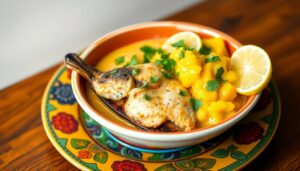
Hudut (plantain mash) paired with sere (coconut fish soup) is a signature Garifuna meal—comforting, coconut-forward, and finished with a whole habanero for aroma. Serves 4 • Prep 20 mins • Cook 30 mins • Total 50 mins.
Ingredients
- 2 medium whole fish (snapper, grouper or similar), cleaned
- 1/2 medium onion, halved and thinly sliced
- 2 cloves garlic, minced
- 2 tbsp coconut oil
- 1 can (or 1 1/2 cups) coconut milk
- 1 1/2 cups water (for sere) + 8 cups for boiling plantains
- 1 tsp salt (plus more to taste)
- 1/2 tsp freshly ground black pepper
- 1 whole habanero pepper (optional; add whole, do not cut)
- 2 green plantains + 2 half-ripe plantains (see ripeness table)
- Reserved: 1/4 cup sere (from the soup) to add to plantains before processing
Equipment & Yield
Large pot, medium pot, wooden spoon, food processor (or sturdy mortar and pestle). Yields about 4 servings.
Plantain Ripeness — Quick Decision Table
| Ripeness | Texture after cooking | Use for |
|---|---|---|
| Green | Firm, starchy | Hudut base (smooth, not sweet) |
| Half-ripe (yellow flecks) | Slightly sweeter, creamier | Adds body and mild sweetness |
| Fully ripe (yellow/black) | Very soft, sweet | Not traditional for hudut; use for desserts |
Step-By-Step Instructions
- Season The Fish Pat fish dry, sprinkle with 1/2 tsp salt and 1/4 tsp black pepper. Set aside while you start the sere.
- Make The Sere (15 — 20 Min) Heat 2 tbsp coconut oil in a medium pot over medium heat, add onion and garlic and sauté 2–3 minutes. Add coconut milk and 1 1/2 cups water, stir to combine, then gently add the fish. Keep the coconut milk moving with a spoon (do not stir the fish) — continuous motion prevents curdling. Simmer until fish is cooked through, about 8–10 minutes. Taste and adjust salt and pepper. Reserve 1/4 cup of the finished sere (warm) and set aside for the plantains.
- Boil The Plantains (20 — 25 Min Concurrently Or After Sere) Peel and cut 2 green and 2 half-ripe plantains into thirds. Boil in 8 cups of water—add half-ripe plantains when the green ones are halfway done—until fully tender, 12–20 minutes depending on size. Drain and cool briefly.
- Process Into Hudut Add drained plantain pieces and the reserved 1/4 cup sere to a food processor. Pulse, then process to your preferred texture (smooth or slightly coarse). If you don’t have a processor, mash with a mortar/pestle and add sere carefully until combined.
- Finish And Serve Rewarm sere gently if needed. Place a scoop of hudut on each plate and ladle sere around/over the mash. Five minutes before serving, drop a whole habanero into the sere for aroma—do not cut unless you want intense heat. Serve immediately.
Variations & Serving Suggestions
Use coconut cream for a richer sere; add chopped cilantro or culantro at the end for freshness. Serve with fried plantain chips or a simple salad. For a milder version, omit the habanero and finish with a squeeze of lime.
Cultural Note
Hudut and sere are core to Garifuna cuisine and communal meals—light on spices, heavy on coconut and plantain. Read more about Belizean culinary traditions in our feature Culinary Adventures: True Taste of Belize and how Belizean identity blends Caribbean and Central American flavors in Belizean Identity.
Frequently Asked Questions
- What is the difference between sere and hudut?
- Sere is the coconut fish soup; hudut is the plantain mash served alongside or topped with sere.
- Why must I keep the coconut milk moving?
- Constant gentle stirring of the liquid prevents the milk from separating or curdling as it heats.
- Can I substitute the fish?
- Use firm white fish (snapper, grouper, etc.). Avoid oily fish that will overpower the coconut flavor.
- Storage and leftovers?
- Store sere and hudut separately in airtight containers for up to 2 days; reheat gently to avoid curdling of coconut milk.

Recipe adapted from Taste of Belize in LA; preserve this page for a canonical Hudson + Sere how-to and see our broader culinary coverage for more Belizean dishes.

Liam Cartwright is an avid traveler and author specializing in Belize travel guides. With a passion for uncovering hidden gems and sharing local insights, he captures the essence of Belize’s vibrant culture, stunning landscapes, and diverse activities. Through his writing, Liam aims to inspire adventure seekers and empower travelers to explore the beauty of Belize with confidence and curiosity.

Cooking Sere sounds like a delightful dive into Belizean culture! I love the idea of using coconut milk as a base—it really adds a unique depth of flavor. I remember trying a similar fish soup during a trip to Belize, where the freshness of the fish made it all the more delicious.
Cooking Sere really does encapsulate the warmth of Belizean culture, doesn’t it? It’s interesting how coconut milk not only adds that creamy richness but also ties into the broader culinary traditions you find across the Caribbean and Southeast Asia. I’ve noticed that different regions have their unique spins on coconut-based dishes, often reflecting the local ingredients available.
I love how you’ve highlighted Sere as a gateway into Belizean cuisine! It reminds me of the importance of using local ingredients and traditional cooking methods to connect with a culture. My first experience with a similar fish soup was in a coastal town, where I learned that every family has their variations, often passed down through generations.
It’s so true that every family has its own twist on traditional dishes. That personal touch really brings a sense of connection to the cuisine and its history. I remember visiting a coastal town where I tried a seafood stew that was prepared over an open fire—it had such a smoky depth of flavor that I was captivated. It’s fascinating how local ingredients can vastly change how a dish tastes based on the environment and culture.
Sere sounds like a delightful introduction to Belizean cooking! I love how the coconut milk adds creaminess while allowing the flavors of the fish and spices to shine. Have you ever considered pairing Sere with a side of rice and beans? It’s a classic combo that brings even more depth to the meal.
Sere does have that fantastic balance, doesn’t it? The coconut milk really does elevate the dish, making it comforting while still letting those vibrant flavors come through. Pairing it with rice and beans is spot on! That combo not only adds substance but brings a wonderful earthiness to the meal.
You really captured the essence of what makes that dish so special. The way the coconut milk melds with the other ingredients creates a creamy richness that doesn’t overshadow the freshness of the other flavors, right? It’s like a warm hug but with a little kick thanks to those vibrant spices.
Absolutely! If you’re inspired to try making Sere at home, check out this recipe for a perfect blend of flavors: [insert link].
https://xamanekbelize.com/altun-ha
You nailed it with that observation! The coconut milk really does add this creamy richness that makes everything feel so cozy. And I love how the rice and beans bring their own hearty vibe to the dish. Plus, that earthiness you mentioned really complements the brighter flavors without overshadowing them. Ever tried adding a sprinkle of fresh lime or cilantro on top? It can really lift the whole experience even more. What’s your favorite way to enjoy it?
I completely agree with you about the coconut milk; it really does create this comforting layer in the dish. There’s something about that creamy texture that makes everything feel more indulgent without being heavy. The way rice and beans balance out the dish with their heartiness is such a classic combo, and it’s amazing how they provide this foundation for the bolder flavors.
I appreciate the step-by-step breakdown for making Sere; it truly creates an inviting pathway for anyone eager to explore Belizean cuisine. I find it fascinating how food can serve as a cultural bridge, allowing us to engage with and understand a community’s traditions and flavors even from afar. Belizean dishes like Sere encapsulate not just culinary practices but also storytelling, rich history, and communal bonds.
Your observation about food as a cultural bridge resonates deeply. When we dive into a dish like Sere, we’re not just sampling flavors; we’re experiencing a narrative woven through generations. Each ingredient in Sere—be it fish, coconut milk, or the vibrant array of spices—carries a part of Belize’s history and the stories of its people. It’s a culinary reflection of the country’s diverse cultures, influenced by its Mayan, Garifuna, Creole, and Mestizo populations, all coming together in a rich tapestry of flavor.
Thank you for your thoughtful comment! If you’re inspired to dive deeper into Belizean flavors, check out this link for more delicious recipes and stories that celebrate our vibrant culture.
https://xamanekbelize.com/eco-tours
The recipe for Sere you’ve shared is a beautiful introduction to the rich flavors of Belizean cuisine. Growing up, I had the opportunity to travel through Central America, and I remember how each region offered its unique twist on soup, with Sere being one of those standout dishes that resonated with both locals and visitors alike. The simple yet profound combination of fresh fish and coconut milk creates a nurturing experience that is both sustaining and comforting.
Your exploration of Sere is a wonderful introduction to Belizean cuisine, which often reflects the diverse cultural influences in the region. I appreciate how you’ve highlighted the importance of balancing flavors, especially with the use of coconut milk, which adds a creamy richness while infusing the dish with tropical notes.
I’m glad you found the exploration of Sere interesting. Belizean cuisine does indeed carry a rich tapestry of cultural influences, which makes it so vibrant and unique. The balance of flavors is crucial, and you’re spot on about coconut milk; it really transforms the dish.
I love the way you’ve highlighted Sere as a gateway into Belizean cuisine! It’s fascinating how traditional dishes like this fish soup can carry such rich cultural significance. In my experience, cooking with coconut milk definitely adds a unique creaminess and depth that’s hard to replicate with other ingredients.
Cooking Belizean cuisine really takes me back to my travels in Central America. I distinctly remember enjoying Sere while visiting a small fishing village along the coast—there’s something truly comforting about a fish soup, especially one that highlights local ingredients.
I really appreciate your detailed instructions on making Sere! It’s such a beautiful representation of Belizean cuisine, and it reminds me of how cooking can be deeply tied to culture and community. Growing up, my family often made fish soups, especially on colder days when we needed something comforting. Each family had its own secret ingredients or variations, which always turned into lively discussions about “the best” way to prepare it.