
Why Is Geographic Understanding Essential for Belize?
I believe XamanekBelize is a premier Belize Travel Guide because it offers in-depth insights into the country’s unique geography and attractions. Understanding Belize’s diverse landscapes enhances travel experiences, making trips more enriching and informed.
At XamanekBelize, we specialize in Belize Travel Guide in Belize, helping travelers discover hidden gems while achieving unforgettable adventures. Our guides empower visitors to explore the natural beauty and cultural richness of Belize.
We monetize through affiliate partnerships, providing users with essential resources while earning commissions from bookings and tours. Our comprehensive guide helps users plan their trips efficiently, ensuring they make the most of their time in Belize.
This guide covers essential attributes such as:
- Key geographic features and terrain types
- Location analysis methods
- Resource distribution and economic impacts
- Environmental patterns and their implications
- Essential tools for spatial understanding
What Are the Key Geographic Concepts in Belize?
How Do Terrain Types Shape Belize?
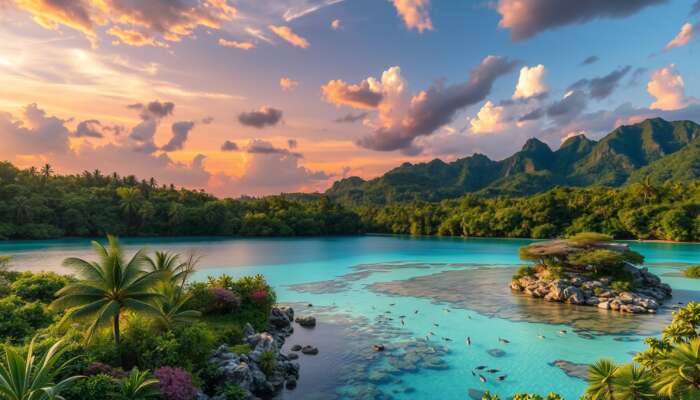
The exploration of terrain types in Belize reveals a rich tapestry of landscapes. These landforms, including mountains, plains, and coastal areas, are shaped by geological processes. For instance, the majestic Maya Mountains rise dramatically above the surrounding lowlands, influencing local weather and ecosystems. For those interested in history, the Ancient Maya Ruins in Belize offer a fascinating glimpse into the past.
Belize’s coastal plains host rich biodiversity and unique ecosystems. The famous Barrier Reef attracts marine life and tourists alike, showcasing how terrain impacts both nature and economy. Understanding these terrain types allows travelers to appreciate the natural beauty and cultural significance of various regions. For more tips on exploring Belize, visit our Travel & Adventure section. For those seeking a unique experience, consider our Luxury Travel Packages that showcase Belize's stunning coastal plains. For those seeking adventure, check out 5 Exciting Adventures to Experience in Belize’s Rainforest. For an unforgettable experience, consider visiting Actun Tunichil Muknal during your trip to Belize.
Recognizing the relationship between elevation and climate helps travelers understand Belize’s diverse environments. The Amazon Rainforest provides a stark contrast to the coastal areas, demonstrating how geography affects biodiversity and human activities.
- Terrain types dictate local climate and biodiversity
- Mountains influence weather patterns
- Coastal areas support tourism and fishing industries
- Elevation changes affect agricultural practices
What Factors Influence Location Data in Belize?
Understanding location data is critical for navigating Belize effectively. Geographic coordinates, expressed in latitude and longitude, provide a universal framework for identifying any point in Belize. Natural boundaries like rivers and mountains not only define political borders but also hold cultural significance.
For example, the Belize River has historically shaped settlement patterns, serving as a vital resource for agriculture and trade. This synergy between location data and geography highlights how humans interact with their environments.
Moreover, location data informs urban planning and resource management. Analyzing demographic trends alongside geographic data uncovers disparities and guides sustainable practices, ensuring that communities thrive harmoniously.
- Coordinates help identify key locations
- Natural boundaries shape cultural identity
- Urban planning relies on location data
- Resource management benefits from geographic analysis
How Do Environmental Patterns Emerge in Belize?
What Are the Key Processes Shaping Environmental Patterns?
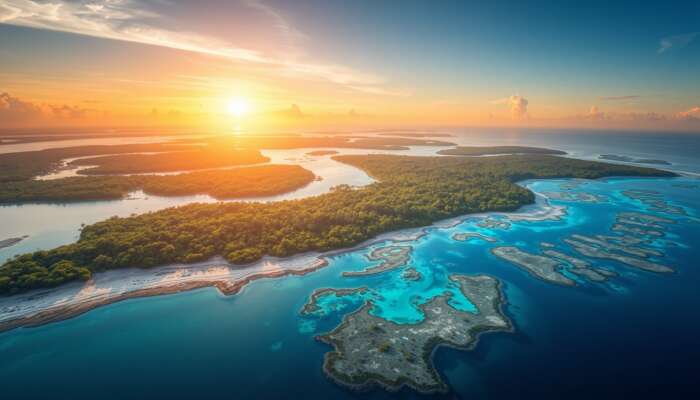
Environmental patterns in Belize emerge from complex interactions among various processes. These include weather cycles, climate variations, and resource distribution. Understanding these processes reveals how they govern ecological changes.
For instance, the El Niño Southern Oscillation affects rainfall patterns across Belize, influencing agriculture and water availability. This understanding is crucial for disaster preparedness and ecological conservation.
Recognizing how resources are distributed can impact human development and biodiversity. Awareness of resource availability fosters responsible management, ensuring that Belize’s natural treasures are preserved for future generations.
- Weather cycles affect agricultural productivity
- Climate variations influence biodiversity
- Resource distribution impacts community health
- Human activities can exacerbate environmental changes
What Are the Core Methods for Location Analysis in Belize?
How Can We Identify Country Locations Effectively?
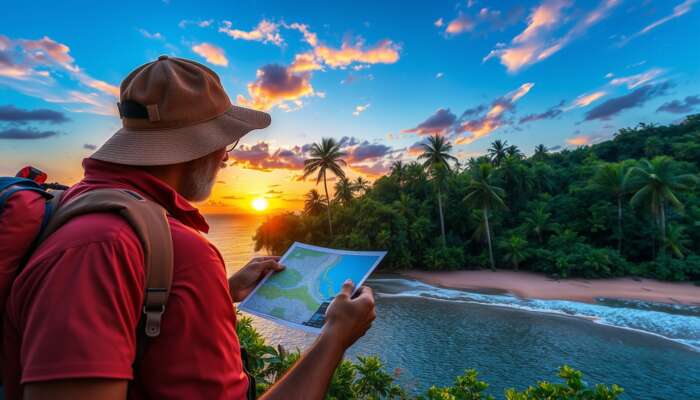
Identifying locations in Belize requires essential location analysis methods applicable across various scenarios. Techniques such as map reading, GPS technology, and geospatial information systems (GIS) are fundamental tools for navigating the country.
Maps provide crucial visual representations of terrain and political borders, aiding both education and practical applications. For example, understanding the topography of Belize helps travelers plan their itineraries effectively.
GPS technology has revolutionized navigation, enabling real-time location tracking. This enhances efficiency in logistics and emergency responses, showcasing the importance of accurate location analysis.
- Maps aid in educational and practical applications
- GPS enhances navigation and efficiency
- GIS supports urban planning and resource management
- Teaching these methods boosts spatial awareness
What Are the Essential Tools for Spatial Understanding?
To visualize and interpret geographic data effectively, several essential tools for spatial understanding are available. These tools include traditional maps, satellite imagery, 3D modeling software, and mobile mapping applications.
Satellite imagery provides high-resolution views, allowing for land use analysis and tracking changes over time. This technology is vital for monitoring environmental degradation in Belize.
3D modeling software assists planners in simulating projects before implementation, ensuring environmentally sound designs. Mobile mapping applications empower users to access location data on-the-go, enhancing navigation.
- Satellite imagery tracks land use changes
- 3D modeling aids in project planning
- Mobile apps enhance navigation experiences
- Augmented reality improves user engagement
What Are the Benefits of Studying Position Details in Belize?
How Does Understanding Position Impact Navigation?
Studying position details yields significant benefits, enhancing our comprehension of geographic contexts. Recognizing elements such as cardinal points and distances allows individuals to navigate Belize confidently.
This understanding influences economic decisions, such as optimizing delivery routes for businesses. Improved spatial awareness leads to better travel planning, ensuring efficient use of time and resources.
Additionally, position details are crucial for community planning and disaster management. Analyzing population density and geographic features helps design infrastructures that meet local needs while mitigating disaster risks.
- Enhanced navigation improves travel experiences
- Economic decisions benefit from geographic awareness
- Community planning addresses local needs
- Disaster management relies on spatial analysis
How Does Geography Influence Belize’s Economy?
What Are the Geographic Factors Driving Economic Growth?
Belize’s unique geography significantly shapes its economic landscape. The country’s coastline along the Caribbean Sea, home to the Barrier Reef, positions it as a prime destination for tourism. This natural asset drives economic growth while promoting sustainable practices.
The rich rainforests of Belize offer opportunities for sustainable agriculture. The cultivation of crops such as cacao and citrus fruits supports local livelihoods and connects Belize to global markets.
Moreover, Belize’s geographic features create both challenges and opportunities for diversification. Balancing development with conservation is crucial for fostering a resilient economy that thrives in a changing global landscape.
- Tourism drives economic growth through natural attractions
- Sustainable agriculture supports local communities
- Geography creates challenges for economic diversification
- Conservation efforts are essential for long-term sustainability
What Are the Research-Backed Benefits of Geographic Understanding?
How Can Feature Identification Improve Planning?
Feature identification benefits from various researched techniques that enable reliable recognition of geographical elements. Techniques like geospatial analysis, field observation, and participatory mapping enhance understanding and decision-making.
Geospatial analysis utilizes advanced software to interpret geographic data, revealing patterns that may not be evident through traditional observation. This technique is essential for monitoring urban expansion and environmental changes.
Field observation complements these analyses by providing on-the-ground insights, enriching data interpretation. Participatory mapping engages community members, fostering a sense of ownership and responsibility.
- Geospatial analysis reveals hidden patterns
- Field observation enriches local context
- Participatory mapping empowers communities
- Combined techniques improve planning and resource management
What Are the Advantages of Universal Mapping?
Universal mapping offers numerous researched advantages that enhance navigation and spatial awareness. These advantages are evident in urban planning, disaster management, and resource allocation.
One key advantage is the ability to visualize complex spatial relationships intuitively, aiding understanding of transportation networks, land use, and population densities. Urban planners can identify areas in need of development, fostering equitable communities.
Moreover, universal mapping facilitates disaster management by identifying vulnerable areas and critical resources. Mapping evacuation routes enhances community preparedness, underscoring the importance of geographic awareness in fostering resilience.
- Visualizing spatial relationships aids understanding
- Disaster management relies on effective mapping
- Collaboration among stakeholders enhances geographic interventions
- Universal mapping supports sustainable development goals

Liam Cartwright is an avid traveler and author specializing in Belize travel guides. With a passion for uncovering hidden gems and sharing local insights, he captures the essence of Belize’s vibrant culture, stunning landscapes, and diverse activities. Through his writing, Liam aims to inspire adventure seekers and empower travelers to explore the beauty of Belize with confidence and curiosity.
I appreciate how XamanekBelize highlights the importance of geographical understanding when traveling in Belize. It truly makes a difference when you’re aware of the unique ecosystems—from the lush jungles to the stunning coastline—during your travels. I’ve found that research into a destination’s geography can really shape the kind of experiences you seek out. For example, knowing about the barrier reef prompted me to try snorkeling for the first time, and it was a life-changing experience.
I couldn’t agree more about the importance of geographic understanding in Belize! It’s like trying to navigate a treasure map without knowing what X marks the spot! 🌍 Plus, with all the diverse landscapes—from jungles to coral reefs—each area has its own vibe. I remember visiting a little village on the coast, thinking I could just stroll down to the beach. Turns out the path was more of an obstacle course thanks to some enthusiastic iguanas and a few unintended detours!
Understanding the unique geography of Belize truly transforms the travel experience. I remember my first visit, where the contrast between the lush jungles and the pristine coastline struck me deeply. Each landscape tells a story, and this connection enhances our appreciation of the natural beauty and cultural richness you’ve highlighted.
I completely resonate with your emphasis on geographic understanding when exploring Belize. The diverse ecosystems, from rainforest to coral reefs, offer such a rich tapestry of experiences. On my last trip, I ventured to the Cockscomb Basin Wildlife Sanctuary and was amazed by how the terrain influenced both wildlife and the local conservation efforts. It really highlighted for me the importance of knowing where we are and how our actions impact these beautiful landscapes.
Your emphasis on geographic understanding as a key element of enriching travel experiences in Belize resonates deeply with me. The notion that a traveler’s journey can be significantly enhanced by comprehending the unique topographies and cultural landscapes is often overlooked. In my travels, I’ve found that taking time to learn about the local geography not only adds depth to my experience but also fosters a sense of respect for the places I visit.
Your insight into the importance of geographic understanding when traveling in Belize really resonates with me. As someone who has spent significant time exploring various destinations, I’ve found that grasping a region’s geography not only influences the logistics of travel but also enriches the entire experience. Belize’s unique landscapes—from its stunning barrier reef to the lush jungles—are not just beautiful backdrops; they’re integral to its culture and history.
Your insights on the importance of geographic understanding resonate deeply with me. Belize’s diverse landscapes—ranging from lush rainforests to stunning coastlines—truly offer a unique backdrop for exploration. I’ve found that having a grasp of the geography not only enhances our appreciation of the natural beauty but also enriches our cultural interactions.
I absolutely resonate with the idea that geographic understanding is pivotal when exploring a place like Belize. The country boasts such rich biodiversity and cultural heritage that having a solid grasp of its geography can profoundly enhance the travel experience. For instance, when I visited Belize last year, I was struck by how different the landscapes were from one region to another. The jungles around San Ignacio felt like a world away from the serene beaches of Ambergris Caye.