Belize sits on the eastern coast of Central America, facing the Caribbean Sea; its landscape ranges from Caribbean reef and coastal plains to the inland Maya Mountains and broad lowlands.
Quick Answer & Key Facts
- Where Eastern Central America, on the Caribbean coast between Mexico (north) and Guatemala (west and south).
- Capital & Size Belmopan; area ≈ 22,966 km² (about the size of New Jersey).
- Major Features Belize Barrier Reef (Caribbean), coastal plains, lowland tropical forests, and the Maya Mountains inland.
For regional context and related mapping analysis see the Geographic Insights category on XamanekBelize — a useful next step if you want deeper maps and datasets: Geographic Insights.
Coordinates, Borders And A Compact Map Box
| Latitude / Longitude | 16.5° N, 88.7° W (approx.) |
| Borders | Mexico (N), Guatemala (W & S), Caribbean Sea (E) |
| Time Zone | Central Standard Time (UTC−6) |
How Belize’s Geography Shapes Travel And Nature
Belize’s coastal reef and cayes attract snorkeling and diving; inland lowlands and the Maya Mountains host protected forest, wildlife corridors and Mayan archaeological sites. These distinct zones affect weather, access, and how you plan time on the coast versus the interior.
- Coastal travel (Ambergris Caye, Placencia) is best for reef activities; inland (Cayo, Mountain Pine Ridge) for caves, ruins and rainforest.
- Roads can be limited in southern and interior districts—factor extra travel time when moving between zones.
- Conservation areas and marine reserves protect biodiversity—book certified guides for reef and cave visits.
Decide What To Do Next — Short Decision Table
Terrain, Climate And Environmental Notes
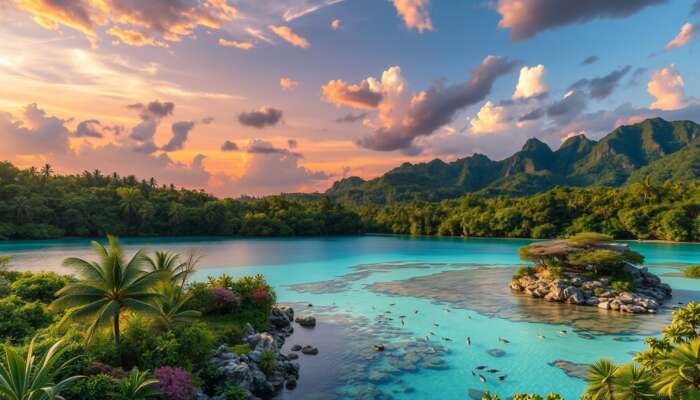
Belize includes low-lying coastal plains and lagoons, a barrier reef offshore, extensive tropical forests, and the Maya Mountains (peaks to ~1,120 m). Rainfall varies: the coastline and cayes are drier than the southern and interior rainforests. Seasonal weather patterns (including occasional hurricanes in the wet season) influence when to schedule reef diving or inland exploration—see our month-by-month weather guide for timing: Belize weather by month.
Practical Mapping And Navigation Tools
Maps, GPS and GIS are the standard tools: use updated road maps for inland drives, and certified dive operators’ charts for reef sites. If you want a readable primer on Belize’s place between regions, our explainer covers the question “Is Belize Central American or Caribbean?”: Belize: Central America or Caribbean?
Conservation And The Economy — Quick Context
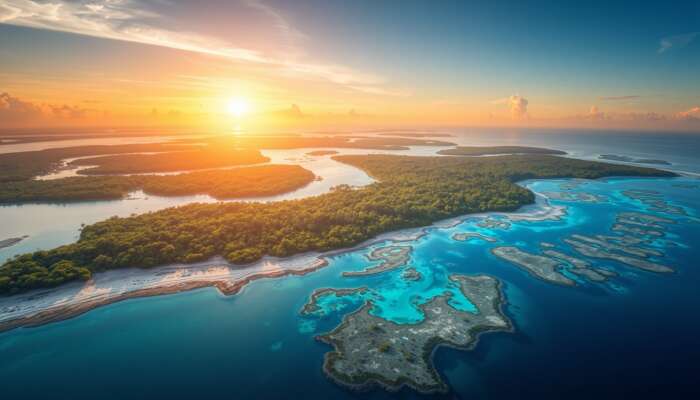
The Barrier Reef and protected forests are economic anchors: tourism (diving, wildlife, cultural sites) and sustainable agriculture (cacao, citrus) matter to local livelihoods. Responsible travel supports conservation fees and certified local guides—look for operators listed in our eco and adventure pages: Educational eco-tours and Adventure tours.
Where To Go Next (Short CTA)
Want More Maps, Datasets And Travel-Ready Advice?
Start with the site’s Geographic Insights category for deeper geographic pieces and the full location guide for practical travel logistics: Geographic Insights · Belize location & travel guide.
Frequently Asked Questions
What Is The Geography Of Belize?
Belize combines Caribbean coastline and barrier reef, broad coastal plains, interior lowland rainforest, and the Maya Mountains inland—each zone has distinct ecosystems and visitor experiences.
What Are Five Quick Facts About Belize?
- It borders Mexico (N) and Guatemala (W & S) and faces the Caribbean Sea (E).
- The Belize Barrier Reef is the world’s second-largest barrier reef.
- Belmopan is the capital; Belize City is the largest commercial center.
- Major ecosystems: reef, mangroves, wetlands, lowland rainforest and mountains.
- English is the official language, making travel logistics simpler for many visitors.
Is Belize Safe For Americans To Visit Right Now?
Safety varies by area; popular tourist zones are generally well-patrolled, but standard precautions apply—check our safety guide for up-to-date advice before travel: Belize safety guide.
Monetization note: XamanekBelize partners with local operators for tours and accommodation bookings; affiliate links may appear on destination pages to help you compare options.

Liam Cartwright is an avid traveler and author specializing in Belize travel guides. With a passion for uncovering hidden gems and sharing local insights, he captures the essence of Belize’s vibrant culture, stunning landscapes, and diverse activities. Through his writing, Liam aims to inspire adventure seekers and empower travelers to explore the beauty of Belize with confidence and curiosity.
I appreciate how XamanekBelize highlights the importance of geographical understanding when traveling in Belize. It truly makes a difference when you’re aware of the unique ecosystems—from the lush jungles to the stunning coastline—during your travels. I’ve found that research into a destination’s geography can really shape the kind of experiences you seek out. For example, knowing about the barrier reef prompted me to try snorkeling for the first time, and it was a life-changing experience.
I couldn’t agree more about the importance of geographic understanding in Belize! It’s like trying to navigate a treasure map without knowing what X marks the spot! 🌍 Plus, with all the diverse landscapes—from jungles to coral reefs—each area has its own vibe. I remember visiting a little village on the coast, thinking I could just stroll down to the beach. Turns out the path was more of an obstacle course thanks to some enthusiastic iguanas and a few unintended detours!
Understanding the unique geography of Belize truly transforms the travel experience. I remember my first visit, where the contrast between the lush jungles and the pristine coastline struck me deeply. Each landscape tells a story, and this connection enhances our appreciation of the natural beauty and cultural richness you’ve highlighted.
I completely resonate with your emphasis on geographic understanding when exploring Belize. The diverse ecosystems, from rainforest to coral reefs, offer such a rich tapestry of experiences. On my last trip, I ventured to the Cockscomb Basin Wildlife Sanctuary and was amazed by how the terrain influenced both wildlife and the local conservation efforts. It really highlighted for me the importance of knowing where we are and how our actions impact these beautiful landscapes.
Your emphasis on geographic understanding as a key element of enriching travel experiences in Belize resonates deeply with me. The notion that a traveler’s journey can be significantly enhanced by comprehending the unique topographies and cultural landscapes is often overlooked. In my travels, I’ve found that taking time to learn about the local geography not only adds depth to my experience but also fosters a sense of respect for the places I visit.
Your insight into the importance of geographic understanding when traveling in Belize really resonates with me. As someone who has spent significant time exploring various destinations, I’ve found that grasping a region’s geography not only influences the logistics of travel but also enriches the entire experience. Belize’s unique landscapes—from its stunning barrier reef to the lush jungles—are not just beautiful backdrops; they’re integral to its culture and history.
Your insights on the importance of geographic understanding resonate deeply with me. Belize’s diverse landscapes—ranging from lush rainforests to stunning coastlines—truly offer a unique backdrop for exploration. I’ve found that having a grasp of the geography not only enhances our appreciation of the natural beauty but also enriches our cultural interactions.
I absolutely resonate with the idea that geographic understanding is pivotal when exploring a place like Belize. The country boasts such rich biodiversity and cultural heritage that having a solid grasp of its geography can profoundly enhance the travel experience. For instance, when I visited Belize last year, I was struck by how different the landscapes were from one region to another. The jungles around San Ignacio felt like a world away from the serene beaches of Ambergris Caye.
I completely resonate with your viewpoint on the importance of geographic understanding when exploring Belize. It’s fascinating how the diverse landscapes—from the stunning coral reefs in the Belize Barrier Reef to the lush jungles and Mayan ruins—can drastically change a travel experience. I remember my own trip there, where the contrast between the serene beaches of Caye Caulker and the vibrant nightlife of Belize City made me appreciate the country’s versatility.
I totally get what you’re saying about the importance of understanding Belize’s geography before diving in. I remember planning my trip there and feeling overwhelmed by the variety of landscapes—from the stunning coastline to the lush jungles. Using a guide like Xamanek helped me narrow down my itinerary and really focus on what I wanted to experience, like exploring the ancient Mayan ruins and snorkeling in the Caribbean.
It sounds like you had a fantastic experience! Belize’s diversity is something special. The blend of natural beauty and rich history makes it a unique spot. Those Mayan ruins really have a way of transporting you back in time, don’t they? And snorkeling in the Caribbean is like stepping into another world with all that vibrant marine life.
It’s interesting to hear how your planning journey unfolded. Belize really does offer this rich tapestry of experiences, doesn’t it? When you consider its diverse landscapes—from the serene beaches to the thick jungles—it can feel like a world unto itself, each part calling out with its own adventures. I can relate to that feeling of being overwhelmed. Sometimes, the sheer number of options might distract you from what really resonates with your interests.
I completely agree about the importance of understanding Belize’s geography before embarking on a trip. The diverse ecosystems, from the vibrant coral reefs to the lush rainforests, offer such unique experiences that can significantly shape one’s itinerary.
It’s fascinating how understanding geography can drastically alter the travel experience, especially in a diverse destination like Belize. I remember my own trip there a few years ago and how the varying landscapes—from the lush jungles to the stunning coastlines—shaped the adventure. One highlight was visiting Caye Caulker, where the laid-back atmosphere felt worlds apart from the bustling city of Belize City.
I completely agree that a solid understanding of Belize’s geography can transform a travel experience. When I visited last year, I was amazed at how different regions, like the Caribbean coast and the jungles of the west, offer such varied adventures—each needing its own approach. Exploring places like the Great Blue Hole or the ancient Mayan ruins, I found that knowing the geography not only helped with planning but also deepened my appreciation for the local culture and ecology.
I completely resonate with the idea that understanding Belize’s geography is crucial for maximizing the travel experience. Each region offers its own unique vibe—from the lush jungles of the Cayo District to the breathtaking Barrier Reef. When I visited, I found that knowing which areas align with my interests really enhanced my adventure. For instance, the Maya ruins in the north provide not only a glimpse into an ancient civilization but also stunning landscapes that are unlike anything else.
I really appreciate how you highlighted the importance of geographic understanding when planning a trip to Belize. It’s so true that the country’s unique landscapes—from the lush rainforests to the stunning barrier reef—can greatly influence our travel experiences. I remember when I visited Belize, I was shocked at how different the various regions were, each offering its own distinct charm and activities. For example, while San Pedro on Ambergris Caye is all about beach life and diving, heading inland to places like the Cayo District opens up a whole world of Mayan ruins and hiking adventures.
It’s fascinating how geographic understanding can significantly enhance our travel experiences, especially in a place as diverse as Belize. I recently explored the lush landscapes of the Cayo District, and the variation in scenery—from dense jungles to serene rivers—really highlighted the importance of having a geographical context in mind. It’s not just about the destinations; it’s about how these different environments shape the adventure you embark on.
It’s fascinating to see how critical geographic understanding is for travelers, especially in a place as rich and diverse as Belize! I’ve always thought that a destination’s geography not only shapes its physical attractions but also its culture and the very essence of its people. For example, Belize’s varied landscapes—from lush jungles to stunning coastlines—offer such unique opportunities for adventure, like snorkeling in the barrier reef or exploring ancient Mayan ruins hidden deep in the rainforest.
Your insights into the importance of geographic understanding in planning a trip to Belize really resonate with me. I remember my first visit—prior to that, I hadn’t fully appreciated how much the geography influenced the experiences available. From the stunning barrier reef to the lush jungle inland, each area offers such distinct adventures.
Understanding the geography of Belize truly enhances the travel experience, as it offers a deeper appreciation for both the natural beauty and the rich cultural heritage of the country. For instance, the way the coastal areas blend into dense jungles and ancient Mayan ruins creates a unique tapestry that invites exploration from both nature lovers and history enthusiasts.
Ah, Belize! The land where the Caribbean kisses the jungle, and the only thing more vibrant than the flora and fauna is the local humor. I mean, you’ve got the Belize Barrier Reef, which sounds like a borderline Olympic swimming event for fish, and the Maya Mountains, which probably host more ancient secrets than a nighttime gossip session in a bustling village market.
Your overview of Belize’s geography and planning considerations really highlights the unique position the country occupies both geographically and culturally. I find it particularly fascinating how the Belize Barrier Reef not only attracts tourists but also plays a crucial role in marine conservation. The balance between eco-tourism and preserving local ecosystems is an ongoing conversation surrounding travel in such biodiverse areas.
I love how you’ve highlighted the diverse landscapes of Belize! It’s fascinating how you can go from snorkeling along the Belize Barrier Reef to hiking in the Maya Mountains in just a day. When I visited a few years ago, I found the local culture just as captivating as the natural beauty. The blend of influences from the Maya, Garifuna, and Mestizo communities creates such a unique vibe.
Your insights on planning a trip to Belize resonate with me deeply, especially the emphasis on carefully checking the requirements and confirming terms in writing. It’s incredible how such seemingly small details can significantly enhance our overall travel experience. I remember when I visited Belize a couple of years ago, the planning phase felt almost as exciting as the trip itself. The vibrant culture, breathtaking landscapes, and rich history of the country made all the logistical headaches worth it in the end.
I really appreciate how you laid out the key facts about Belize—it’s such a unique place that often gets overshadowed by its neighbors. I recently spent some time there, and it struck me how diverse the landscapes are, from the stunning barrier reef to the lush mountains. It’s one of those places where you can be appreciating the vibrant marine life in the morning and then exploring ancient Mayan ruins in the afternoon.
I appreciate the detailed overview of Belize! It sounds like a fantastic destination for those looking to immerse themselves in nature and rich culture. The diversity in landscapes, from the Belize Barrier Reef to the Maya Mountains, really highlights how much there is to explore.
It’s fascinating to read about the diverse landscapes and cultural richness of Belize, especially as a gateway to both relaxing beach experiences and adventurous inland explorations. The mention of the Belize Barrier Reef really resonated with me; it’s not just a beautiful sight but also a crucial ecosystem that supports biodiversity. It reminds us of the importance of sustainable tourism and conservation efforts — as travelers, we have a responsibility to protect such natural treasures for future generations.
Your insights into planning an itinerary for Belize really highlight the crucial aspects of travel that often get overlooked in the excitement of exploration. I found your emphasis on understanding the requirements and trade-offs particularly resonant. In our fast-paced world, it’s easy to rush into travel decisions without thoroughly considering how they align with one’s overall journey and personal constraints.
The emphasis on understanding the requirements and potential trade-offs before planning a trip to Belize is indeed crucial. It’s fascinating how such a small country encapsulates diverse ecosystems and cultural heritage, yet many travelers overlook this preparatory step.
The way you describe Belize really brings the landscape to life! I love how its diverse ecosystems offer something for every type of traveler. The Belize Barrier Reef is a must-see; snorkeling there is completely immersive—the colors and marine life are beyond what you can imagine!
The insights shared about planning a trip to Belize are indeed vital for anyone looking to explore this diverse destination. The emphasis on understanding the requirements and constraints before making commitments resonates well, especially as travel experiences can vary significantly based on individual expectations and priorities.