
If your trip centers on reefs, small‑group marine conservation, and easy English‑language logistics, Belize is often the better pick; if you want dense cloud forests, volcano landscapes, and highly developed national‑park services, Costa Rica leads. For a deeper side‑by‑side, see the site’s main comparison full Belize vs Costa Rica comparison.
Quick Decision: Who Should Pick Which
| Best pick: Belize | If you prioritize barrier‑reef snorkeling/diving, boutique community‑run eco‑tours, English‑language ease, and lower per‑day costs. |
| Best pick: Costa Rica | If you want cloud‑forest canopy walks, volcanoes, clearly signed parks, and a wider range of land‑based eco‑lodges and guided research options. |
Ready to plan? See our suggested Belize itineraries and booking options on the main comparison page or contact us to build a custom Belize eco‑itinerary.
At A Glance: Practical Comparison
Landscapes And Biodiversity — What You’ll Actually See
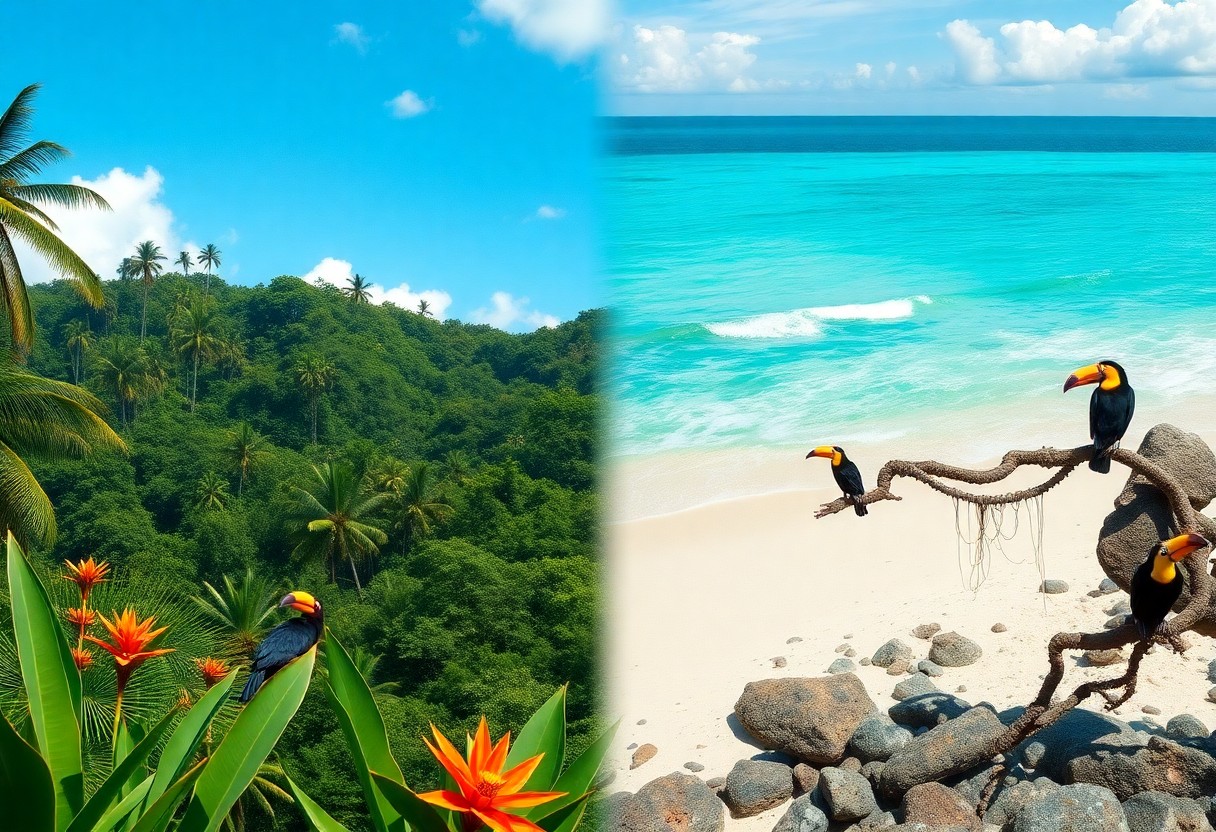
Belize concentrates marine diversity in a narrow coastal band: the Belize Barrier Reef (a UNESCO site) runs about 300 km and delivers world‑class snorkeling and diving in close proximity to jungle experiences inland. For detailed dive and snorkeling spots, our Belize Barrier Reef snorkeling guide lists top sites and typical marine species.
Costa Rica’s strength is altitude: cloud forests such as Monteverde create persistent mist, unique epiphyte communities, and a high chance of seeing specialty birds (e.g., quetzals) on canopy walks. If your priority is canopy research, guided night walks, and a broad range of structured land tours, Costa Rica’s infrastructure makes those easier to access.
Eco‑tourism Infrastructure And Conservation Approaches
Belize favors smaller, community‑driven conservation programs—particularly around marine protected areas and reef restoration. That local approach often means fewer tourists on any given day, more direct community benefit, and an authentic conservation narrative on each tour. For organized educational experiences, see our educational eco‑tours page.
Costa Rica has national policy advantages—large contiguous parks, a long‑running conservation brand, and established eco‑lodges that fund research and reforestation programs. If you want heavily regulated trails, clear visitor centers, and larger research programs, Costa Rica leads.
Wildlife Encounters: What’s Common, What’s Rare
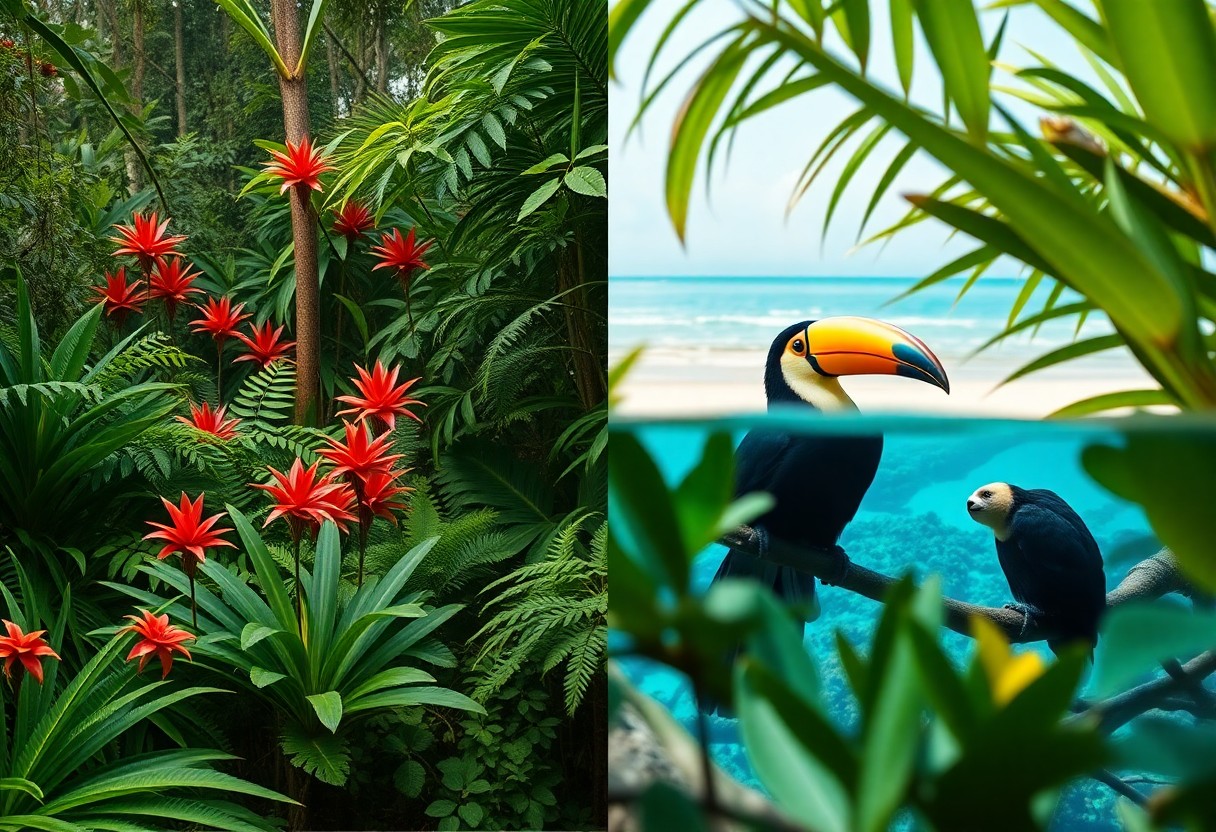
Belize is proportionally stronger for marine megafauna encounters: whale‑shark season and reef biodiversity are prime reasons divers choose Belize. On land, protected areas such as Cockscomb Basin offer the chance—rare but possible—to track jaguars and to photograph toucans and colorful understory birds. Read more on terrestrial sightings at our wildlife encounters guide.
Costa Rica’s strengths are visible primates (sloths, howler monkeys), amphibian diversity, and birding in cloud forests. For photographers focused on birds and canopy species, Costa Rica’s variety of accessible reserves is a strong draw.
Practical Planning: Budget, Language, And Timing
- Budget Expect Costa Rica to trend higher on lodge and guided‑tour pricing; Belize offers more flexible price points from budget guesthouses to high‑end resorts.
- Language Belize’s official language is English, which simplifies logistics for many North American travelers; Costa Rica is predominantly Spanish.
- When To Book Peak dry season (Dec–Apr) is best for both reef clarity (Belize) and forest trekking (Costa Rica). For lower crowds and good marine visibility, consider shoulder months like Nov or May.
We recommend using this article as a Belize‑leaning planner; for a comprehensive side‑by‑side and booking options, open the main comparison or request a custom itinerary.
Conclusion — Pick By Priority
Choose Belize if your trip centers on marine wildlife, barrier‑reef snorkeling/diving, and intimate, community‑run eco experiences with English‑language ease. Choose Costa Rica if you want dense cloud forest biodiversity, well‑established park infrastructure, and a wider selection of land‑based research or lodge programs. Either way, thoughtful timing and a local operator will multiply the value of your eco‑adventure.
Frequently Asked Questions
Is Costa Rica Or Belize More Eco‑friendly?
Both prioritize conservation but differ in scale: Costa Rica’s national systems operate at a national policy level; Belize’s work is often community‑led and marine‑focused. The better choice depends on whether you want land‑based park networks or hands‑on reef conservation.
Is Belize Safer Or More Affordable Than Costa Rica?
Affordability: Belize typically offers lower per‑day costs across many categories. Safety: both countries have safe tourist areas and some higher‑risk urban zones; standard travel precautions apply. Check our local safety guide for Belize for specifics before travel.
When Should I Book To Get The Best Eco‑experience?
Book peak dry‑season travel (Dec–Apr) well in advance for popular reef or cloud‑forest tours; shoulder months (Nov, May) can offer lower prices and good conditions with fewer crowds. Use the main comparison page to check sample itineraries and current availability.
Related reading: Belize Barrier Reef snorkeling guide, Wildlife encounters, and our educational eco‑tours page for immersive options.

Liam Cartwright is an avid traveler and author specializing in Belize travel guides. With a passion for uncovering hidden gems and sharing local insights, he captures the essence of Belize’s vibrant culture, stunning landscapes, and diverse activities. Through his writing, Liam aims to inspire adventure seekers and empower travelers to explore the beauty of Belize with confidence and curiosity.
I totally agree that both Belize and Costa Rica offer such unique experiences for eco-tourism seekers. I recently visited Belize, and the barrier reef was just incredible—snorkeling there felt like swimming in an aquarium filled with vibrant marine life. The diversity of fish and corals was nothing short of mesmerizing.
It sounds like you had an incredible time in Belize! The barrier reef really is a gem, isn’t it? Snorkeling there is like stepping into another world. The variety of marine life can be almost overwhelming — every time you glance beneath the surface, it feels like you’re discovering something new.
It’s fascinating to see the growing recognition of Belize as a vibrant contender in the eco-tourism landscape! I’ve had the privilege of visiting both Costa Rica and Belize, and it’s incredible how each destination captures the essence of what it means to connect with our planet’s natural wonders.
You’re spot on when it comes to recognizing how Belize is carving out its own niche in the eco-tourism scene! It’s such a unique place, isn’t it? With the barrier reef, lush jungles, and an array of wildlife, it’s really a dream for anyone looking to immerse themselves in nature. I think the blend of cultures there also adds to the experience—there’s this wonderful mesh of Garifuna, Mestizo, and Maya influences that shape not just the scenery but also the flavors, sounds, and stories you encounter.
Your insights into the rising prominence of Belize as an eco-tourism destination alongside Costa Rica are both timely and thought-provoking. As someone who has traveled extensively through both countries, I can appreciate the nuanced differences that make each destination unique in terms of biodiversity and ecological experiences.
The differences you mention between Belize and Costa Rica are indeed fascinating and worth exploring further. Both countries have their own distinct landscapes, ecosystems, and cultural experiences that shape the eco-tourism they offer.
I’m glad you found the insights valuable! If you’re looking to explore more about the unique offerings of Belize and Costa Rica, check out this resource for an in-depth look at their eco-tourism treasures.
https://xamanekbelize.com/nature-and-wildlife-encounters
You’ve highlighted some intriguing points about Belize and Costa Rica. Each country indeed offers a unique tapestry of experiences, from Belize’s stunning barrier reefs and Mayan ruins to Costa Rica’s lush rainforests and commitment to sustainability.
If you’re curious about how Belize stacks up against the Bahamas in terms of vacation vibes, I found some interesting insights that highlight what each destination brings to the table.
‘Belize Vs. The Bahamas: Which Vacation Fits Your Travel Style?’
https://xamanekbelize.com/belize-vs-the-bahamas-best-vacation-choice/.
It’s fascinating to see how Belize is gaining recognition as a rival to Costa Rica in the realm of eco-tourism. Both destinations have their unique allure and incredible offerings that cater to adventurous spirits and nature enthusiasts alike. I’ve had the pleasure of experiencing Costa Rica’s rainforests firsthand, specifically in places like Monteverde, where the lush greenery and diverse ecosystems were simply mesmerizing. The chance encounters with sloths, toucans, and vibrant orchids left a lasting impression on me, one that sparked an even deeper appreciation for our planet’s biodiversity.
I love the comparison between Belize and Costa Rica! I’ve always been drawn to Costa Rica for its biodiversity, especially the rainforests and wildlife. Last year, I hiked through Corcovado National Park and was blown away by the sheer beauty and the variety of species. But I can see why Belize is gaining traction; the barrier reef is just incredible! I snorkeled there a while back, and the underwater life felt like a different world altogether.
It’s awesome to hear about your experience in Costa Rica! Corcovado National Park is truly a gem—it’s like stepping into a living science book with all the wildlife and diverse ecosystems. I can totally understand the draw of that place; every hike feels like an adventure waiting to unfold.
I’m glad to hear you enjoyed your adventures in both Costa Rica and Belize! If you’re looking to plan your next unforgettable getaway, check out this guide to explore more about the wonders each destination has to offer!
https://xamanekbelize.com/belize-fry-jack-recipe-stepbystep-guide
This is such an intriguing discussion about the eco-tourism scene in Belize and Costa Rica! Having traveled to both countries, I can personally attest to the mesmerizing beauty and biodiversity they offer. What strikes me most is how each destination possesses its unique character while still providing an unforgettable connection to nature.
I’ve always been captivated by the distinct allure of both Costa Rica and Belize. While Costa Rica’s rich biodiversity and commitment to conservation certainly set a high bar, I agree that Belize is rising as a fantastic alternative. I had the chance to visit Belize last summer, and exploring the barrier reef was nothing short of surreal. I remember snorkeling among vibrant coral formations and being greeted by a school of tropical fish—it felt like stepping into another world.
Your exploration of the eco-tourism potential in both Belize and Costa Rica highlights an essential conversation about sustainability and conservation in travel today. While Costa Rica has rightly been celebrated for its pioneering role in eco-tourism, Belize’s ascent is indeed significant, especially given its remarkable biodiversity and cultural richness.
You’ve captured an important aspect of the conversation around eco-tourism, especially regarding the contrasting paths of Belize and Costa Rica. Costa Rica has set a strong precedent with its comprehensive conservation policies and a well-established eco-tourism framework that has been drawing visitors for decades. Their commitment to protecting biodiversity and promoting sustainable practices serves as a valuable model for other nations.
Your observations about eco-tourism in Belize and Costa Rica really resonate with me. It’s intriguing how Costa Rica has established itself as a leading figure in this movement, particularly with its strong focus on sustainability and conservation practices. I recently read about their extensive national park systems and initiatives aimed at protecting all kinds of ecosystems—there’s so much we can learn from their approach.
I appreciate your thoughts on the eco-tourism potential in Belize and Costa Rica—it really is a fascinating topic. Costa Rica’s reputation as a pioneer in eco-tourism has set such a high standard, hasn’t it? Their approach to sustainability, like the government’s commitment to becoming carbon neutral, has influenced many other countries looking to balance tourism and conservation.
It’s fascinating to see how the conversation around eco-tourism has evolved, particularly as we highlight emerging destinations like Belize alongside established leaders like Costa Rica. I think there’s something incredibly alluring about the idea of connecting with nature in these diverse environments, each offering unique charms and challenges.
It’s fascinating to see Belize getting recognition as an eco-tourism alternative to Costa Rica. I’ve recently explored both destinations, and each offers such distinctive experiences that truly highlight biodiversity. Belize’s barrier reef, with its incredible marine life, provides a stark contrast to Costa Rica’s lush rainforests where sloths and vibrant birds abound.