British colonial administration left a compact set of institutional choices that still define Belize: a Westminster-style parliament, courts built on English common law, English as the official language, and a centralized civil service that shaped administrative practice. For a concise chronology of independence milestones, see the timeline below and the detailed account on how Belize gained independence.
- Parliamentary Form Westminster institutions shaped party politics, cabinet government and legislative practice.
- Law And Courts English common law traditions anchor judicial interpretation and legal training.
- Language & Education English as the official language structured schooling, administration and regional diplomacy (Why Belize speaks English).
- Civil Service & Administration Centralized bureaucratic norms introduced under colonial rule persist in public-sector organization.
Key Dates And Turning Points
| Year / Period | What changed | Why it matters |
|---|---|---|
| 17th–18th centuries | British territorial claims and settler economy (mahogany, trade). | Creates extractive trade patterns and legal claims shaping property and commerce. |
| 1862 | Formal colony established as British Honduras. | Introduces formal colonial administration and Westminster-derived institutions. |
| 20th century (gradual reforms) | Incremental local governance reforms and development of public institutions. | Builds a professional civil service and legal framework that outlived direct rule. |
| 1981 | Independence and continuation in the Commonwealth. | Constitutional continuity: parliamentary system and Governor-General remain central features. |
Constitutional And Legal Legacy (What Changed First)
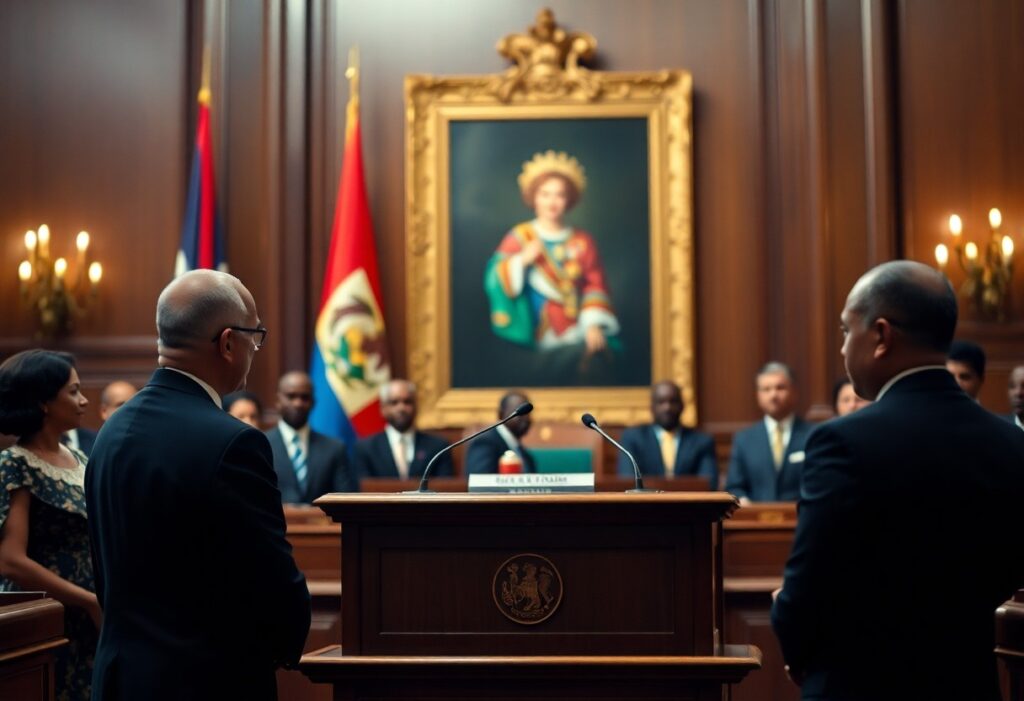
The most durable British contributions were constitutional design and legal method. Belize adopted a parliamentary form of government that places executive power in a Prime Minister and cabinet accountable to an elected legislature. The judiciary follows English common law practice — precedent-based reasoning, similar court hierarchies, and shared legal education traditions.
Those choices influence everyday governance: laws are interpreted through precedent, litigation strategy mirrors British practice, and legal professionals are trained in a common-law tradition, which affects everything from land claims to contract law.
Monarchy, Governor-General And Commonwealth Ties
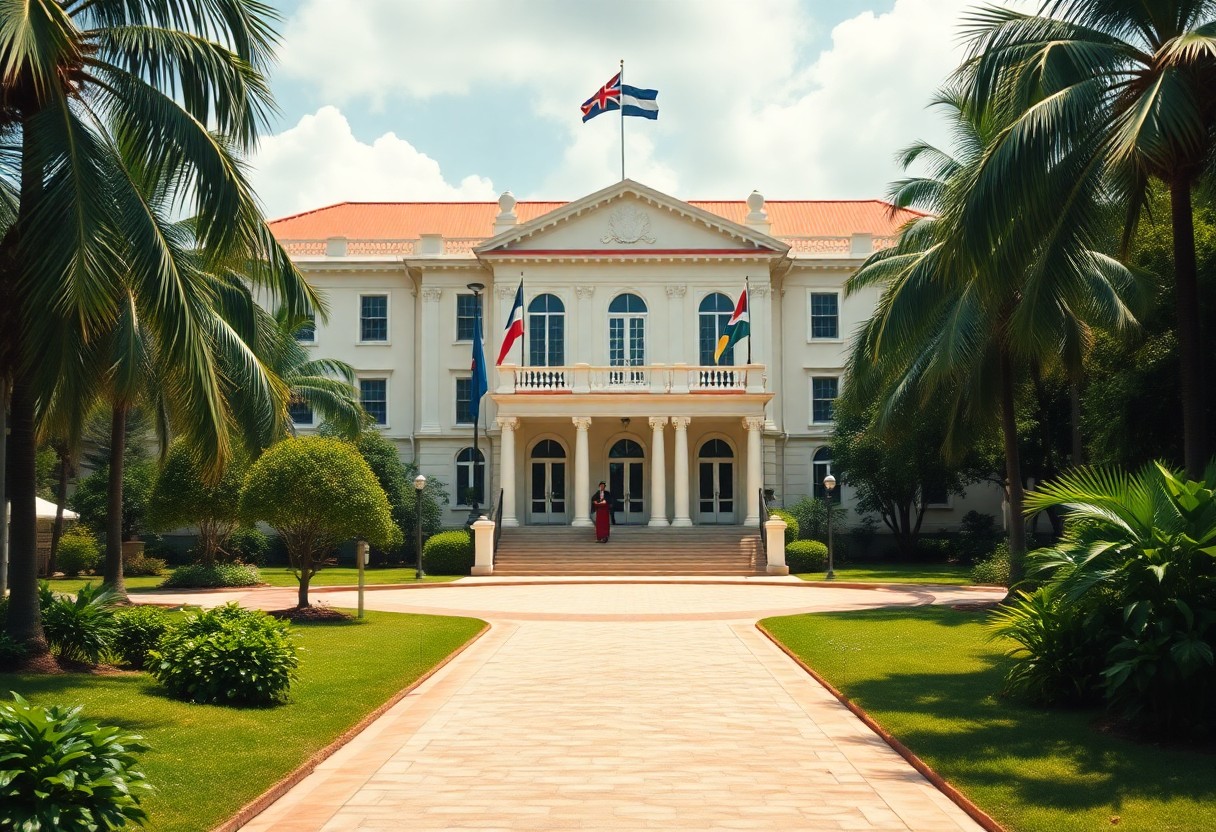
Belize remains a member of the Commonwealth and retained the British monarch as head of state after independence; the Governor-General acts as the monarch’s representative. Practically, this arrangement is mostly ceremonial: appointments, formal assent to legislation and symbolic state functions continue under constitutional rules rooted in Westminster practice.
Language, Education And Cultural Administration
English as the official language is one of the most visible legacies. It standardized administration, facilitated diplomatic ties with Anglophone partners, and shaped curricula in primary and secondary education. For readers interested in the language strand specifically, see the explainer on why Belize speaks English.
Political Identity, Representation And Civil Society
British administrative structures were adapted to a multicultural society—Creole, Garifuna, Maya and Mestizo populations all operate within the same parliamentary and electoral framework. Over time, Belizean political identity blended these inherited institutions with local pressures for inclusion. Civil society and grassroots organizations now play a major role in policy debates, providing accountability and advocacy beyond electoral cycles.
Economic And Administrative Effects
Colonial-era trade patterns (e.g., timber exports) and property regimes shaped early economic development and the public administration that managed it. Those systems created formal property rights, customs procedures, and financial controls that formed the basis for modern economic policy. If you want a fuller view of how colonial-era institutions connect to modern economic sectors, read the site’s analysis of Belize’s economy, agriculture and ecotourism.
What It Means For Citizens Today
Everyday Impacts legal predictability through common law, English-language public services, familiar administrative pathways for permits and land titles, and political debate conducted within party and parliamentary norms inherited from Britain.
For a focused timeline of how Belize moved from colonial status to independence, see our detailed chronology of how Belize gained independence.
To understand institutional effects on trade and tourism policies, read the analysis linking historical institutions to Belize’s modern economy.
(Contextual analysis of trade, agriculture and ecotourism.)
Faqs (Short Answers To Common Questions)
How Did Britain Gain Control Of Belize?
British presence grew from 17th-century settlers and trade interests; formal colonial status followed in 1862, when Britain established legal and administrative control that later evolved into the colony of British Honduras.
Is Belize Still Governed By The British?
No — Belize is an independent sovereign state (since 1981) though it remains a Commonwealth realm with the British monarch as ceremonial head of state, represented by a Governor-General.
When Did Belize Become Independent?
Belize achieved independence from Britain on September 21, 1981; the post-independence constitution retained many Westminster-derived structures.
What Was Belize Called Under British Rule?
Before independence, Belize was officially known as British Honduras.
For readers focused on travel or social context: the British institutional legacy makes it easy for English-speaking visitors to navigate government services and education-based cultural sites—see our travel planning hub and resources across the site for practical tips and local context.
See also: How Belize gained independence — key milestones and Why Belize speaks English.

Benjamin Turner is a passionate travel writer specializing in exploring the beauty and diversity of Belize. With a keen eye for detail and a knack for storytelling, he provides readers with insightful guides that encompass everything from the country’s stunning landscapes to its rich cultural heritage. Drawing on his extensive travels throughout Belize, Benjamin aims to inspire fellow adventurers and facilitate immersive experiences for all who seek to discover this tropical paradise.
I’ve always found the transition from British Honduras to Belize to be such a captivating story. It’s like watching a complicated tapestry being woven; each thread represents the diverse influences that have shaped the nation. The remnants of British colonial governance still feel alive in many of the country’s systems today, which raises interesting discussions about identity.
The transition from British Honduras to Belize is a fascinating narrative, isn’t it? That blend of historical influences weaves a complex identity. It’s interesting how the echoes of colonial governance still shape many aspects of life in Belize today. Look at the legal system or education; you can see those British influences clearly. Yet, it’s also heartening to see how Belizeans have embraced their own rich cultures and languages, creating a unique national identity.
“I’m glad you find it fascinating! If you’re curious to delve deeper into this rich tapestry and explore how these threads intertwine in modern Belize, check out this insightful resource.”
https://xamanekbelize.com/belize-zoo
The transition from British Honduras to Belize is indeed a fascinating story, woven with various cultural and historical threads. It’s interesting to consider how the legacy of colonial governance has permeated many facets of Belizean life. For instance, the legal and educational systems still reflect British influences, which can spark debates about national identity and autonomy.
“Absolutely, the rich tapestry of Belize’s history is truly fascinating! If you’re interested in exploring this story further, check out this insightful resource that delves deeper into Belize’s unique journey.”
https://xamanekbelize.com/top-accommodations-guide-for-the-best-hotels-in-belize
What an intriguing dive into Belize’s historical narrative! It’s like peeling an onion—each layer revealing not only the pungency of colonial influence but also the vibrant complexities of Belizean identity that emerge beneath it. I mean, who would’ve thought that a place known for its stunning barrier reef and Mayan ruins was also navigating the waters of a past steeped in British colonialism? It’s almost like the political historical equivalent of lime juice—refreshing on the surface, but with a zesty kick that makes you think twice!
You’ve captured the essence of Belize’s story beautifully. The layers of history really do create a rich tapestry. What’s fascinating is how those colonial influences still echo in the culture today. Take the Garifuna music, for example—it’s a blend of African, Carib, and Arawak influences, showcasing that resilience and creativity in the face of a challenging past.
It’s intriguing to see how the legacy of colonialism shapes Belize’s modern governance. The duality of having British parliamentary traditions alongside indigenous perspectives creates a unique fusion. I often think about how this tension plays out in everyday politics—does it foster a truly representative system, or are there still remnants of colonial imposition affecting decision-making? It’s similar to what we see in other former colonies where colonial structures persist, sometimes hindering progress toward genuine self-determination. I’m curious to hear more about how Belize is navigating that balance today and whether there are efforts to integrate more local governance models. What do you think are the most critical changes needed for Belize to fully embrace its independence?
It’s intriguing to consider how the echoes of colonial governance still influence Belize’s political landscape today. The transition from British Honduras to an independent Belize illustrates the complexities of post-colonial identity and governance. I’ve often thought about how these colonial roots intersect with Belize’s rich cultural tapestry, especially given the presence of various ethnic groups like the Garifuna and Maya.
Your exploration of Belize’s colonial legacy is incredibly thought-provoking. It’s intriguing to consider how the British governance structures have shaped not just the political framework but also the overarching national identity. The hybrid nature of Belizean governance—balancing indigenous perspectives with colonial remnants—really highlights the complexities of post-colonial societies.
Your exploration of Belize’s colonial legacy really resonates with the complexities that many post-colonial nations face today. It’s intriguing how British colonial governance has left both positive and negative imprints on the country’s institutional framework, shaping its current democratic processes. The juxtaposition of indigenous perspectives with colonial inheritance paints a vivid picture of Belize’s ongoing struggle to find a cohesive national identity.
You bring up such an important point about the dual legacy of British colonialism in Belize. I sometimes think about how these historical influences shape not only political structures but also cultural identity. The interplay of indigenous perspectives within that context is fascinating and often overlooked.
You make a really interesting point about how colonialism’s legacy still echoes throughout Belize, especially regarding cultural identity. It’s like we’re living through this blend of history where influences are constantly colliding and reshaping what it means to be Belizean today.
You’ve touched on such an important aspect of Belize’s journey and how these colonial legacies play out. The tensions between the remnants of British governance and the rich tapestry of indigenous culture are fascinating yet complex. Just imagine how much these historical footprints shape not only our institutions but also everyday life for people trying to navigate both their local identity and the shadow of colonial history.
Your exploration of Belize’s political evolution is incredibly thought-provoking. It’s interesting to consider how the remnants of British colonial governance continue to influence not just institutional frameworks but the cultural identity of the nation itself. The balance between indigenous perspectives and colonial legacies raises questions about how countries can honor their heritage while also forging their own paths.
It’s fascinating to think about how deeply intertwined Belize’s political evolution is with its colonial past. The way remnants of British colonial governance continue to shape not just institutional frameworks but also cultural identity is an ongoing dialogue that many post-colonial nations face.
You’ve hit on something really important about Belize’s political story. The way colonial legacies can linger long after the end of direct control is definitely a topic that prompts so much reflection. When I was diving into Belize’s evolution, it struck me how these remnants shape not just the legal and political frameworks but also the everyday lives of people and their cultural expressions.
Absolutely, the influence of colonial history on contemporary governance and identity is profound. To explore this dynamic further, I invite you to check out more insights in my latest article.
https://xamanekbelize.com/blue-hole
What a thought-provoking dive into Belize’s transformation from British Honduras! It’s intriguing to think about how those old colonial legacies are not just dusty history but have a real impact on today’s governance. It’s like the lingering scent of British tea: you can’t quite shake it off, even when you’re sipping a local Belikin instead!
Your exploration of Belize’s political journey is incredibly thought-provoking. It’s striking to consider how the remnants of British colonial governance continue to influence the political landscape. This legacy not only shaped institutional frameworks but also how Belizeans interact with governance today. The integration of indigenous perspectives into these inherited systems presents a fascinating dynamic.
Your exploration of Belize’s colonial history and its impact on contemporary governance is truly enlightening. The legacy of British Honduras really does leave us with a unique political landscape that’s both complex and rich in cultural nuance. It’s fascinating to consider how the imposition of British parliamentary traditions has coexisted with indigenous practices and perspectives, creating a dynamic political environment that’s quite unlike any other in the region.
It’s great to hear your thoughts on the intricate legacy of British Honduras and how it shapes Belize’s contemporary governance. The blend of British parliamentary traditions with indigenous practices really does create a fascinating dynamic, doesn’t it? It’s like an ongoing dialogue between different cultural narratives, each seeking its place in the broader societal framework.
You’ve captured the essence of Belize’s historical narrative beautifully. The interplay between British parliamentary traditions and indigenous practices certainly creates a unique framework for governance. It’s interesting to see how these differing systems influence current political discussions and policies.
I’m really glad you resonated with the piece. The rich tapestry of Belize’s history is definitely fascinating, especially when you think about how the British parliamentary system was layered on top of indigenous practices. It’s a bit like mixing two very different flavors to create something unique that reflects the diverse voices within the country.
Your exploration of Belize’s transition from British Honduras to an independent nation indeed highlights the complex interplay between colonial legacies and contemporary governance. It’s striking how the architectural frameworks of British parliamentary traditions continue to exert influence over Belize’s political landscape. This raises a broader question about the adaptability of colonial structures in post-colonial contexts.
Your exploration of Belize’s colonial legacy truly resonates, especially when considering how deeply historical narratives shape contemporary governance. It’s interesting to reflect on how Belize’s political landscape intertwines traditional British parliamentary structures with indigenous perspectives, creating a dynamic yet complex system.
You’ve hit on something really important. Belize’s political scene is like a tapestry woven with both British influences and the rich threads of indigenous thought. It’s fascinating to see how these elements coexist, often pulling in different directions while still contributing to a unique governance style.
Your exploration of Belize’s transition from British Honduras to an independent state truly resonates with me, especially considering the intricate web of historical influences that continue to shape its political landscape today. It’s intriguing to reflect on how the colonial legacy is woven into the very fabric of Belize’s governance, balancing traditional structures with indigenous perspectives. This narrative of historical complexity not only sheds light on Belize’s democratic processes but also invites deeper reflection on the broader implications of colonialism in today’s world.
Your exploration of Belize’s colonial history and its impact on modern governance is truly compelling. It’s interesting to reflect on how the legacy of British colonialism continues to shape the political dynamics today, especially in balancing indigenous rights and historical structures.