The Garifuna are an Afro‑Indigenous people whose language, music, rites and cuisine form one of Belize’s living UNESCO‑recognized cultural traditions; this primer explains what Garifuna culture is and where to experience it respectfully and practically.
Want to experience Garifuna culture in person? Start in Hopkins — the best place for drumming schools, homestays and festivals.
Quick primer: origins, language and identity
The Garifuna (Garinagu) trace their roots to West and Central African survivors who blended with Carib and Arawak people on St. Vincent; after exile in 1797 they established communities along the Central American coast, including southern Belize. Their language (Arawakan with Carib and African elements), ritual drum practices and clan traditions anchor identity across generations and diaspora communities.
Music, dance and spiritual life
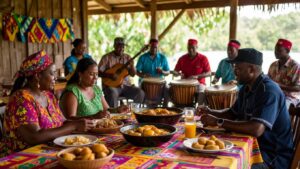
Rhythm is central: drumming (primero and segunda), call‑and‑response singing and ritual ceremonies such as the dugú sustain social and spiritual life. Punta and its modern offshoot, punta rock, carry dance and storytelling into public festivals and recordings—artists like Andy Palacio brought Garifuna music to a global audience.
Cuisine and sustainable foodways
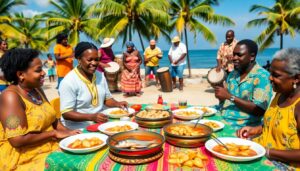
Garifuna cooking centers on cassava, plantain, coconut and seafood. Signature dishes to try: hudut (fish in coconut milk with mashed plantain), machuca (fish soup with plantain dumplings), ereba (cassava bread), and street treats like cassava pone. For a hands‑on culinary experience, see the Darasa cultural and cooking experience for recipes and workshops.
Try the Darasa cultural & flavors experience →
Hopkins and other places to experience Garifuna culture
Hopkins (Yarumein) is the cultural hub for visitors—daily drum schools, homestays, museum exhibits and food workshops make it the best single stop. Dangriga is the national center for Garifuna media and festivals; Seine Bight, Punta Gorda and parts of Toledo preserve distinctive local practices. For practical planning and places to stay, start with the Hopkins Village guide and the site listing of local cultural experiences.
Hopkins Village guide →Local cultural experiences →Where to stay →
- Typical costs: day tours and workshops USD 20–80; homestays and guesthouses vary by season.
- Best months: November–April for dry weather and events (Settlement Day is Nov 19).
- Safety notes: Southern coastal towns are welcoming—use common travel caution at night and book local guides for remote visits.
- Top experiences: drum workshop in Hopkins (Hopkins guide), Darasa cooking class (book here), Settlement Day parade (Nov 19).
Timing and booking guidance
If your trip centers on cultural events, plan for November and reserve 6–12 weeks in advance for popular homestays and festival‑period rooms. For quieter cultural immersion (drum schools, cooking workshops), booking 2–4 weeks ahead is often sufficient during the dry season.
Contemporary pressures and how visitors can help
Language shift, land pressure and one‑sided tourism threaten continuity. Support Garifuna‑run businesses, ask before photographing ceremonies, buy crafts directly from makers, and favor community workshops that return revenue locally.

Decide now
If you want music, hands‑on food and authentic homestays, make Hopkins your base; if your focus is research or broader festival coverage, include Dangriga and the diaspora events.
Frequently asked questions
What is the Garifuna tradition in Belize?
A living Afro‑Indigenous culture of language, drumming, dance and ritual (including the dugú) that ties community life to ancestors, coastal resources and kin networks.
Where are the Garifuna located in Belize?
Mainly along the Stann Creek and Toledo coasts—Dangriga, Hopkins and Seine Bight—and in smaller southern towns; diaspora communities exist across the U.S. and Central America.
Basic Garifuna greetings
A friendly hello: “Buiti” (hi); For affection: many speakers borrow Spanish “mi amor” informally—use with caution; to say “I love you” literally: “Nuguya ma hugu.”
Further reading and resources
UNESCO’s listing and community programs support revitalization; for hands‑on planning and bookings, use the Hopkins Village guide and our local cultural experiences page linked above. If you need lodging options near cultural hubs, consult the Belize hotels guide.
This page serves as an informational “info node” connecting cultural background (history, language, music, food) with the Hopkins experiential hub and vetted local experiences; consult the Hopkins guide for detailed itineraries and bookings.

Emma Sterling is a passionate travel writer specializing in exploring the vibrant culture, stunning landscapes, and hidden gems of Belize. With a keen eye for detail and a love for adventure, she brings her experiences to life in her engaging Belize Travel Guide. Emma’s insightful tips and local recommendations inspire fellow travelers to discover the beauty and uniqueness of this Central American paradise. Through her writing, she aims to foster a deeper appreciation for Belize’s diverse ecosystems and rich heritage.
I appreciate how you highlighted the rich tapestry of Garifuna culture in Belize. It’s fascinating to see how the blending of African, Indigenous, and European influences creates such a vibrant community. On my last visit to Belize, I had the chance to experience a Garifuna drumming session, and it was unlike anything I’ve ever encountered. The rhythms are infectious, and there’s something deeply communal about the way everyone comes together to celebrate through music and dance.
It’s great to hear about your experience with Garifuna drumming. There really is something magical about how the rhythms draw people in and create such a sense of community. The Garifuna culture, especially their music and dance, is not just a form of entertainment; it’s a way of expressing history, identity, and resilience.
It’s great to hear about your experience with the Garifuna drumming session. The way the rhythms can create such a sense of connection really speaks to the heart of their culture. I found that the communal aspect of their music not only brings people together but also fosters a spirit of wellness—it’s like a form of therapy, where everyone can express themselves collectively.
I really appreciated the exploration of Garifuna culture in your post. It’s fascinating how the Garifuna people have woven together such a rich tapestry of history, language, and tradition despite the challenges they’ve faced over the centuries. Their resilience speaks volumes about the power of cultural identity.
The Garifuna culture truly is a remarkable blend of influences, and their ability to adapt while maintaining their unique identity is inspiring. What’s particularly striking is their deep connection to music and storytelling, which serves not only to preserve their history but also to foster community.
It’s great to hear that you appreciated the exploration of Garifuna culture. I find it particularly intriguing how their music and dance play such a significant role in their identity. The way they blend African, Caribbean, and indigenous influences creates a unique cultural experience that transcends mere tradition.
I can see why you appreciated the Garifuna culture; it really highlights the depth of Belize’s diversity, which dances beautifully throughout its history and traditions.
‘Belize Cultural Guide: Understanding Its Diverse People’
https://xamanekbelize.com/belize-cultural-guide-understanding-its-diverse-people/.
It’s truly fascinating to delve into the tapestry of the Garifuna culture in Belize. The way you described their roots and cultural significance reminds me of how crucial it is to acknowledge and celebrate the diversity of identities that contribute to the social fabric of any nation. The Garifuna’s history of resilience following their exile in 1797 is a powerful testament to the strength of community and the preservation of heritage, especially in the face of colonial pressures.
Your exploration of the Garifuna culture resonates deeply, especially as it highlights the resilience and creativity that emerge from such a rich confluence of histories. The way they preserve their language and customs, even in the face of historical adversity, is truly inspiring.
I really enjoyed reading this post about the Garifuna culture in Belize. It’s fascinating how their rich blend of African, Indigenous Caribbean, and European influences has created such a unique cultural tapestry. I remember trying some Garifuna food while traveling in Belize—traditional dishes like hudut really stand out. The combination of fish and plantains in that savory coconut broth was something I hadn’t experienced before, and it was delicious!
It’s great to hear you enjoyed the post on Garifuna culture! Their culinary traditions, like that amazing combination in hudut, really do reflect the heart of their cultural melding. The use of coconut and plantains is not just delicious; it also speaks to the resourcefulness of the Garifuna people, sourcing what’s available in their environment.
I’m glad to hear you enjoyed the Garifuna culture and their delicious cuisine! If you’re interested in exploring more about their culinary delights or planning a trip to Belize, check out this link for some great tips and recipes.
https://xamanekbelize.com/belize-flights
It’s fascinating to dive into the rich tapestry of Garifuna culture in Belize, especially given how much history underpins their identity. I remember when I first heard about the Garifuna people during a cultural festival in Central America. It was a sensory overload—in the best way possible! The pulsating rhythms of their music, the mouthwatering aroma of hudut, and the vibrant colors of their traditional clothing sparked a curiosity in me that has only grown over time.
The rich tapestry of Garifuna culture truly is a fascinating subject, and it’s wonderful to see it highlighted in such detail. What strikes me most is how the resilience of the Garifuna people, despite historical challenges, has resulted in a vibrant community that not only preserves its heritage but also shares it so generously with the world.
What a fascinating exploration of Garifuna culture in Belize! As someone who has always been deeply intrigued by how diverse cultural histories blend and evolve, I find the Garifuna’s resilience and vibrant heritage particularly inspiring. Their story, originating from such a rich tapestry of African, Indigenous Caribbean, and European roots, highlights the strength found in diversity and the importance of preserving cultural identities.
It’s fascinating to learn about the Garifuna’s rich history and cultural resilience. Their blend of African and Indigenous Caribbean influences truly showcases the beauty of cross-cultural heritage. I’ve always found the concept of preserving language so intriguing—especially in a world where globalization often leads to the dilution of unique voices.
It’s fascinating to see the Garifuna culture highlighted in such a vibrant way! The blend of African, Indigenous Caribbean, and European influences creates a unique tapestry that enriches not only Belize but the entire Caribbean region. I recently had the opportunity to attend a Garifuna drum festival, and experiencing the rhythms and improvisational spirit of their music was truly unforgettable.
I really appreciate how you’ve captured the essence of Garifuna culture in your post. It’s fascinating to think about how the Garifuna people have managed to preserve their rich heritage amidst so many historical challenges. The blend of African, Indigenous Caribbean, and European influences creates such a vibrant tapestry that’s truly unique to Belize.
This exploration of Garifuna culture highlights a fascinating intersection of identity and resilience. It’s striking how the Garifuna’s history showcases not just survival but the thriving of a rich heritage in the face of colonial challenges. The blend of African, Indigenous Caribbean, and European influences creates a unique cultural tapestry that not only enriches Belize but also resonates globally.
It’s so true that the Garifuna culture represents such a complex blend of identities. The way they’ve integrated African, Indigenous Caribbean, and European influences really makes their heritage stand out. It’s not just about survival; it’s about actively maintaining and celebrating that identity. I often think about how communities like the Garifuna can offer insights into resilience in today’s world, particularly in the face of globalization and cultural homogenization.
I’ve always been fascinated by how the Garifuna culture beautifully intertwines African, Indigenous, and European influences. It’s such a strong reminder of resilience and the rich tapestry of history that shapes identity. The way they celebrate through music and dance, particularly in Hopkins Village, is like a joyful declaration of their heritage. I’ve tried their traditional dishes, like tamales and hudut, and they truly capture that essence of community and sharing.
What a delightful dive into the Garifuna culture in Belize! I love how you’ve highlighted their rich tapestry of history and the incredible blend of influences that have shaped their identity. It’s fascinating to think about how a community can maintain such a vibrant culture despite the odds stacked against them.
The rich tapestry of Garifuna culture truly captivates me! It’s fascinating how the fusion of African, Indigenous, and European influences shapes their unique identity. The emphasis on oral traditions and storytelling not only preserves history but also fosters deep community bonds. I was particularly intrigued by the role of music and dance—elements that seem to be a universal language for expressing joy and resilience.
I really appreciate how this post highlights the rich tapestry of Garifuna culture in Belize. The blend of African, Indigenous, and European influences is fascinating, especially how it manifests in music and food. I’ve always found Garifuna drumming to be mesmerizing, and it’s incredible that these rhythms have roots in such a poignant history.
It’s great to hear your thoughts on Garifuna culture in Belize. The way you mention the blend of African, Indigenous, and European influences really captures the essence of how dynamic and layered this culture is. The drumming, in particular, is something that I’ve always found to connect deeply with both the history and the community spirit.
Your exploration of Garifuna culture in Belize raises significant points about the resilience and richness of a community that often remains on the peripheries of mainstream discourse. The unique fusion of African, Indigenous Caribbean, and European influences not only creates a vibrant tapestry of traditions but also serves as a poignant reminder of the historical upheavals they faced.
Reading about the Garifuna culture truly deepens my appreciation for the diversity of heritage in Belize. It’s fascinating how the blend of African, Indigenous, and European influences creates such a rich tapestry of traditions, especially in music and dance. The significance of the annual festivals, like Garifuna Settlement Day, is a great reminder of the importance of community and connection to one’s roots.
I really appreciate this exploration of Garifuna culture and its unique heritage! It’s fascinating how the confluence of African, Indigenous Caribbean, and European influences has created such a rich cultural tapestry in Belize. Your mention of their history is particularly striking; the story of resilience and exile in the face of colonial conquest resonates deeply, especially when considering the broader context of diasporic cultures around the world.