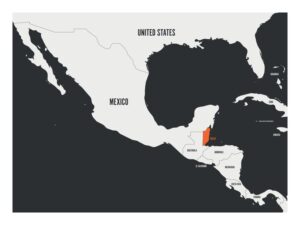
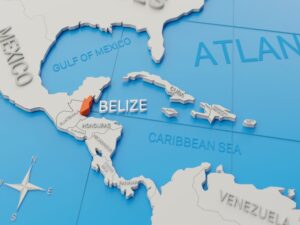
Belize sits where Central America meets the Caribbean: geographically part of North America, regionally Central American, and culturally connected to the Caribbean.
Belize is on the continent of North America; regionally it belongs to Central America and — because of history, language and maritime culture — it is often grouped with the Caribbean.
For an extended travel and logistics overview, see the full Belize location & travel guide.
| Question | Short answer | Travel note |
|---|---|---|
| Continent | North America | Used in maps and continental statistics. |
| Regional label | Central America | Most travel guides group Belize with Central America. |
| Cultural ties | Caribbean-affiliated | English language and CARICOM membership make the Caribbean connection strong. |
Where Belize Sits On The Map
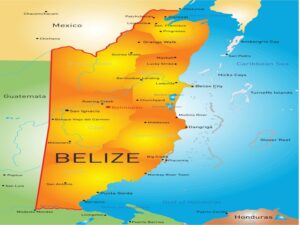
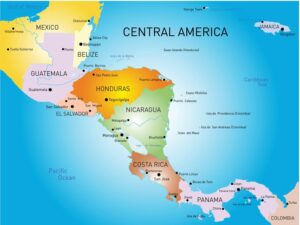
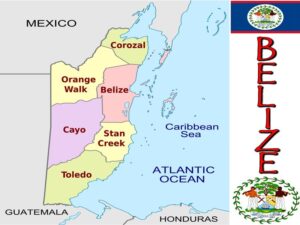
Belize occupies the northeastern edge of the Central American isthmus, with the Caribbean Sea to its east, Mexico to the north and Guatemala to the west and south. Its coordinates run roughly 15.8°–18.5° N latitude and 87.5°–89.2° W longitude.
Borders And Size
Belize covers about 22,970 km² (second smallest in Central America). The Mexico border is ~250 km long and the Guatemala border ~266 km. Those borders shape travel routes and cross-border commerce.
Why Maps List Belize As North American But Travel Guides Call It Central American
Continental definitions used by atlases and the United Nations place Central America inside the North American continent; travel writers and regional specialists typically use “Central America” as a practical region. For a deeper look at identity and culture, see our piece on Belize: Central American or Caribbean?.
Belize’s Caribbean Connections
Belize is English‑speaking, has a British colonial history and is a CARICOM member — all of which tie it closely to Caribbean nations in politics, language and culture. Its long Caribbean coastline and the Belize Barrier Reef further strengthen that maritime relationship.
Coastal Identity And Marine Tourism
From Ambergris Caye to the Barrier Reef and the Great Blue Hole, Belize’s coastal geography drives much of its tourism and regional partnerships with Caribbean islands and nations.
What Travelers Need To Know
Belize’s continental label rarely affects travel logistics, but a few practical details matter when planning.
- Flights from the U.S. and Canada are short (typically 2–4 hours from major hubs) and frequent; see our flights guide for carriers and routes.
- Cruise calls to Belize City are common; shore excursions usually focus on coastal and reef sites.
- English is the official language — useful for American and British travelers — but Spanish, Garifuna and Maya languages are widely heard too.
When To Go And When To Book
Peak season runs from late November through April (dryer, cooler). Hurricane season runs June–November and typically brings heavier rain and potential disruptions.
Book hotels and reef tours 2–4 months ahead for peak season; for shoulder months (May, October–November) a 4–6 week booking window often secures better rates and availability. For month-by-month weather detail and crowds see our Belize weather by month.
Culture, Demographics And Why Labels Matter
Belize’s multiethnic population — Creole, Garifuna, Maya, Mestizo and others — reflects both mainland Central American and Caribbean histories. If you’re researching culture, customs or community travel experiences, our closer cultural profile is useful: Belize: a closer look at geography and culture.
Decision: Is Belize A Central American Country You Should Book As Part Of A Central America Trip Or A Caribbean Beach Escape?
- You plan an overland trip (Guatemala / Belize / Mexico).
- You want inland jungle, Maya ruins and river adventures.
- Your trip focuses on islands, reef diving and English‑speaking coastal towns.
- You prefer Caribbean-style resorts and meals influenced by Afro-Caribbean culture.
Want The Full Practical Guide? Start with the site hub: Belize location & travel guide for logistics, sample itineraries and recommended routes.
Editorial Note For Editors this article has been repositioned as a supporting FAQ/info node; consider the site hub (Belize location & travel guide) as the semantic root for continental/region queries.
For policy/SEO actions about duplicate intent, review the travel guide and adjust canonical settings if you keep multiple similar pages.
Frequently Asked Questions
Is Belize In North America Or Central America? Geographically it is part of the North American continent; regionally and culturally it is Central American.
Is Belize Considered Part Of The Caribbean? Culturally and politically (CARICOM membership), Belize has strong Caribbean ties, especially on its coast and islands.
Does The Continental Label Affect Travel Plans? Not usually—flight times, visas and weather are what you should plan around; see the hub guide for itineraries and logistics.
See also: Belize location & travel guide · Belize: Central American or Caribbean? · Belize — geography & culture

Sophie Daniels is an accomplished travel writer and expert on Belize, dedicated to sharing the beauty and culture of this Central American gem. With a passion for adventure and a deep understanding of the local landscape, she crafts insightful and engaging guides that inspire travelers to explore Belize’s vibrant ecosystems and rich heritage. Through her writing, Sophie aims to connect readers with the heart of Belize, offering practical tips and personal anecdotes that enhance their travel experiences.
Your exploration of Belize’s geographical and cultural identity really highlights the complexity of how borders and regions shape our understanding of a place. It’s fascinating to see how Belize straddles both the North American and Central American identities, creating a rich tapestry that’s distinct yet interconnected. I’ve always found that this kind of geographical nuance often mirrors the cultural diversity one can experience there — from the vibrant Garifuna culture to the Mayan heritage still present today.
You’ve captured an essential aspect of Belize’s identity so well. The interplay between its North American and Central American influences creates a unique cultural landscape that often surprises those who visit. Belize is a place where you can experience an array of traditions, languages, and practices in close proximity to one another, and it feels like each community contributes its own thread to that vibrant tapestry you mentioned.
I really resonate with your observation about Belize’s cultural landscape. It’s fascinating how those diverse influences weave together, creating a community where various traditions coexist, often in surprising ways. I remember when I first visited, I was struck by how the Garifuna culture, with its rich music and storytelling traditions, blended seamlessly with the influence of Creole, Mopan, and Spanish.
You’ve touched on something really profound with the way borders and regions shape our understanding of a place. Belize’s unique position truly does create a rich tapestry of cultural influences. The blending of North American and Central American identities is like a microcosm of what we see in larger global contexts.
I’ve come across an insightful piece that delves into the economic challenges Belize faces, shedding light on how these realities intersect with its rich cultural and geographical tapestry.
‘Why Is Belize So Poor? Exploring the Country’s Economic Realities’
https://xamanekbelize.com/belizes-economic-realities-why-is-it-poor/.
I found your breakdown of Belize’s geographical context really intriguing! It’s fascinating how something as seemingly straightforward as a country’s location can spark such interesting discussions about identity and culture. Belize’s position between Mexico and Guatemala does seem to make it a unique melting pot, especially considering its rich history influenced by both Caribbean and Central American cultures.
I’m glad you found the breakdown of Belize’s geography engaging. It’s true that geography plays a significant role in shaping a nation’s identity and culture. Belize often feels like a crossroads—where the influences of both Mexico and Guatemala blend with Caribbean traditions.
You bring up an interesting point about Belize being a crossroads. That blending of influences is truly fascinating. When you think about how the Mayan civilizations shaped the historical landscape and then the impact of British colonialism mixed with the rich traditions of the Garifuna and Creole peoples, it creates such a unique tapestry.
Absolutely! If you’re interested in exploring more about how these diverse influences shape Belizean culture, check out this link for a deeper dive into the country’s unique heritage and attractions.
https://xamanekbelize.com/great-blue-hole-of-belize-essential-diving-tips-for-enthusiasts
I’m glad you found the breakdown interesting! Belize really is a fascinating spot on the map, sitting right where the Caribbean vibe meets Central American traditions. It’s incredible how its history of colonial influences and migration has shaped everything from the local cuisine to music and languages spoken.
I found your exploration of Belize’s geographical position really interesting! It’s fascinating how a country can have such a unique identity, straddling the line between North and Central America. I’ve always thought that geography shapes culture so much, and in Belize’s case, it’s like the blend of influences is just as vibrant as its scenery.
I found your insights about Belize’s geographical position really intriguing! It’s interesting how geography can shape not just a country’s identity, but its culture and relationships as well. Belize’s unique mix of influences from the Caribbean, Latin America, and even British colonial roots adds such richness to its cultural tapestry.
I find it fascinating how Belize occupies such a unique position both geographically and culturally. It seems like its identity straddles the line between being part of North America and Central America, which is interesting given how borders can often define cultural narratives. Belize’s rich history, influenced by various cultures, adds depth to its appeal.
It’s fascinating how geography can shape our perceptions of culture and identity, isn’t it? Belize’s location as both a part of North America and Central America really highlights the complexity of national identities. The blend of Caribbean influences in its culture adds another layer to this richness.
You’ve touched on something really interesting there. The way geography plays into identity is pretty remarkable. When you think about Belize, it’s not just a simple matter of borders; it’s more like this melting pot of influences and histories. Belize sits right at that crossroads, with its Mayan heritage, British colonial past, and Caribbean vibe all swirling together.
Absolutely, it’s amazing how geography intertwines with culture! If you’re curious to explore more about Belize’s unique identity and vibrant heritage, check out this insightful resource.
https://xamanekbelize.com/blue-hole
Your exploration of Belize’s geographical position is intriguing and highlights a fascinating aspect of its identity. It’s interesting how the cultural and historical influences shape the perception of Belize as a Central American nation, despite its geographical classification under North America. This nuance often leads to a richer understanding of Belizean culture, which is influenced by a blend of indigenous, African, and Caribbean peoples.
Your exploration of Belize’s geographical and cultural positioning is both enlightening and thought-provoking. For many, the initial belief that Belize belongs solely to Central America may stem from its rich tapestry of cultural influences and its Caribbean charm. This complexity is a perfect representation of how boundaries—whether they be geographical, cultural, or societal—can often blur, revealing a deeper narrative about identity and connection.
You’ve touched on a critical point about Belize’s cultural mosaic. The interplay between its Central American roots and Caribbean influences is fascinating. It makes you ponder how history shapes identity. Belize was once a melting pot of different cultures and peoples, from the ancient Maya to colonial influences, resulting in a unique blend that defies easy categorization.
Your exploration of Belize’s geographical identity is quite intriguing, especially considering the country’s complex cultural tapestry. As you mentioned, Belize exists at the intersection of several influences—Caribbean, Central American, and even North American. This blend is evident not only in its multicultural population but also in its unique ecology and biodiversity, including the world’s second-largest barrier reef.
Your exploration of Belize’s geographical and cultural identity is indeed thought-provoking. It’s interesting to think about how geography can shape not just borders but also the cultural narratives that emerge from them. Belize is an excellent example of this phenomenon. Although it is classified as part of North America, its culture is deeply intertwined with the Caribbean and Central American influences, which creates a unique identity that can sometimes confuse people unfamiliar with the region.
I always found the geographical puzzle of Belize fascinating! It’s interesting how our perceptions can be shaped by cultural context rather than strict geographical definitions. The fact that it’s technically in North America yet embodies so many Central American traits really showcases the blend of influences in the region.
Your exploration of Belize’s geographical position is not only enlightening but also opens up a rich tapestry of cultural and historical contexts that are often overlooked. I’ve always found the blending of regions and cultures, especially in areas like Belize, to be incredibly fascinating. The way Belize uniquely sits between North and Central America mirrors much of its historical evolution, where influences from both the Caribbean and the mainland converge.
Your observations about Belize’s geographical and cultural significance really resonate. It’s intriguing to think about how Belizeans draw from a rich blend of influences—Mayan, Creole, Garifuna, and more. This fusion creates a unique identity that reflects both the history and the modern-day realities of the country.
I completely agree with you; the blend of influences in Belize is genuinely fascinating. It seems like each cultural group adds its own layer to the national identity, making it a living tapestry of history and modern life. The interplay of Mayan, Creole, Garifuna, and other cultures not only shapes Belize’s arts and music but also influences its cuisine, festivals, and even social dynamics.
I found an interesting piece that dives into Belize’s unique position between Central America and the Caribbean, exploring how its diverse cultural influences shape its identity today.
‘Is Belize Central American Or Caribbean? A Clear, Short Answer’
https://xamanekbelize.com/is-belize-central-american-or-caribbean/.
I found your exploration of Belize’s geographical positioning quite intriguing! It’s fascinating how geography can shape not only a country’s identity but also its cultural influences. Belize’s situation at the crossroads of North and Central America creates a rich tapestry of Caribbean and Central American cultures that is unique to this small nation.
Your breakdown of Belize’s geographical and cultural positioning really highlights how complex our understanding of borders and regions can be. It’s fascinating to think about how such distinctions can influence perceptions of a place. For me, Belize represents a perfect case study of those blends—how its Caribbean influences and Central American roots create a rich cultural tapestry.
You’ve touched on a really essential point about how borders shape not just geography but the identities of people and communities. Belize serves as a unique lens through which to explore this complexity. When you consider its position both geographically and culturally, it truly embodies a crossroads of influences.