Belize is a constitutional monarchy with a Westminster-style parliament — but executive power rests squarely with the Prime Minister and the elected National Assembly, while the monarch remains a ceremonial head of state.
For a short country overview and travel context, see our Belize country and culture guide.
| Office | Real power | Traveler impact |
|---|---|---|
| Monarch / Governor‑General | Ceremonial head of state; Governor‑General performs formal duties on the monarch’s behalf. | Mostly symbolic — no effect on visas, policing or travel services. |
| Prime Minister | Head of government with executive authority, leads the Cabinet and sets national policy. | Determines public policy that affects transport, safety, and tourism infrastructure. |
| Parliament (House & Senate) | Creates and approves laws, budgets, and oversight — elected House plus appointed Senate. | Laws passed here shape border rules, licensing, and local governance that travelers may notice. |
- Belize is politically stable for most tourists; everyday travel services are managed by elected ministries and local councils.
- Visas, immigration and customs are administrative functions — check the official visa and entry guide before you travel.
- When planning logistics (transport, permits, or protected-area access), the Prime Minister’s administration and relevant ministries set policy and budgets.
How Belize’s Constitutional Framework Divides Power
Belize adopted its constitution at independence in 1981 and kept a Westminster model. That means a hereditary monarch (today King Charles III) remains the formal head of state, represented locally by an appointed Governor‑General, while real day‑to‑day governance is run by the Prime Minister and Parliament.
The Ceremonial Role: Monarch And Governor‑General
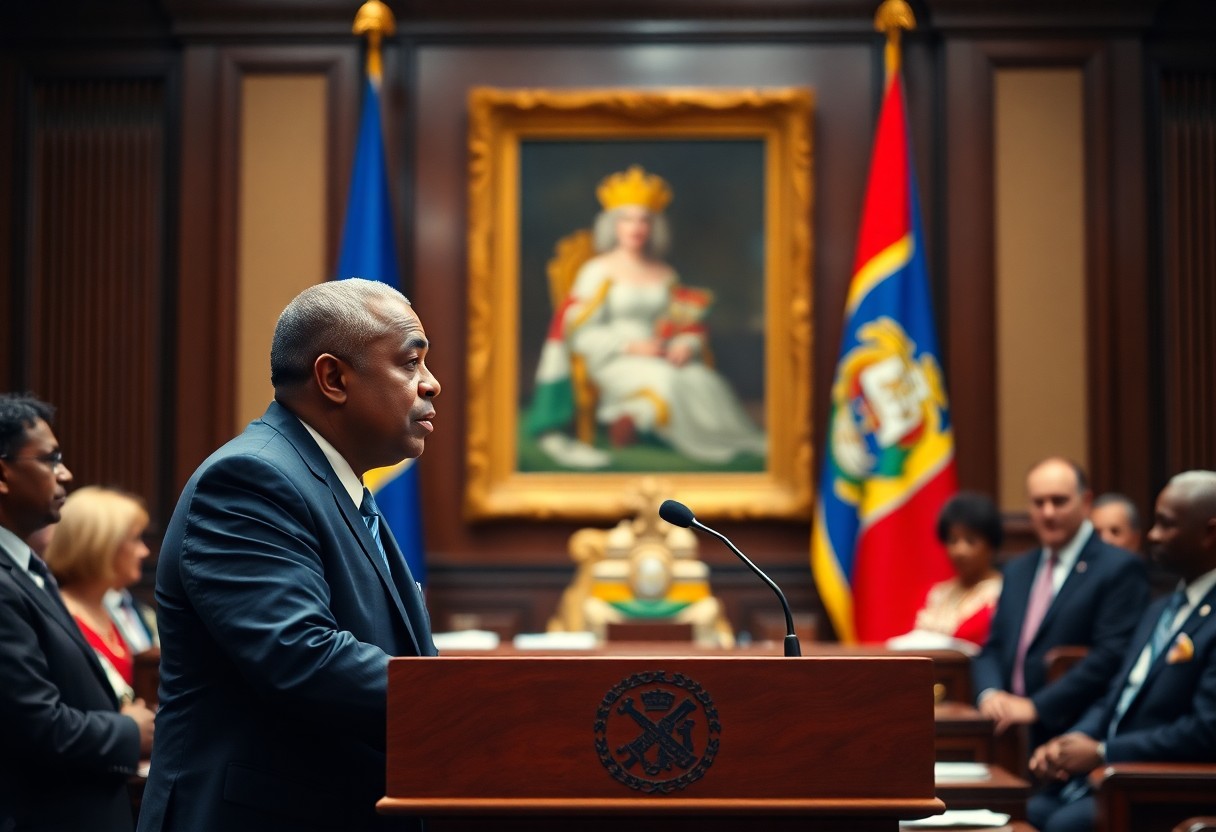
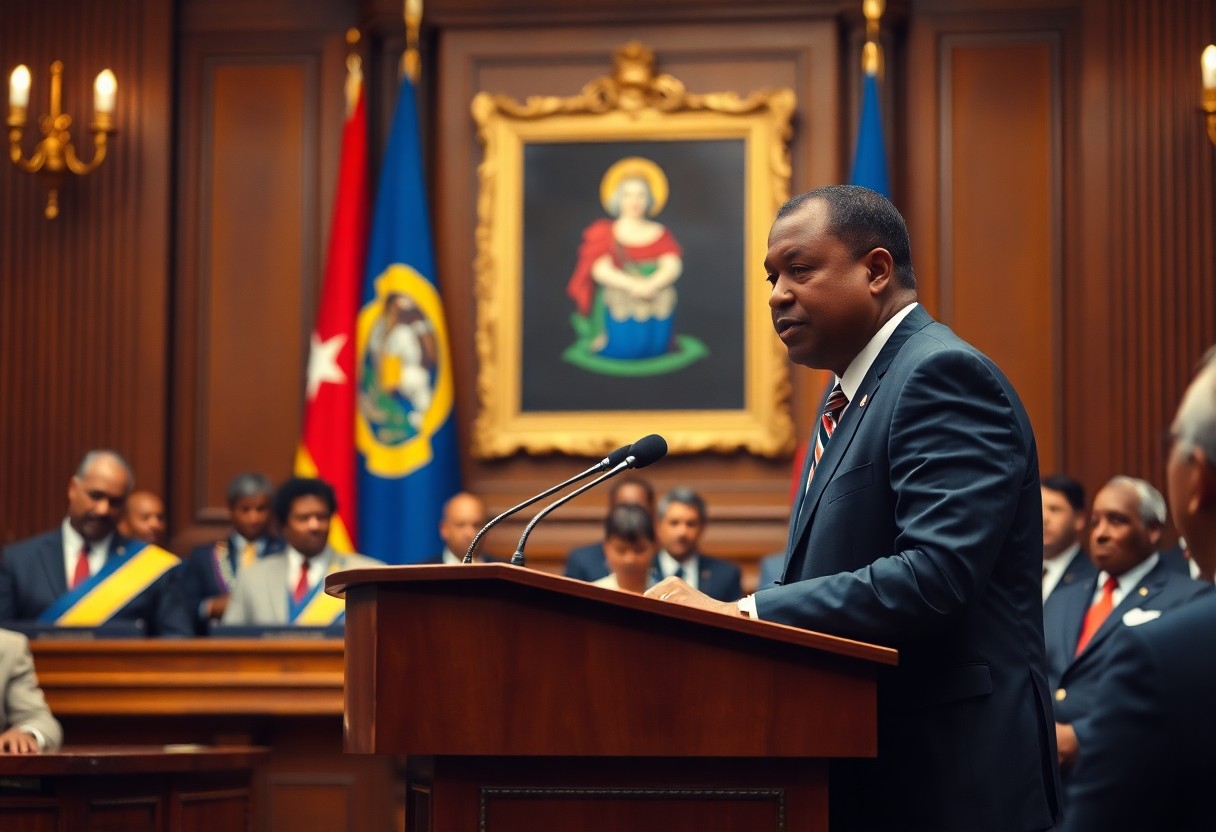
The monarch’s role is symbolic. The Governor‑General carries out formal tasks — opening Parliament, swearing ministers and assenting to legislation — normally on the advice of elected ministers. These functions maintain constitutional continuity but do not direct policy.
Executive Authority: The Prime Minister And Cabinet
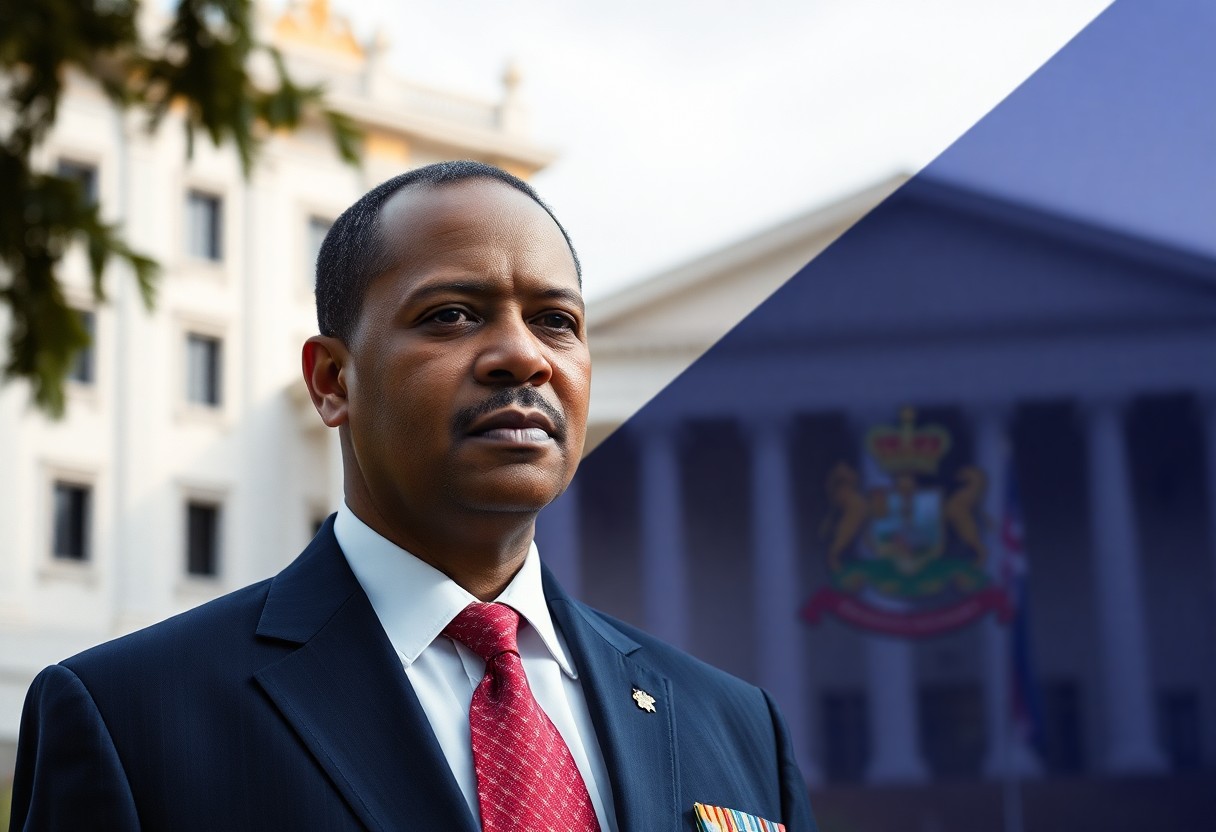
The Prime Minister is the head of government: selected as leader of the party holding the majority in the House of Representatives, they lead the Cabinet and set government policy, appointments, and priorities. In practice the PM’s office controls most levers that affect visitors — from transport funding to tourism promotion.
Legislation And Oversight: House Of Representatives And Senate
Belize’s bicameral Parliament includes a 31‑member elected House and a 12‑member appointed Senate. The House initiates most bills and controls budgets; the Senate reviews and can suggest amendments. Parliamentary debate, committee work and budget votes determine how quickly policy affecting visitors is enacted.
Common Misconceptions — Clarified
Because Belize keeps a monarch in its constitutional framework, some readers assume the monarch or a ceremonial president runs the country. In reality, the Prime Minister and the elected House hold the policy power: the monarch’s role is representative and formal rather than operational.
What This Means If You’re Visiting Or Researching Belize
For most travelers the important points are practical, not constitutional: who issues visas, how stable public services are, and whether local authorities can process permits for activities like guided cave tours or marine permits. Those matters are handled by ministries and civil service departments answerable to the elected government.
- Check visa and entry requirements before you travel (visa guide).
- Carry local emergency contacts—police and your embassy—and confirm transport options in advance.
- For permits (protected areas, diving, research), contact the relevant ministry or tour operator; these are governed by laws passed in Parliament.
Independence 1981 → Westminster system retained → Governor‑General represents monarch → Prime Minister leads elected government.
Want Context For Planning Your Trip?
If you’re arranging travel logistics or evaluating stability, our deeper pieces explain how politics intersect with the economy and tourism infrastructure: see our analysis of Belize’s economy and political context and practical planning tips in the Belize itinerary guide.
Read our deeper analysis of how political choices affect Belize’s economy and travel services — it’s the best next step for travellers and researchers who want practical context.
Frequently Asked Questions
Generally yes — Belize is stable for typical tourism; localised crime can occur in urban areas, so follow standard safety advice and local guidance. See our safety guide for details.
Who Issues Visas And Entry Permits?
Visas and immigration procedures are handled by Belizean immigration authorities; consult the visa and entry guide for up‑to‑date requirements.
Who Do I Contact For Permits (Marine Parks, Research)?
Permits are issued by the responsible ministries and agencies; most tourists coordinate permits through licensed tour operators who handle the paperwork.
See also: Belize’s economy — agriculture to ecotourism and our 2026 travel guide for practical trip planning.

Benjamin Turner is a passionate travel writer specializing in exploring the beauty and diversity of Belize. With a keen eye for detail and a knack for storytelling, he provides readers with insightful guides that encompass everything from the country’s stunning landscapes to its rich cultural heritage. Drawing on his extensive travels throughout Belize, Benjamin aims to inspire fellow adventurers and facilitate immersive experiences for all who seek to discover this tropical paradise.
Your exploration of Belize’s political landscape is quite insightful, especially considering how British colonial legacies continue to shape governance in former colonies. The tension between traditional authority, embodied by King Charles III, and the realities of a democratic government led by the Prime Minister and National Assembly, presents a rich case for discussion.
You’ve hit the nail on the head with the complexities of Belize’s political fabric! When you really think about it, it’s like a tangle of vines—where every twist and turn represents something historical, cultural, or just plain quirky. The British colonial legacy certainly cast a long shadow, but it’s fascinating to see how Belizeans have woven their own vibrant tapestry over it.
The political landscape in Belize indeed presents a compelling case for the study of parliamentary democracy within a Commonwealth context. It’s intriguing to see how Belize balances its historical ties to Britain with the unique demands of its contemporary society. The constitutional framework set in place at independence in 1981 seems to be a critical foundation for the nation, ensuring that while there is respect for traditional governance, there is also room for evolving democratic practices that resonate with the local populace.
You’ve captured an essential part of Belize’s identity—it’s that fascinating blend of history and modernity. With its roots in British colonial governance, Belize has had to navigate a path that respects those traditions while adapting to the vibrant demands of its diverse society. The 1981 constitution really does set the stage for a unique parliamentary system that allows for local voices to be heard and incorporated into decision-making.
You’ve pointed out a critical aspect of Belize’s identity, and it’s interesting to consider how that historical backdrop complicates present dynamics. While the 1981 constitution certainly laid the groundwork for a participatory framework, one has to question how effectively this system truly amplifies local voices. There can be a disconnect between policy-makers and everyday citizens, especially in communities with deep-rooted social issues.
I’m glad you resonated with those insights! If you’re interested in exploring more about Belize’s rich history and its dynamic present, check out this resource that dives deeper into its unique journey.
https://xamanekbelize.com/private-and-luxury-tours
I appreciate your perspective on the complexities of Belize’s identity and the implications of the 1981 constitution. It’s intriguing to consider how historical contexts can shape present-day governance and community engagement.
It’s really interesting to dive into the political landscape of Belize, especially how it blends those historical British influences with Belize’s own unique identity. The fact that it’s a parliamentary democracy while still being part of the Commonwealth adds a layer of complexity and intrigue. The relationship with the monarchy, especially with King Charles III as the symbolic head of state, really makes you think about how colonial histories shape modern governance.
You’ve hit on some really important points about Belize’s political scene. The blend of British influences with the country’s own cultural identity is fascinating to see play out in everyday life. It’s like a tapestry where each thread tells a story of the past while contributing to the present. The parliamentary democracy definitely shapes how decisions are made, showing both a respect for tradition and a push for local representation.
You nailed it! Belize really is like that unique stew made of various cultural ingredients, simmered in a pot of historical complexities. And you can’t help but chuckle at the whole monarchy situation. Here we are in the 21st century, still tipping our hats to a distant figure who probably has no idea where Belize is on the map. It’s almost like getting a postcard from your weird uncle who insists on wearing outdated fashion while you’re just there, trying to rock your own style.
Your exploration of Belize’s political landscape highlights an intriguing intersection of tradition and modern governance. The balance between the traditional British parliamentary system and Belize’s own unique cultural identity is indeed compelling. This duality reflects not merely in political structures but also in the everyday lives of Belizeans, as they navigate a system that both honors colonial legacies and seeks to address contemporary challenges.
You’ve touched on a really fascinating aspect of Belize’s political culture. The way traditional elements persist alongside modern governance creates a unique tapestry of identity that’s not always easy to navigate. For many Belizeans, this blend is a source of pride, but it can also be a challenge when the push for progress seems at odds with deeply rooted customs.
It’s interesting how Belize’s political system mirrors a blend of historical traditions and contemporary governance. The fact that it remains a Commonwealth realm yet functions independently with its own Prime Minister and National Assembly shows how nations can honor their past while shaping their future.
You’ve hit the nail on the head about Belize’s unique mix of old-world charm and modern governance. It’s like having grandma’s classic recipes but spicing them up with some trendy ingredients—who doesn’t love a good jerk chicken taco?
Your discussion of Belize’s political landscape provides a compelling overview of how the country merges traditional British parliamentary practices with its unique cultural heritage. It’s interesting to see how this blend shapes governance and citizen engagement in Belize.
You’ve opened a fascinating door into the political dynamics of Belize! The unique blend of British parliamentary traditions and modern democratic principles truly reflects the nation’s intricate historical narrative. It’s intriguing to consider how Belize navigates its identity as both a Commonwealth realm and an independent nation.
It’s great to hear your thoughts on Belize’s political landscape. The blend of British influences with local traditions definitely shapes how the country views its governance and identity. It’s interesting to think about how Belize balances its historical ties to the Commonwealth while asserting its independence.
I find it really intriguing how Belize’s unique blend of British parliamentary traditions and modern democracy shapes its political scene. It’s kind of a testament to how historical contexts can influence contemporary governance. I mean, when you think about it, the constitutional structures put in place when Belize gained independence in 1981 still have a significant impact on the political culture today.
You raise an interesting point about Belize’s unique political landscape. The intertwining of British parliamentary traditions with the country’s own adaptations creates a distinctive governance framework that reflects both legacy and modern needs.
Absolutely, it’s fascinating how those historical influences continue to ripple through Belize’s political landscape. If you’re interested in exploring more about Belize’s governance and its evolution, check out this insightful resource!
https://xamanekbelize.com/hol-chan
You’ve touched on a fascinating aspect of Belize’s political landscape. The blend of British parliamentary traditions with local influences certainly creates a distinct governance style. It’s interesting to see how those constitutional frameworks set in place back in 1981 still resonate today, shaping not just the political structures but also the public’s expectations and engagement.
Absolutely, the interplay between history and modern governance in Belize is fascinating! If you’re interested in exploring more about the evolution of Belize’s political landscape and its implications today, check this out!
https://xamanekbelize.com/eco-tours
You make a great point about the perpetuation of those constitutional frameworks in Belize. It’s intriguing how the blend of British parliamentary traditions with local cultural nuances has crafted a unique political identity. I often think about how that historical context sets expectations not just for governance but for civic participation as well.
It’s intriguing how Belize’s political system reflects a blend of its colonial past and modern democratic values. The fact that the constitution was adopted in 1981, right after gaining independence, really highlights how the country sought to establish its identity while still retaining some of the British influences. I think this mix actually helps Belize navigate the challenges of governance today, especially when it comes to balancing traditional values with the demands of a changing global landscape.
You’ve highlighted some truly intriguing aspects of Belize’s political landscape, and it’s fascinating to consider how deeply intertwined history, culture, and governance are in that small nation. The unique blend of British parliamentary traditions with modern democratic principles creates a compelling dynamic. It reminds us how historical legacies can shape contemporary governance, even in ways that may not be immediately obvious.
Your exploration of Belize’s political landscape is indeed thought-provoking, and it resonates deeply with the ongoing conversation about the true nature of democracy around the world. Belize’s parliamentary system, rooted in its historical ties to Britain and influenced by its vibrant cultural mosaic, speaks volumes about how diverse traditions can marry to create a unique governance model. It piques my curiosity about how these historical legacies shape the political attitudes of its citizens today.