
Relleno Negro is Belize’s smoky, dark recado stew of seasoned meatballs, chicken and hard‑boiled eggs—comforting, richly spiced, and surprisingly straightforward to make at home.
- Want traditional depth? Make or buy authentic black recado (achiote + roasted, charred spices).
- Short on time? Use pre-made recado and 30‑minute simmer for the meatballs.
- Serving: corn tortillas or steamed rice and a simple cabbage slaw.
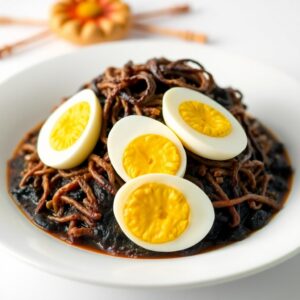
Ingredients
- 1 whole chicken, cut into medium pieces (or 1.5 lb bone-in pieces)
- 2–3 tbsp vegetable oil
- 3–4 tbsp black recado paste (homemade or store-bought)
- 2 tomatoes, chopped
- 1 large onion, chopped
- 1 sweet (bell) pepper, chopped
- For meatballs: 1 lb ground beef (or a mix beef/pork), 1 egg, 1/4 cup breadcrumbs
- Seasonings: season salt, 1 tsp ground cumin, 1/2 tsp black pepper, 2–3 garlic cloves, minced
- 4 hard‑boiled eggs, halved
- Corn tortillas or rice, to serve
Method — Step By Step
- Prep The Broth In a large pot, bring 8 cups of water to a simmer. Stir in the black recado paste until dissolved and fragrant. Taste and adjust—recado can be smoky and slightly bitter; balance with a pinch of sugar if needed.
- Sauté The Aromatics In a heavy saucepan heat the oil on medium. Add onion, garlic, pepper and tomato and cook until softened, 6–8 minutes. Stir in cumin and season salt.
- Brown The Chicken Add chicken pieces to the pan, sear briefly on both sides to lock flavor, then transfer to the recado broth. Simmer gently for 30–40 minutes until the chicken is tender.
- Make Meatballs Combine ground beef, egg, breadcrumbs, minced garlic, cumin, season salt and black pepper. Form into 1–1.5 inch balls. Gently drop meatballs into the simmering recado broth and cook 12–18 minutes until cooked through.
- Finish And Serve Add halved hard‑boiled eggs to the pot to warm. Adjust seasoning. Serve hot with corn tortillas or rice and a simple cabbage slaw or pickled onions.
Timing & Serving Table
| When to make | Cool evenings and festival days; also perfect for family lunches where people serve from the pot. |
| Best accompaniments | Warm corn tortillas, white rice, a fresh cabbage salad, and pickled onions for brightness. |
| Substitutions | Use turkey or pork for meatballs; canned recado or achiote paste is OK—roast your spices for deeper color and flavor if you can. |
Tips, Technique And Troubleshooting
- Black Recado Color The deep color comes from charred spices and ground roasted chiles—if your paste is pale, roast a few annatto seeds and dried chiles briefly and blend them into the paste for that authentic hue.
- Meatball Texture Keep the mix cold and don’t overwork the meat; breadcrumbs and one egg are usually enough to bind without becoming dense.
- Too Bitter? A small pinch of sugar or a splash of vinegar balances very dark recados.
- Make Ahead Flavors deepen after a day—reheat gently and skim grease if needed.
Where To Try Relleno Negro In Belize
If you prefer to taste before cooking, look for traditional kitchens in southern towns and communities where recado is handcrafted. For cultural food experiences and guided tastings, explore our Culinary Adventures and the Darasa Garifuna experience, both of which highlight local recado and festival dishes.
When To Visit Belize To Taste Local Food
Peak food festival and fresh-produce season runs from November through March; if you plan travel around culinary events see our seasonal travel guide for tips.
Best time to visit Belize and seasonal tips
This recipe focuses on Relleno Negro as a dish-level recipe; for the technical background on recado types and other recado soups, see the full Recado Soups overview.
Frequently Asked Questions
Can I Skip The Recado? Yes, but the dish will lose its characteristic smoky-dark flavor; use a good achiote-based paste as the minimum.
Is Relleno Negro Spicy? Not necessarily hot—its flavor is smoky and earthy; heat depends on the chiles used in your recado.
Can I Make It Vegetarian? Use mushroom or roasted squash meatballs and a rich vegetable stock; add black recado to preserve the classic color and depth.
If you enjoyed this recipe, read our feature on recado soups for technique and history or browse local culinary experiences to taste authentic preparations in Belize.
See also: seasonal produce and fruits and our culinary travel page for where to taste local specialties.

Sophie Daniels is an accomplished travel writer and expert on Belize, dedicated to sharing the beauty and culture of this Central American gem. With a passion for adventure and a deep understanding of the local landscape, she crafts insightful and engaging guides that inspire travelers to explore Belize’s vibrant ecosystems and rich heritage. Through her writing, Sophie aims to connect readers with the heart of Belize, offering practical tips and personal anecdotes that enhance their travel experiences.

Relleno Negro indeed encapsulates the essence of Belizean cuisine, combining both tradition and the diverse cultural influences that have shaped the region’s culinary landscape. The use of black recado is particularly intriguing; it not only contributes to the dish’s unique flavor but also reflects the indigenous cooking techniques that have been passed down through generations.
You’ve hit the nail on the head with your thoughts on Relleno Negro. It’s fascinating how black recado isn’t just a flavor; it’s a reflection of history and cultural blending that Belize is known for. Each bite feels like tasting generations of knowledge and technique.
You’ve really captured the heart of Relleno Negro. It’s fascinating how that dish serves as a canvas for so many culinary traditions in Belize. I appreciate how black recado adds depth not only in terms of flavor but also in its connection to the land and the history of the people.
It’s great to hear your thoughts on Relleno Negro. The way it blends various culinary traditions really shows how food can be a bridge connecting different cultures in Belize. That black recado you mentioned, with its rich flavors, really does carry so much weight—literally and metaphorically. It’s more than just an ingredient; it reflects the history and experiences of the people who make it.
You bring up such an interesting perspective on Relleno Negro and the significance of black recado. It’s fascinating how a dish can serve as a narrative thread, weaving together the stories and identities of different communities in Belize. I often think about how food can transcend generations and geography.
You’ve hit the nail on the head! Relleno Negro really is like a culinary history lesson tucked into a delicious dish. It’s wild to think about how black recado is this magical mix of flavors, carrying with it stories from so many different cultures. It’s like each spoonful is a little trip through the history of Belize. And the connection to the land? Oh man, it’s like a food-based GPS guiding us to roots that run deep in the soil and the heart.
Thank you for your thoughtful insights! If you’re interested in exploring more about Relleno Negro and its rich cultural significance, check out this link for a deeper dive into its history and variations.
https://xamanekbelize.com/belize-zoo
It’s really fascinating how food can embody so much history and culture, isn’t it? Relleno Negro is such a prime example of that connection, weaving together influences from the Maya, Garífuna, and Creole traditions. Each ingredient seems to have its own story—like the black recado you mentioned, which brings depth and richness not just in flavor but also in cultural heritage.
You really captured the essence of Relleno Negro! It’s fascinating how a single dish can weave together so many narratives and traditions. The layers of flavor not only tantalize the taste buds but also invite us to reflect on the cultural exchanges that shape our food history. It’s a reminder that what we eat is often a reflection of where we come from and the stories we carry forward.
It’s fascinating how Belize’s rich history unfolds both in its cuisine and its breathtaking landscapes; if you enjoyed the stories behind Relleno Negro, you’ll find the journey through Actun Tunichil Muknal equally captivating.
‘Actun Tunichil Muknal: Why This Epic Adventure Should Top Your 2025 Belize Vacation List’
https://xamanekbelize.com/actun-tunichil-muknal-mustsee-for-2025-belize/.
You articulated the connection between food and culture beautifully. Relleno Negro is such a profound dish, isn’t it? It’s not just about the taste; it truly embodies the stories and traditions that have been passed down through generations. I always find it intriguing how food acts as a bridge connecting us to our past and to one another.
I’m so excited to see Relleno Negro getting the attention it deserves! It’s fascinating how traditional dishes like this truly encapsulate the culture and history of a place. I remember the first time I tried Relleno Negro; I was completely taken aback by the depth of flavors. The black recado definitely adds a unique twist that you can’t find in many other dishes.
Relleno Negro really is a gem, isn’t it? It’s amazing how a dish can tell the story of a place. Each ingredient, like the black recado, carries so much history and significance. That depth of flavor you experienced is a testament to the careful balance that cooks strive for, combining spices and techniques passed down through generations.
Your exploration of Relleno Negro truly captures the essence of what makes this dish so special. Having tried it during a visit to Belize, I can confidently say that the combination of flavors is unlike anything else. The use of black recado not only gives it that striking appearance but also infuses the dish with a depth that’s deeply satisfying.
I love how you’ve highlighted Relleno Negro as a must-try dish! It’s one of those culinary delights that opens the door to exploring the rich culture of Belize. The black recado is such a fascinating addition—its unique flavor truly sets Relleno Negro apart from other dishes in the region.
I’m glad you connected with the piece on Relleno Negro! It really is a dish that embodies so much of what makes Belizean cuisine special. The way the black recado adds depth and complexity is something that surprises a lot of people who try it for the first time. It’s not just a meal; it’s a taste of history and culture.
I appreciate how you highlighted Relleno Negro’s unique flavors and its significance in Belizean cuisine. It’s fascinating how dishes like this can carry so much cultural weight and history while simultaneously being a delightful experience for our taste buds.
Relleno Negro truly showcases the rich culinary traditions of Belize, and it’s fascinating how the dish reflects the diverse cultural influences in the region. The use of black recado not only gives it that striking color but also connects to the indigenous practices that highlight the importance of local ingredients and techniques. It’s interesting to think about how dishes like Relleno Negro serve as a gateway to understanding the history and cultural narratives of the places they originate from.
You hit the nail on the head with Relleno Negro. It’s not just a dish; it’s like a story on a plate. The black recado really does work wonders, both in flavor and in connecting us to the roots of Belizean culture. It’s amazing how something as simple as food can weave together the histories of different communities, right?
Relleno Negro truly sounds like a culinary gem that encapsulates the essence of Belizean flavors! I appreciate how you highlight the dish’s unique characteristics, especially the intriguing black recado that sometimes intimidates the uninitiated but is actually a treasure trove of flavor.
Relleno Negro is definitely one of those dishes that sparks conversation, especially among those new to Belizean cuisine. It’s interesting how food can carry stories and history, and Relleno Negro is a perfect example of this. The allure of that dark recado can be a bit daunting for newcomers, but once you dig in, its depth of flavor is like nothing else.
Relleno Negro certainly captures the essence of Belizean culinary traditions, blending vibrant flavors and rich cultural influences. As someone who has explored various traditional dishes from different parts of Latin America, I find the process of making Relleno Negro not only a delightful cooking experience but also a way to connect with the region’s history. The incorporation of black recado is particularly fascinating – it seems to epitomize how local ingredients can create distinctive flavors that tell a story.
You’ve nailed it with that observation on Relleno Negro! It’s like a culinary tapestry woven from the threads of history, culture, and, of course, some magic from the kitchen. The way ingredients like black recado come together is really something special. It’s almost like they’re all meeting up for a reunion party, reminiscing about their journeys from fields and markets to that simmering pot.
You’ve captured the essence of Relleno Negro beautifully. It really does feel like a culinary reunion, doesn’t it? Each ingredient has its own story, contributing to a dish that’s both rich in flavor and history. The use of black recado is especially intriguing—its depth adds such an amazing complexity to the dish.
It’s fascinating to read about Relleno Negro and its significance in Belizean cuisine. The way this dish encapsulates the essence of local culinary traditions is a testament to how food can be both a source of nourishment and a cultural narrative. The use of black recado, which you aptly highlighted for its unique color and flavor, truly embodies the complexities of traditional Latin American cooking.
It’s fascinating to see traditional dishes like Relleno Negro gaining attention! This dish really embodies the rich cultural tapestry of Belizean cuisine. The use of black recado as a base not only adds depth to the flavor but also highlights how regional ingredients can elevate a meal.
Relleno Negro sounds like such a fascinating dish, and I appreciate how you’ve highlighted its unique flavor profile and cultural significance. The use of black recado must really give it those deep, rich undertones that might surprise those unfamiliar with it. It’s interesting how food can encapsulate the history and traditions of a place, and Relleno Negro seems to be a perfect example of that.
I’ve always been intrigued by the culinary diversity found in Latin American cuisine, and Relleno Negro is a prime example of how traditional dishes can encapsulate cultural heritage and regional ingredients. The detailed breakdown of the preparation process that you’ve provided illustrates not only the complexity involved but also the communal aspect of cooking. In many cultures, dishes like Relleno Negro are not just meals; they evoke memories and family gatherings, creating a narrative around the food itself.
Relleno Negro sounds like such a rich and flavorful dish, perfectly embodying the culinary spirit of Belize! I love how traditional recipes like this can tell such a vibrant story about a culture’s history and values. The combination of bold spices and the unique black recado truly makes it an adventurous dish to explore.
Relleno Negro really does have a fascinating backstory that connects deeply with Belize’s cultural landscape. It’s one of those dishes that you can trace across generations, reflecting not just the local ingredients but also the blending of influences from various communities. The black recado, with its deep, rich flavors, showcases how each component contributes to the overall narrative of the dish.
You’ve touched on something really special with Relleno Negro and its deep ties to Belize’s culture. It’s fascinating to see how food can act as a living history, weaving together stories from different communities. The black recado, in particular, is more than just a flavor profile; it’s like a tapestry of experiences and traditions that reflect the journey of the people who create and enjoy it.
“Si quieres descubrir más sobre la historia y la diversidad de la gastronomía beliceña, te invitamos a explorar nuestro artículo completo aquí.”
https://xamanekbelize.com/belize-flights
Relleno Negro really does capture so much of what makes Belizean cuisine special. It’s fascinating how food can reflect a place’s history and values, right? Each bite of that dish tells a story—about the Mayan influence, the vibrant Afro-Caribbean culture, and the unique ingredients that grow in this part of the world. The black recado, with its blend of roasted spices and sometimes charred ingredients, really does create a depth of flavor that feels like a celebration on the plate.
¡Totalmente de acuerdo! Si te interesa probar este delicioso platillo, aquí tienes un enlace donde puedes descubrir más sobre su preparación y otros sabores de Belize.
https://xamanekbelize.com/cultural-tours
¡Qué bien que te resuena el relleno negro! Es un platillo que realmente encierra mucho de la identidad de Belize. Cada vez que lo pruebo, me doy cuenta de cómo se entrelazan las tradiciones y las influencias a lo largo de los años. La forma en que el maíz, el cacao y las especias se combinan muestra no solo la diversidad de ingredientes que tenemos, sino también la historia rica de los pueblos que habitaron esta tierra.
¡Exactamente! Si quieres sumergirte en la auténtica experiencia de la cocina beliceña, te animo a explorar este enlace donde podrás aprender más sobre Relleno Negro y otros sabores de nuestra rica cultura gastronómica.
https://xamanekbelize.com/cultural-tours
You’ve really captured the essence of Relleno Negro and what it represents in Belizean culture. It’s fascinating how a dish can carry so much weight in terms of storytelling, isn’t it? Each element in Relleno Negro isn’t just about flavor; it’s a reflection of the diverse influences that have shaped Belize. The black recado, with its rich, smoky undertones from the roasted spices, is like a bridge connecting generations, each bite saturated with the history of the land and its people.
Relleno Negro sounds like such an interesting dish to explore! The black recado really captures my attention—it’s amazing how certain ingredients can transform a dish completely. I appreciate that this recipe incorporates hard-boiled eggs, which I think adds a nice texture contrast.
Relleno Negro really does have a fascinating depth to it. The black recado is such a unique blend of flavors that really defines the dish, and it’s interesting how it varies from one region to another. I’ve found that making it can be a bit of an adventure in itself, sourcing ingredients like the dried chiles and figuring out the right balance of spices.
Since you appreciate the unique flavors of Relleno Negro, you might find the comparisons between Belize and the Bahamas quite intriguing, especially when it comes to how local ingredients shape each vacation experience.
‘Belize vs. The Bahamas: Which Offers the Best Vacation Experience?’
https://xamanekbelize.com/belize-vs-the-bahamas-best-vacation-choice/.