
Recado—the black, white, and red spice pastes—is the flavor backbone of Belizean soups; read on for a quick comparison, practical recipes for Relleno Negro, Relleno Blanco and Chechack, and timing tips for the best local ingredients.
If you want a deep, smoky broth choose black recado; for a lighter, aromatic holiday soup use white recado; for seafood and coastal broths pick red recado. Learn the cultural context or book a tasting experience at the Darasa Garifuna program to sample these dishes in community—see the Darasa experience here: Darasa — Garifuna culture and flavors.
| Recado type | Flavor & color | Best uses / soups |
|---|---|---|
| Black recado | Deep, smoky; dark brown/black from charred tortillas & chilies | Relleno Negro; hearty stews where you want intense, roasted notes |
| White recado | Lighter, aromatic; spice-forward but pale | Relleno Blanco and holiday poultry soups |
| Red recado | Earthy, peppery; orange-red from annatto (achiote) | Chechack and seafood broths; fish soups where color and mild heat are wanted |
What Is Recado And How To Use It
Recado is a family of seasoning pastes used across Belize. Make or buy the paste, then dilute or fry briefly to release oils before adding to broths. Below are short production notes and practical tips to get authentic flavor without bitterness.
Basic Recado Tips
- For black recado: char chiles and tortillas until dark but not burnt; taste as you go and stop before black smoke dominates.
- For white recado: grind whole spices then temper gently; keep the broth clear by skimming solids.
- For red recado: bloom annatto (achiote) in warm oil to release color, then combine with toasted spices for best aroma.
Recipes — Clear, Tested Steps
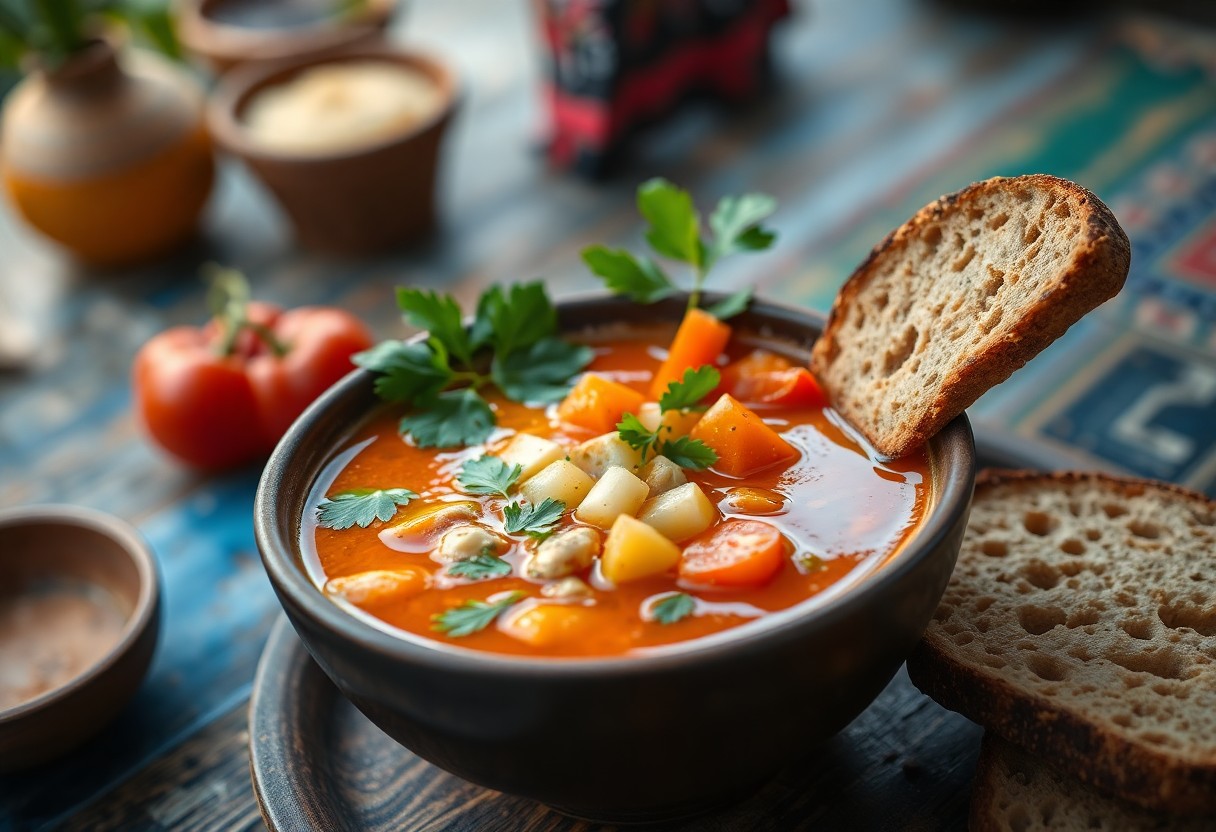
Relleno Negro (Black Recado)
Traditional Maya-influenced holiday soup: stuffed chicken simmered in a charred, smoky broth.
Active Time 1 hr
Total Time 2–2.5 hrs
- 1 whole chicken, skin intact for stuffing
- 1 lb ground pork
- 2–3 eggs (for stuffing)
- 3–4 charred corn tortillas (for black recado)
- 2–3 dried chilies, roasted and charred
- 2 cloves garlic, 1 onion, stock or water
- Salt, pepper, oregano to taste
Method
- Make black recado: char tortillas and chilies until very dark but not acrid; grind with garlic, oregano and a little water to a paste.
- Mix ground pork with beaten egg, salt and spices. Stuff the chicken and secure with kitchen twine or sew if desired.
- Brown stuffed chicken lightly then add stock and 2–3 tbsp black recado. Simmer gently 1–1.5 hours until tender.
- Adjust salt and serve meat separately from broth if preferred; ladle broth over rice or with corn tortillas.
Expert Tip
To avoid bitterness when charring, use even heat and remove ingredients from flame the moment they darken—charred flavor comes from controlled browning, not heavy smoke.
Relleno Blanco (White Recado)
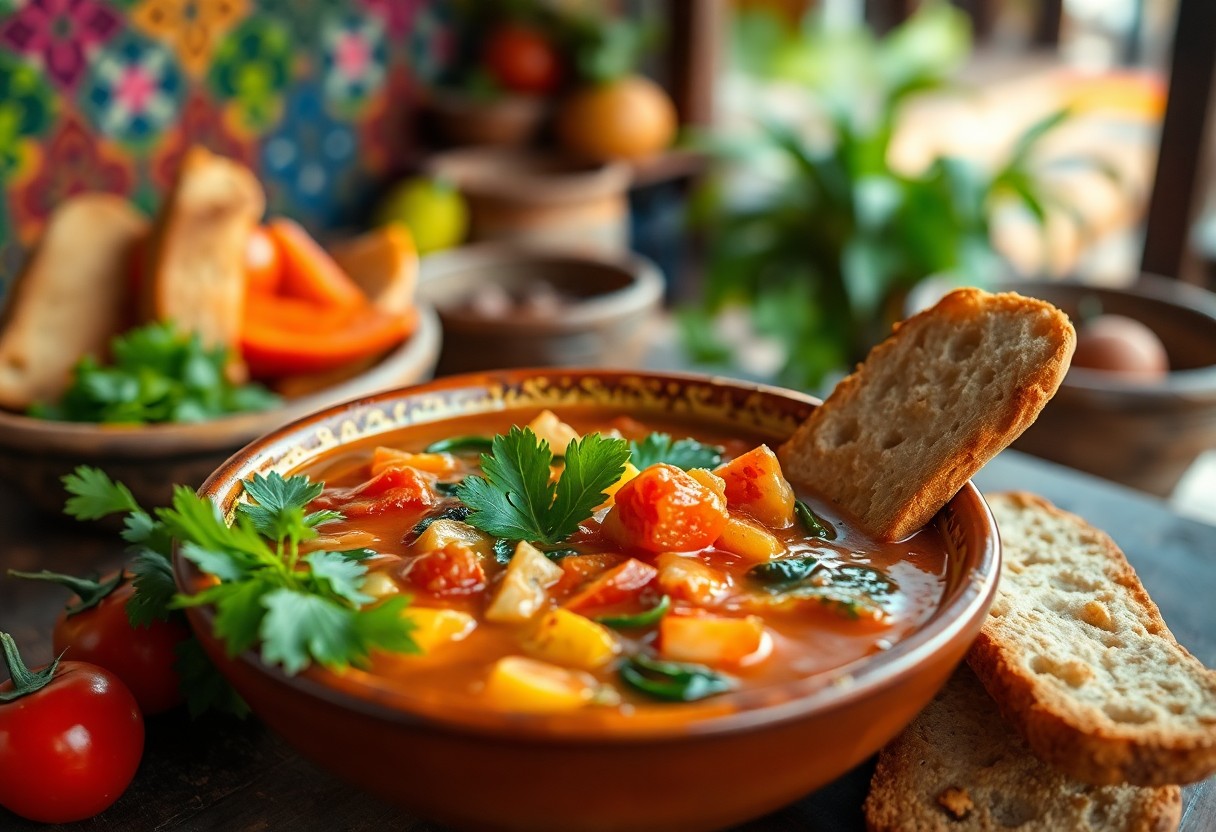
A festive, aromatic poultry soup commonly prepared for Christmas and New Year.
Total Time 2–3 hrs
- 1 whole local chicken
- 1 lb ground pork for stuffing
- 1/2 cup raisins, 1/3 cup olives, capers to taste
- Spices: cumin, cloves, cinnamon, allspice
- 1 onion, garlic, white wine (optional)
Method
- Prepare white recado by grinding spices and briefly simmering with onion and water to a paste or thin sauce.
- Combine pork with raisins, olives, capers, and egg whites; stuff the chicken and secure.
- Brown chicken, deglaze with a splash of white wine, add recado and simmer until cooked through and broth is clear.
Cultural Note
Because of the labor and ingredients, Relleno Blanco is a celebratory dish that brings families together during holidays.
Chechack (Red Recado With Fish)
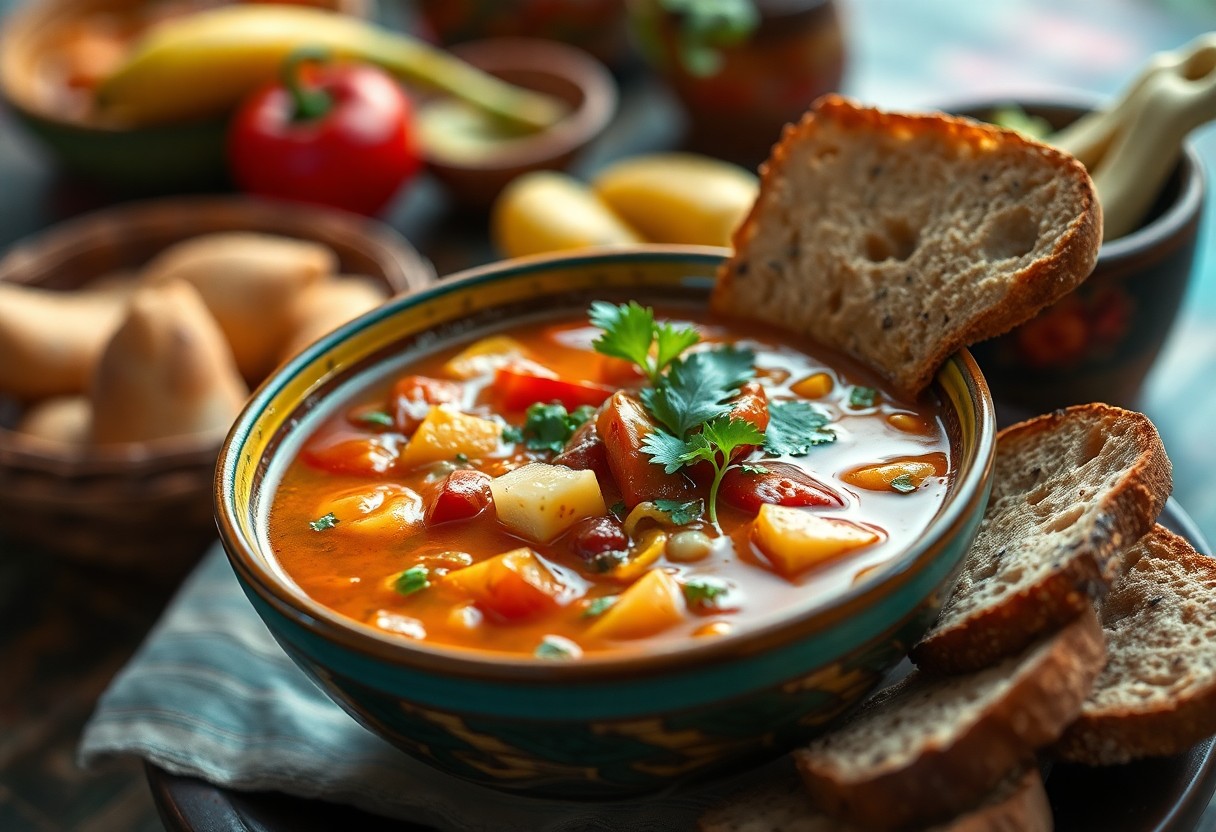
A coastal fish soup where annatto-red recado complements fresh snapper or local reef fish.
Total Time 40–60 mins
- 2–3 lbs snapper or firm white fish, cleaned and portioned
- 2–3 tbsp red recado (annatto paste)
- 1 onion, 2 cloves garlic, 1 cup coconut milk (optional)
- 2 tbsp flour (for body), cilantro, lime to finish
Method
- Bloom annatto in oil, add garlic and onion, then stir in a spoon of flour and stock to make a fragrant broth.
- Add fish pieces and simmer gently 8–12 minutes until cooked; finish with cilantro and lime. Coconut milk is regional—use if you want richness.
Regional Variations
Northern coastal villages often use freshly caught snapper and may fry fish pieces before adding for texture. For festival flavors, check local variations in the Culinary Adventures coverage.
When To Eat These Soups And When To Go To Belize
Timing changes ingredient availability and traditions: Relleno Blanco is most often served at Christmas and New Year; Chechack is best during the peak fishing season (March–June) when snapper is abundant; heavier recado soups are common in the rainy months (June–November) as comfort food.
Where To Taste Or Learn These Dishes
For an authentic food-and-culture experience, book a Garifuna or culinary program—see the Darasa experience for community tastings and demonstrations: Darasa — Garifuna culture and flavors. For more recipes and traditional plates, explore our feature on Relleno Negro and the broader culinary cluster in Culinary Adventures.
If you plan to sample fresh Chechack, schedule coastal visits in March–June and ask your guide about the morning fish markets for best catches and freshness.
Frequently Asked Questions
How Do I Avoid Bitterness When Making Black Recado?
Char ingredients quickly over hot, even heat and remove them once darkened—don’t let them smolder. Work in small batches and taste the paste diluted in warm stock before adding to the full pot.
Where Can I Buy Annatto (Achiote) Or Pre-Made Recado In Belize?
Local markets and grocery stores across Belize sell annatto seeds and prepared recado; coastal towns and market stalls often carry fresh recado blends—ask at morning markets or at culinary experiences like Darasa.
Can I Substitute Annatto For A Similar Color And Flavor?
Annatto is unique for its mild earthy flavor and bright color; paprika can mimic color but not the full flavor profile—use paprika only if annatto isn’t available and reduce quantity to avoid sweet notes.
When Is The Best Time To Taste Relleno Blanco In Belize?
Relleno Blanco is traditionally served at Christmas and New Year when families prepare the full recipe; visiting in late December gives the best chance to taste an authentic family-made version.
Book a cultural food experience to watch recado preparation and taste Relleno Negro, Relleno Blanco and Chechack with community cooks.
See also: Relleno Negro feature, Culinary Adventures, and our Traditional Recipes category for more Belizean dishes.

Benjamin Turner is a passionate travel writer specializing in exploring the beauty and diversity of Belize. With a keen eye for detail and a knack for storytelling, he provides readers with insightful guides that encompass everything from the country’s stunning landscapes to its rich cultural heritage. Drawing on his extensive travels throughout Belize, Benjamin aims to inspire fellow adventurers and facilitate immersive experiences for all who seek to discover this tropical paradise.
Recado truly is a fascinating cornerstone of Belizean cuisine, and it’s interesting how each variety brings its own unique character to dishes. The black recado, with its robust earthiness, adds a wonderful depth to soups that I find genuinely comforting. It reminds me of the ways that traditional foods often carry cultural histories, almost like culinary storytelling.
You nailed it with the idea of recado as a culinary storyteller. Each type really does reflect the diverse cultural influences in Belize, and it’s fascinating to see how they evolve in different hands. The black recado, in particular, delivers that earthy richness you mentioned, and it’s almost like a flavor bridge to the past.
I completely agree with you about the unique character that recado brings to Belizean dishes. The black recado, in particular, has such a rich flavor profile that does indeed add comfort to soups. I remember the first time I tried it in a traditional stew, and I was struck by how the flavors seemed to connect me to the culture and history of the dish. It’s fascinating how ingredients like recado can serve as a bridge to cultural stories and personal memories.
It’s great to hear your thoughts on recado and its role in Belizean cuisine. That black recado really does have a special way of deepening flavors, doesn’t it? I think part of its magic lies in how it ties us to our roots. The first time I experienced that taste in a traditional stew, it opened my eyes to the stories behind our food—stories passed down through generations.
“I’m so glad to hear your thoughts on recado! If you’re eager to explore more about its cultural significance and how to incorporate it into your cooking, check out this link for some delicious recipes and stories.”
https://xamanekbelize.com/caye-caulker
I completely relate to your experience with black recado. It really does hold a unique place in Belizean cuisine. The way it enhances the depth of flavors is something special. When I first tasted it in a traditional stew, it felt like I was not just enjoying a meal but connecting with a rich tapestry of culture and history.
I appreciate your thoughts on recado; speaking of cultural ties, if you’re curious about how Belize stacks up against the Bahamas for a vacation, I’ve got a great article that dives into the unique experiences each destination offers.
‘Belize vs. The Bahamas: Which Offers the Best Vacation Experience?’
https://xamanekbelize.com/belize-vs-the-bahamas-best-vacation-choice/.
I feel the same way about recado and its impact on Belizean cuisine. The black recado really does have that depth of flavor that you can’t forget once you’ve experienced it, right? I remember my first bowl of stew too, it was during a family gathering. The combination of the spices and the way it melded with the meat felt like a warm hug. It’s interesting how food has that ability to evoke memories and connect us to our roots.
Recado certainly highlights the depth and richness of Belizean culinary traditions. I’ve always been fascinated by how a single ingredient can carry so much cultural significance and history. For instance, the use of black recado reminds me of how many indigenous ingredients in Central America often bring together not just flavor, but also stories of heritage and community.
You’ve hit on something really important about black recado and its place in Belizean cuisine. Many might overlook the way cooking intertwines with history and identity. This ingredient, made primarily from roasted spices and bell peppers, does more than enhance flavor—it connects us to the land and the generations before us.
I really enjoyed reading about recado and its pivotal role in Belizean soups. It’s fascinating how a single ingredient can influence a whole culinary landscape, isn’t it? Growing up, I remember my grandmother using all sorts of spice pastes in her cooking, but it wasn’t until I stumbled upon the various recado types that I truly appreciated the art of flavor layering.
It’s great to hear you enjoyed the piece on recado and its significance in Belizean soups. It’s interesting how those spice pastes can carry such deep memories and transform dishes. The beauty of recado lies not just in its unique flavor, but also in how each type brings its own character to a meal.
I appreciate your thoughts on recado and its significance in Belizean soups. It’s interesting to think about how so many culinary traditions rely on foundational ingredients that may not seem like much on their own, but can transform an entire dish. Recado is one of those game-changers.
I really appreciate the spotlight on recado in your post—it’s fascinating how such a simple ingredient can carry so much cultural significance and flavor! I particularly love the way you highlighted the different varieties of recado and their unique contributions to Belizean cuisine.
It’s great to hear that you found the discussion on recado engaging. It’s interesting how this ingredient not only flavors dishes but also tells a story about the culture and traditions behind Belizean cooking. Each variety of recado brings its own personality, shaped by the local ingredients and cooking methods.
It’s fascinating how food acts as a bridge to culture and personal stories, isn’t it? Recado truly embodies that connection. When I first tried it, I was struck not just by the flavor, but by how it reflects the rich history of the region – the indigenous ingredients, the influences from various cultures. It makes each bite feel like a piece of a larger narrative.
I’m glad you found the piece on recado engaging. It really is remarkable how such an uncomplicated ingredient can tell a story and shape a culture. Each variety of recado not only brings its own flavor but also reflects a part of Belizean heritage and community traditions.
Your exploration of recado and its integral role in Belizean soups is a fascinating glimpse into the culinary traditions that reflect both history and culture. It’s intriguing to consider how such a simple ingredient can elevate a dish so remarkably. Personally, I’ve always been drawn to the depth that black recado brings, especially when used in a hearty chicken soup. It not only enhances the flavor but also serves as a reminder of the ancient Maya cooking techniques that continue to influence modern Belizean cuisine.
You’ve touched on something so vital when it comes to Belizean cuisine—the way recado acts as a bridge between the past and present. It really is remarkable how an ingredient can carry such weight in both flavor and cultural significance. When you’re enjoying a black recado chicken soup, you’re not just savoring a delicious bowl of comfort; you’re experiencing a flavor profile that speaks to centuries of culinary evolution influenced by the ancient Maya.
You’ve captured the essence of recado beautifully. It’s fascinating to consider how this single ingredient does more than just season a dish; it weaves together stories from generations past to the meals we’re sharing today. When someone takes that first sip of a black recado chicken soup, they digest not just flavors, but layers of history, culture, and tradition that have evolved over time.
I couldn’t agree more. The way recado acts as a bridge between generations is something truly special. It’s almost like each ingredient holds a story waiting to be shared. When I make a dish using recado, I often think about the hands that have crafted those flavors before me, passing down not just recipes but a sense of identity and belonging.
I recently came across this guide that beautifully showcases Belize’s culinary treasures, highlighting how each dish tells its own rich story, much like the recado you mentioned.
‘Belize Food Guide: Must-Try Local Dishes and Exactly Where to Eat Them’
https://xamanekbelize.com/belize-food-guide-top-local-eats/.
You’ve captured the essence of recado beautifully. It’s fascinating how cooking techniques and flavors connect us to our roots and to those who came before us. Each batch of recado isn’t just about the ingredients; it’s a blend of memories and traditions that continue to shape our identities.
Thank you for your thoughtful comment! I’m glad to hear you connect with the heritage of recado. If you’re interested in exploring more of Belize’s culinary stories, you might find this guide helpful: it beautifully highlights local dishes and the unique narratives behind them. Check it out here: [Belize Food Guide: Must-Try Local Dishes and Exactly Where to Eat Them](https://xamanekbelize.com/belize-food-guide-top-local-eats/). Enjoy your culinary journey!
https://xamanekbelize.com/belize-zoo
I really resonate with what you’re saying about recado and the stories that ingredients carry. It’s fascinating how food serves as a vessel for culture and history, connecting us to the past in such a tangible way. When I cook a dish that my grandparents used to make, I can almost hear their voices guiding me through the process. It’s a beautiful reminder that food isn’t just about sustenance; it’s about connection and heritage.
You really captured the essence of how recado weaves through the tapestry of Belizean cuisine. It’s fascinating to think about how that blend of ancient Maya traditions and modern flavors creates layers in every bite. I often find that food is one of the richest ways to connect with history. Like, when I’m making a dish with recado, I can almost imagine the generations before me preparing similar recipes, passing down techniques and stories along with them.
It’s interesting how a single ingredient like recado can be such a powerhouse in both flavor and cultural significance. I’ve found that it not only enhances the taste but also sparks conversations about our culinary heritage. The connection you mentioned to ancient Maya cooking techniques is a rich vein to explore; it reminds us of how food serves as a bridge to our shared past.
You’ve nailed it with that observation about recado. It really does pack a punch, not just in flavor but in the stories it carries. When you dive into its history, you start to see how it has woven itself into different cultures and how cooking techniques have evolved over centuries.
You’ve touched on something really profound about food—how it encapsulates history and culture. Recado, in particular, has such a rich tapestry woven into its preparation and use. It’s fascinating how ingredients and methods passed down through generations often tell stories of migration and adaptation.
I appreciate your thoughts on recado; it really got me thinking about how similar layers of culture and history come together in dishes like Relleno Negro, which offer a deep dive into Belize’s culinary heritage.
‘Discover the Bold and Rich Flavors of Belize’s Iconic Relleno Negro Dish’
https://xamanekbelize.com/bold-flavors-of-belize-s-relleno-negro-dish/.
You’ve really highlighted something special about these traditional dishes. Recado certainly carries stories from the past, and it’s amazing how it connects not just families, but entire cultures through food. Your mention of Relleno Negro brings to mind how each ingredient in both dishes is like a piece of history itself—migratory patterns, colonization, and even trade all blend into the flavors we enjoy today.
You’ve touched on such a crucial aspect of traditional dishes that often gets overlooked: the stories woven into every ingredient and preparation method. It’s fascinating to think about how a dish like Recado not only nourishes but also serves as a vessel for ancestral knowledge and memories passed down through generations. It isn’t just about the flavors; it’s about what those flavors represent—how they reflect the history of the people who created and consumed them.
You’re spot on about how traditional dishes like Recado and Relleno Negro serve as vessels for history. It’s fascinating to think about how each ingredient tells a story that transcends generations. When I prepare these dishes, I often find myself reflecting on the hands that have passed down the recipes before me, envisioning the gatherings that would have taken place around the table.
Speaking of connections, the new flight from Montreal opens up incredible opportunities for cultural exchanges, much like the traditions we cherish in our culinary heritage.
‘Belize Welcomes Inaugural Air Canada Montreal Flight – Same-Day European Connections Now Available’
https://xamanekbelize.com/belize-welcomes-inaugural-air-canada-montreal-flight-same-day-european-connections-now-available/.
It’s really fascinating how food can tell so many stories, isn’t it? Recado, with its rich combination of spices and history, feels like a bridge connecting different cultures. I love how it reflects the melding of indigenous ingredients with influences from colonial times, showing us not only what people ate but also what they valued and believed.
You’ve really touched on something special with that observation about recado. It’s amazing how a single ingredient can serve as a lens into the past, revealing not just culinary traditions but the cultural narratives that shape communities. It’s fascinating to think about how cooking techniques have transformed, influenced by factors like migration, trade, and even technology over time.
I completely agree with your observation about recado; it really is fascinating how food can tell such rich stories. When I first learned about it, I was struck by how a single dish could encapsulate so many cultural influences and histories. Each region seems to have its own take, which adds layers of meaning.
You’ve touched on something key—how food serves as a historical narrative. It’s intriguing that recado offers a glimpse into the local environment and resources, transforming simple ingredients into a canvas of culture. Each variation reflects not just individual tastes but also social history.
You make a really compelling point about recado. It’s fascinating how such a humble ingredient can carry so much weight in both flavor and cultural significance. I remember the first time I tasted a dish made with recado; it was like a revelation, not just for the taste but for the stories woven into it. There’s something profound about how certain ingredients can connect us to historical traditions and culinary practices.
You’re so right about recado—it really does tell a story. When you think about it, every ingredient carries its own history, and recado uniquely ties together the flavors of the past with the present. It’s amazing how something so simple can evoke memories and regional identity.
You bring up such a compelling point about recado. It really is fascinating how an ingredient can serve as a gateway into the culinary traditions of our ancestors. The way flavors intertwine with stories and community is something I’ve always appreciated about cooking.
You’ve touched on a core aspect of cooking that often gets overlooked. Recado really does connect us to our ancestors in such a visceral way. Think about the stories behind those recipes—how they reflect the environment, the seasons, and even the struggles of a community. When you cook with recado, you’re not just mixing ingredients; you’re engaging in a dialogue with history.
“I’m glad you feel that way! If you’re interested in exploring more about recado and its rich history, check out this link for delicious recipes and stories that celebrate its culinary heritage.”
https://xamanekbelize.com/lamanai
You make a great point about recado. It really is fascinating how something so simple can connect us to our roots and inspire deeper conversations about our culinary heritage. I’ve had experiences where just one ingredient, like recado, can transform a dish and bring people together around the table.
You’ve captured the essence of recado beautifully. It’s remarkable how one ingredient can evoke such strong connections to our culinary roots. I remember a gathering I had with friends where we decided to bring a dish that represented our individual heritages. One friend made a traditional stew using recado, and it sparked a wonderful conversation about our family histories and the stories behind our recipes.
You make such a great point about recado and its dual role in enhancing flavors and connecting us to deeper cultural roots. It’s fascinating how something as simple as a spice blend can evoke memories and emotions tied to our culinary heritage. When we cook with recado, we’re not just tossing in an ingredient; we’re layering on a history that stretches back to the ancient Maya. They had this incredible ability to see food as more than sustenance—it was an art, a ritual, and a link to the earth and each other.
You’re spot on about recado and its deep cultural significance. It’s amazing how that blend of spices can stir memories and connect us to our roots. Cooking with recado transforms the kitchen into a space of storytelling, where each ingredient brings a piece of history to the table.
“Absolutely! If you’re eager to explore the rich history and flavors of recado firsthand, check out our collection of authentic spice blends that honor these culinary traditions.”
https://xamanekbelize.com/belize-zoo
You’re spot on about recado. It really does transcend mere flavor, becoming a vessel for history and identity. There’s something magical about how a simple blend of ingredients can carry stories from ancient kitchens to our modern tables. It’s fascinating to think about the hands that have shaped these recipes over generations and how they’ve adapted and evolved.
You hit the nail on the head with how recado isn’t just a spice; it’s like a thread connecting us to history. I love how a simple blend of ingredients can carry such weight in terms of flavor and storytelling. When I cook with recado, it feels like I’m tapping into this ancient rhythm that stretches back generations.
“I’m glad you resonated with the significance of recado! If you’re curious to delve deeper into its history and culinary applications, check out this insightful resource.”
https://xamanekbelize.com/caracol
It’s so interesting to hear your thoughts on black recado and its impact on chicken soup. I can definitely relate to how a single ingredient can transform a dish. The depth it adds is remarkable, and it really does reflect the cultural influences that shape Belizean cuisine.
It’s great to find someone who appreciates the nuances of how a single ingredient can change the entire character of a dish. Black recado really does hold a special place in the heart of Belizean cooking—a true embodiment of our history and culture. What’s fascinating to me is how this dark, rich paste not only brings depth to chicken soup but also tells a story of our community and the way we’ve adapted and embraced different influences over time.
I totally get what you mean about how a single ingredient can really change the whole vibe of a dish. Black recado just has this way of weaving its magic throughout the soup, doesn’t it? It’s like the backbone of flavor in so many Belizean meals, bringing that earthy, smoky essence that somehow makes everything else pop.
I’m so glad you feel that way about black recado! It really does have this incredible ability to transform a dish. The earthy, smoky depth it brings is like a secret ingredient that’s hard to put into words—but once you taste it, everything else seems to click into place.
I completely resonate with your thoughts on black recado. It’s fascinating how such a simple ingredient can elevate the overall character of a dish. The way it captures that smoky, earthy quality reminds me of how certain spices or herbs have a similar transformational power in different cuisines. For instance, saffron in Middle Eastern dishes or miso in Japanese cooking—they both add such distinct layers of flavor that are almost hard to describe until you experience them.
I know exactly what you mean about black recado; it really does have this unique ability to elevate a dish. It’s fascinating how something as simple as this ingredient can carry such depth of flavor. I personally love how it not only enhances a soup but also seems to connect everything on the plate.
It’s fascinating how recado transcends mere seasoning to become a vessel for culinary heritage in Belize. The nuances of each type of recado reflect not only the ingredients but also the stories and histories of the communities that have cultivated these flavors over generations. I find it interesting how food can serve as a cultural narrative, with spices acting as the words that tell those stories.
You’ve hit the nail on the head with recado as a culinary time capsule. It’s like that weird old family photo album you inherited; each dish tells a story that ties back to grandma’s kitchen, where she might have told tales of how she turned a quiet Sunday into a full-blown fiesta with just a few key ingredients. Every region has its own spin on recado, like a creative competition where everyone thinks their grandma has the best recipe, and they’re probably right because food always tastes better when it’s made with love (and maybe a bit of sneakiness in the spice level).
You’ve really captured the essence of recado and the nostalgia that comes with it. It’s fascinating how food can connect us to our roots, like those old family photos that might evoke laughter or tears just by looking at them. Each family truly has its own little twist on these recipes, which makes gatherings so special when everyone brings their signature dish to the table.
You’ve touched on something really profound about the way food acts as a bridge to our past. There’s this unique power in those flavors and aromas—they have the ability to transport us to moments we might have tucked away in our memories. When we gather around a table, it’s not just about sharing a meal; it’s about sharing stories, traditions, and the heart of our families.
You’ve captured the essence of recado beautifully. It’s true that these seasonings do more than just enhance flavors; they tell stories filled with cultural significance and personal experiences. Each blend is like a chapter from a family’s history, revealing the influences of the land, the community, and even the moments shared around the dinner table.
You’ve captured something truly special about recado. It really is more than just a blend of spices—it’s a storytelling medium that bridges the past and present. Each variation of recado holds a piece of someone’s history and cultural practice, reflecting the landscape and experiences of the community it comes from.
Ah, recado! The culinary superhero of Belizean soups! I must say, the way you describe its transformative powers really hits home. It’s like when a mediocre movie suddenly gets a plot twist—you’re left thinking, “Why didn’t I see that coming?” Just like a well-mixed recado turns a mundane broth into a flavor explosion that could wake the dead. I can almost hear the broth whispering, “Don’t worry, dear, I might look plain but wait ‘til you meet the recado.”
It’s interesting you brought up the idea of a “plot twist” in relation to recado. Sometimes, flavor in cooking can be like storytelling—what starts off as straightforward can take you by surprise. Recado does have that knack for shifting the narrative of a broth from “just alright” to something that genuinely resonates.
I love that you highlighted the importance of recado in Belizean cuisine! It’s fascinating how a simple spice paste can carry so much history and flavor with it. I remember trying black recado for the first time in a small cafe in Belize City—there was something so grounding about its earthy notes. It felt like I was tasting a piece of history with every spoonful. Plus, the ritual of making these soups, especially gathering with family to share recipes, adds another layer of connection to the culture.
It’s true—recado is so much more than just a spice paste. It really reflects the blend of cultures in Belize. That earthy quality you mentioned really comes through in the preparation and enhances the overall experience. What’s interesting is how people might adapt the recipes based on personal or family traditions, adding their own unique twist to that rich history.
It’s fascinating to see how recado not only serves as a flavor enhancer in Belizean cuisine but also embodies the rich cultural history of the region. The way you described the different varieties—black, white, and red—really emphasizes how each brings something unique to the table. I’m particularly intrigued by the use of black recado, especially considering its roots in Maya culinary traditions. It must add such a depth of flavor that tells a story of heritage and tradition.
This exploration of recado as a fundamental component of Belizean cuisine resonates deeply with my own culinary experiences. The way you describe the transformative power of this spice paste highlights its significance not only as a flavor enhancer but also as a cultural marker within Belize. Each variation—black, white, and red recado—serves as a window into the rich tapestry of Belize’s diverse culinary heritage.
It’s great to see your enthusiasm for recado, and you really hit the nail on the head about its role in Belizean cuisine. It’s fascinating how something as simple as a spice paste can carry so much history and cultural significance. The way it varies—like the black, white, and red versions—you can almost trace the story of the people who’ve made it part of their cooking traditions.
This exploration of recado in Belizean cuisine truly resonates with me, particularly as someone who’s spent years fascinated by the intricate relationships between culture and food. It’s remarkable how a simple paste can carry such a weight of tradition and regional identity—it’s a beautiful reminder that food is not just sustenance, but a vessel of history and culture.
Your exploration of recado truly captures the essence of Belizean cuisine and its rich history. As someone who has always been drawn to the stories behind food, I find it fascinating how ingredients like recado serve not just as seasoning, but as a connection to cultural heritage. Each pot of soup infused with recado feels like a taste of tradition, invoking memories and stories passed down through generations.
I really appreciate your deep dive into recado and its significance in Belizean cuisine. It’s fascinating how a single ingredient can carry so much history and cultural importance. The way you describe the different varieties of recado—black, white, and red—each offering its own unique flavor profiles, truly highlights the richness of Belize’s culinary heritage.
I really enjoyed reading about the significance of recado in Belizean soup recipes. It’s fascinating how such a simple ingredient can carry the weight of tradition and flavor across generations. I must admit, I was previously unaware of the distinct varieties of recado and how they each add their own personality to dishes.
I feel the same way about recado—it’s amazing how something so seemingly simple can serve as a vessel for cultural identity. Each variety does seem to bring its own flair to a dish, don’t you think?
Your exploration of recado and its role in Belizean cuisine sparks a fascinating conversation about how traditional ingredients define regional culinary identities. It’s intriguing to think about how spices, much like recado, are not just flavor enhancers but cultural touchstones that encapsulate history, tradition, and community.
It’s fascinating how recado serves as such a crucial element in Belizean cuisine, bridging cultural heritage and culinary innovation. I love the way this spice paste encapsulates the artistry of cooking with its various forms—each variety really tells a different story! Personally, I find black recado particularly intriguing; its deep, earthy flavor reminds me of the rich traditions of the Maya and how they still influence contemporary cooking today.