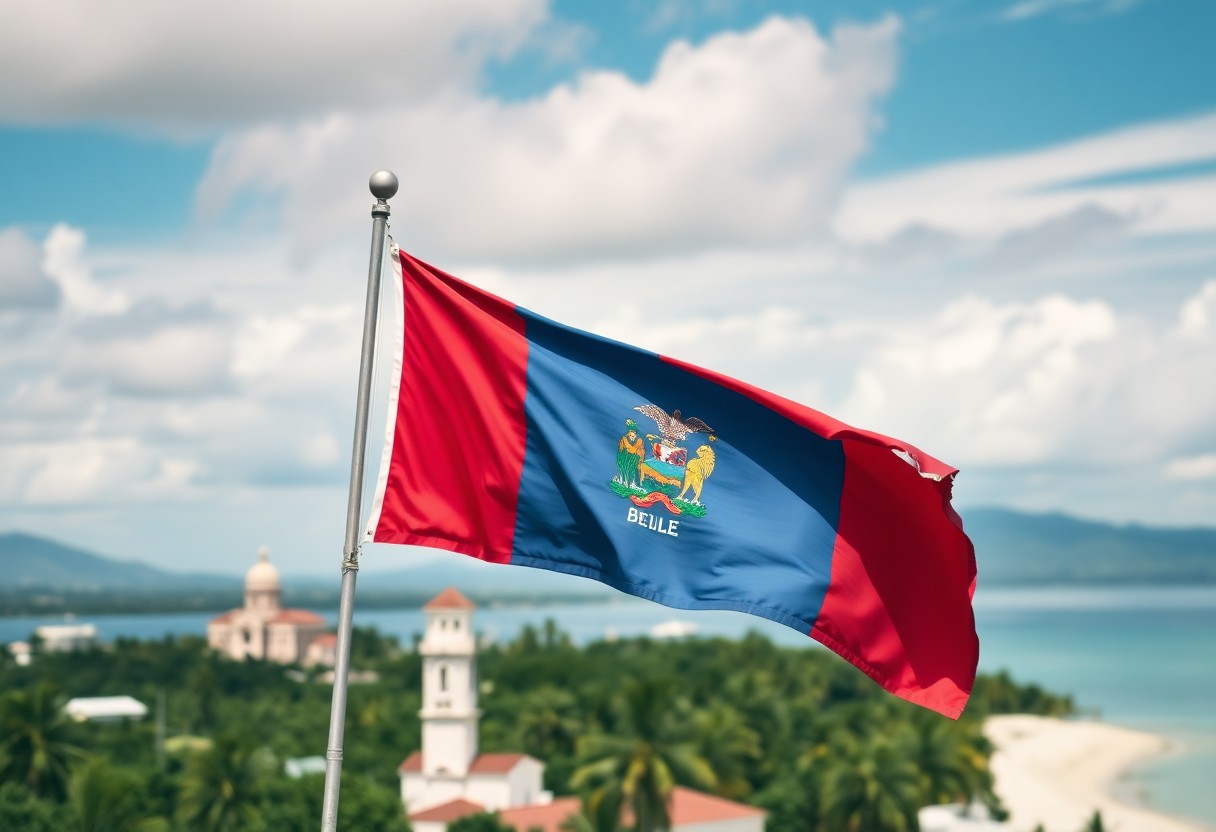
The Belize flag was chosen in a national competition and officially raised at independence on September 21, 1981; its royal blue, red borders and the central coat of arms together express the country’s political roots, natural resources and multicultural identity.
- Designers Everal Waight and Inez Sanchez (selected from ~80 entries).
- Official Adoption September 21, 1981 (Independence Day).
- Core Symbols royal blue (PUP association), red borders (unity), coat of arms (mahogany, ship, two woodcutters).
- Flag Ratio 2:3; coat of arms set in a white disc with a 50-leaf wreath.
For broader historical context—how Belize’s modern borders and political history influenced national symbols—see the site’s overview of the Belize–Guatemala border history.
Belize–Guatemala border: history and conflict
Timeline — Key Dates At A Glance
| Year / Period | Event |
|---|---|
| 1862–1981 | British colonial rule—Union Jack and colonial badge (mahogany imagery) dominate official symbols. |
| 1950 | Independence movement begins (50‑leaf wreath on coat of arms commemorates this year). |
| 1960s | People’s United Party (PUP) promotes a blue-and-white flag that influences later designs. |
| Late 1970s–1981 | National design competition (~80 entries); final design by Everal Waight and Inez Sanchez chosen. |
| 21 Sep 1981 | New flag raised at midnight—official symbol of the independent nation of Belize. |
Colonial Roots And The Independence Movement
Belize’s flag echoes its colonial past. Under British rule (as British Honduras) the Union Jack and a colonial badge showing a maritime scene and timber workers were standard. Those images reflected the mahogany trade that shaped the economy and social structure for generations. Political organization in the mid‑20th century—especially the People’s United Party—introduced a blue-and-white banner that later fed into national discussions about a new, distinct flag.
Design Development: Competition, Authors And Choices
The modern Belize flag emerged from a public design process: roughly 80 entries were received and two public servants—Everal Waight and Inez Sanchez—produced the winning entry. Their design kept the PUP blue field (a nod to the party’s role in the independence movement) but added red stripes and placed the national coat of arms within a white disc so the emblem would be legible at a distance.
Flag Elements And Symbolism
Colors And Layout
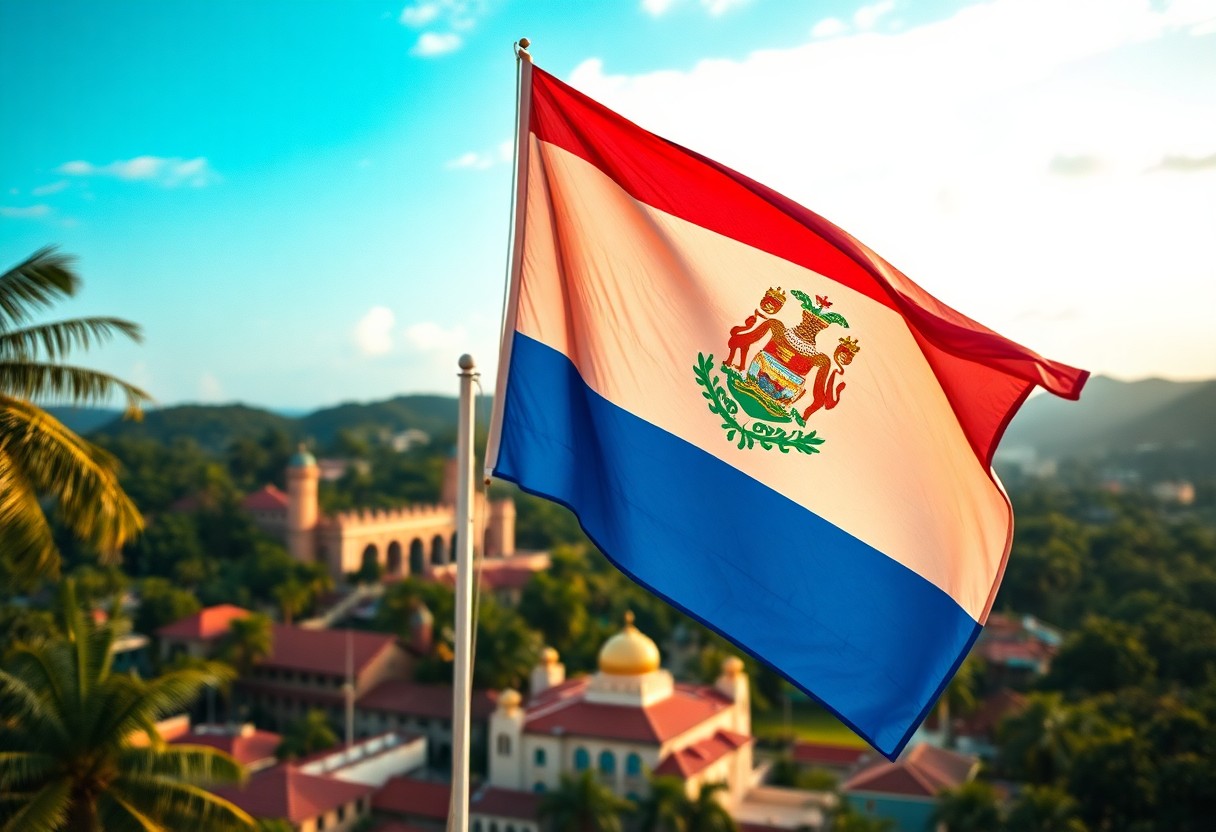
Royal blue dominates the field and recalls the PUP; the narrow red borders were added to acknowledge national unity across political lines. The white disc centers and isolates the coat of arms so its detailed imagery remains visible on a waving flag.
Coat Of Arms — A Compact National Story
The coat of arms is the narrative core: a mahogany tree at the top, a ship in the shield, and two woodcutters holding tools that reference the historic timber economy. The two figures (one Mestizo, one Afro‑Belizean) visually assert the country’s multicultural roots. The 50‑leaf wreath recalls 1950—the start of the formal independence movement—and the Latin motto Sub Umbra Floreo (“Under the Shade I Flourish”) sums up resilience and growth.
Official Adoption, Display Rules And Protocol
The National Assembly approved the design at independence. Public protocol is clear: the flag is to be displayed between sunrise and sunset unless properly illuminated; it should not touch the ground or be used as clothing; damaged flags are to be retired ceremonially. Government offices, schools and official institutions observe strict handling and disposal rules to protect the flag’s dignity.
Why The Flag Matters Today
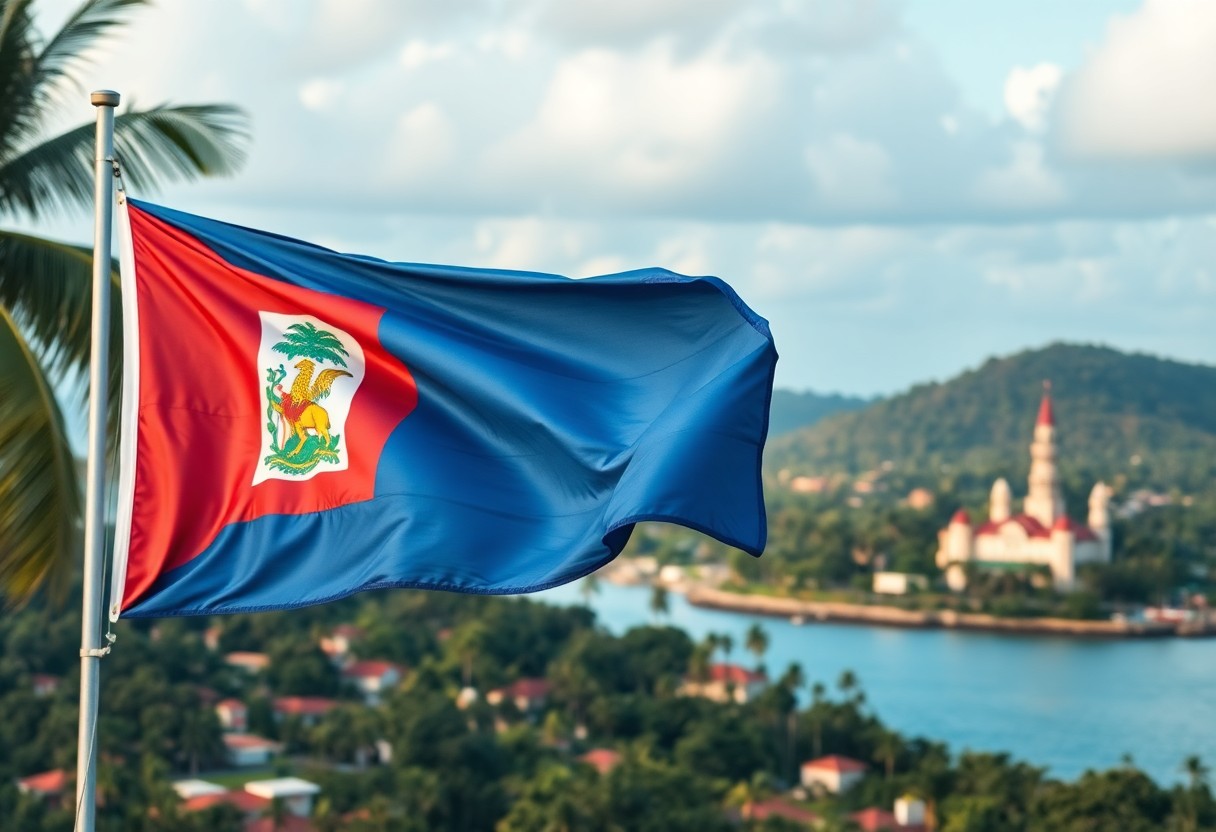
Beyond formal rules, the flag functions as a living cultural symbol: it’s displayed during civic events, festivals and school ceremonies, and it appears on memorials and public buildings. If you’re exploring Belizean identity more broadly, the flag’s story intersects with language, environment and sacred places—see work on Belize’s language history and biodiversity and studies of cave sites for cultural context.
Belize’s language, history and biodiversity · Caves & cultural significance
If you want deeper context on how state formation and territorial disputes shaped national symbols, our history overview on the Belize–Guatemala border explores the political backdrop to independence.
Frequently Asked Questions
What Do The Colors And Symbols On The Belize Flag Represent?
Royal blue references the People’s United Party and the independence movement; red borders were added to show political unity; the coat of arms (mahogany tree, ship, tools and two figures) represents the timber and maritime past and the country’s multicultural make-up.
Who Designed The Flag And When Was It Adopted?
Two public servants, Everal Waight and Inez Sanchez, won a national competition (about 80 entries). The design was formally adopted on September 21, 1981, when Belize became independent.
What Are The Basic Rules For Displaying The Belize Flag?
Display it between sunrise and sunset unless illuminated, keep it higher than organizational flags, never let it touch the ground, and retire damaged flags through proper ceremonial disposal as prescribed by national protocol.
Interested in local culture and events where you can see the flag in ceremony? Visit our Local Cultural Experiences section for upcoming festivals and civic events.

Clara Beckett is a passionate travel writer specializing in the vibrant culture and breathtaking landscapes of Belize. With a keen eye for detail and a love for adventure, she provides insightful and engaging content that guides readers through the best experiences Belize has to offer. Clara’s work not only highlights the country’s stunning natural beauty but also its rich history and diverse communities, making her Belize Travel Guide an essential resource for anyone seeking to explore this magnificent destination.