
Night at the Plaza is Caracol’s annual Winter Solstice observance (typically around Dec 20–21), organized with the Belize Institute of Archaeology and open by advance booking only; the ceremony blends Maya fire rites, Pok-ta-Pok demonstrations, and guided stargazing from Caana pyramid.
If you are planning broader winter travel in Belize (weather, crowds, and recommended itineraries), see Belize in January — weather & crowds for timing and trip-length advice.
Why Night At The Plaza Is Special
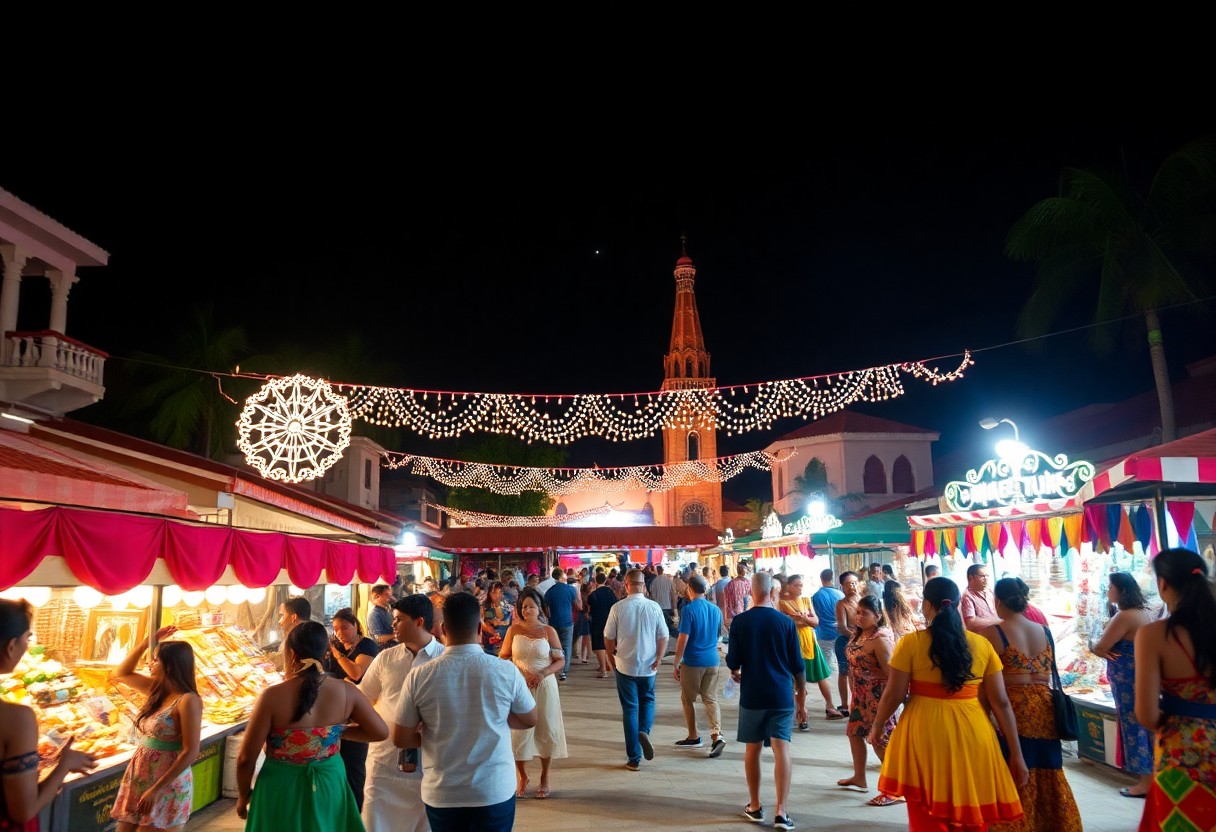
Caracol’s event is one of the few public ceremonies that recreates Maya solstice observances at an active archaeological site: the plaza and Caana pyramid become a living classroom for Maya astronomy, ritual firework displays, and a staged Pok-ta-Pok demonstration that echoes ancient practice.
Who Should Attend — Quick Decision Table
Event Activities And Typical Schedule
The program blends ritual, interpretation, and practical astronomy. Exact timing shifts each year; this outline reflects a typical Night at the Plaza schedule.
Planning Your Visit — Logistics That Matter
Because Caracol lies inside Mountain Pine Ridge, logistics determine whether the evening is comfortable and meaningful. Read these essentials before you commit.
- Booking: Advance Registration Through The Belize Institute Of Archaeology is required; confirm ticketing and transport when you reserve (capacity is limited).
- Getting there: start from San Ignacio (Cayo). The drive is roughly 2.5 hours with unpaved sections; many visitors choose a guided transfer or 4×4 rental. See our guide to getting around Belize for vehicle and routing tips.
- Arrival: check-in windows are strict—plan to arrive early afternoon to pick up credentials and join the site orientation.
- Facilities: basic on-site facilities; bring water and warm layers for the night.
What To Bring
Cultural Notes & Etiquette
This event is both a public ceremony and a preservation effort. Respect ritual spaces: keep silence during ceremonies, avoid flash photography during the fire rites, and never climb or touch ceremonial architecture unless expressly permitted by guides.
Where This Page Fits And Next Steps
This article is an event-focused companion to broader winter-travel planning. If you are arranging flights, hotels, or a multi-day Belize itinerary, consult our winter hub for calendar, weather, and crowd planning: Belize in January — weather & crowds, and our planning guide for trip-length and booking checklists.
Start with the practical hub: Belize in January — weather, crowds & itineraries to coordinate flights, lodging in San Ignacio, and transport to Caracol.
Frequently Asked Questions
Tickets and registration are handled by the Belize Institute of Archaeology; check their announcements or contact the Institute directly for the current registration link and release dates—spots are limited.
What Should I Wear?
Layered clothing is best: warm jacket for the cool night, sturdy shoes for walking uneven temple grounds, and modest attire for ceremonies; avoid flash photography during rituals.
Is The Event Family-Friendly?
Yes—many families attend, but note the terrain, late evening schedule, and the requirement to respect sacred activities; consider age and mobility when deciding to bring young children.
Related reading: Caracol — Belize’s largest ancient city · Getting around Belize · Planning your first Belize trip

Emma Sterling is a passionate travel writer specializing in exploring the vibrant culture, stunning landscapes, and hidden gems of Belize. With a keen eye for detail and a love for adventure, she brings her experiences to life in her engaging Belize Travel Guide. Emma’s insightful tips and local recommendations inspire fellow travelers to discover the beauty and uniqueness of this Central American paradise. Through her writing, she aims to foster a deeper appreciation for Belize’s diverse ecosystems and rich heritage.
What a fascinating dive into the world of the ancient Maya! I must admit, if I could get face-to-face with the celestial alignments they used to track, I’d probably still end up mistaking Jupiter for a particularly bright taco truck light. But seriously, it’s incredible how advanced their understanding of astronomy and mathematics was — the kind of knowledge that still boggles the mind today, despite all our shiny gadgets.
It’s interesting how you bring humor into the discussion about the ancients’ astronomy. Imagining a bright taco truck light in the sky definitely puts a cheeky spin on the celestial wonders. Yet, this touches on a deeper point about how we interpret the universe around us. The Maya had their own cultural context that shaped how they viewed the stars and planets. Their alignments weren’t just for navigation or agriculture; they tied into their spiritual beliefs and daily lives in a way that transcended the purely scientific.
You make a great point about the cultural context shaping the ancient interpretations of the cosmos. It’s fascinating how those celestial bodies were intertwined with every aspect of life, including spirituality and societal structure. The Maya, for instance, saw the stars not just as distant balls of gas but as integral to their whole understanding of existence. Their calendars, tied to astronomical events, influenced everything from agriculture to rituals, showing how deeply connected they were to the rhythms of nature.
It’s interesting how you mention the potential mix-up between planets and something as everyday as a taco truck light. The ancient Maya had a keen eye for the night sky, using their observations of celestial bodies to create an incredibly sophisticated calendar system. They managed to track various cycles, like the movements of Venus, which held significant meaning for them in terms of agriculture and warfare.
You bring up a great point about the Maya and their advanced understanding of astronomy. It’s fascinating how they didn’t just look to the stars for navigation or inspiration; they woven those celestial patterns into the very fabric of their daily lives. They managed to link astronomical events with agricultural cycles, which was crucial for their survival. Imagine planting or harvesting based on the first visible light of Venus or the phases of the moon—there’s a sort of poetry in it, right?
It’s fascinating to think about the contrast between something as modern as our taco truck lights and the ancient Maya’s deep understanding of the cosmos. Their ability to track celestial cycles and link them to agriculture and warfare speaks volumes about their intelligence and adaptability. It’s intriguing how our ancestors could read the stars and develop sophisticated systems to help them thrive, relying on nature and the universe to guide their lives.
You bring up a really intriguing point about the Maya and their connection to the cosmos. It’s fascinating to think about how they viewed the stars not just as distant objects but as integral to their existence. The way they connected celestial events to their agricultural cycles is a testament to their incredible observational skills and their deep understanding of nature’s rhythms.
You bring up a great point about the Maya’s cosmic savvy. I mean, it’s one thing to have the latest taco truck bling, but it’s another to be able to predict solar eclipses while also deciding when to plant corn. We’re talking about folks who looked up at the night sky and saw a complex dance of planets and stars, not just a backdrop for late-night taco runs.
It’s really interesting how you connected modern elements like taco truck lights to the ancient Maya’s celestial knowledge. It does make you think about the evolving relationship humans have with technology and nature. While our taco trucks serve immediate gratification with bright lights and delicious food, the Maya were crafting a way of life that aligned with the stars, truly an impressive feat of observation and understanding.
It’s fascinating how ancient civilizations like the Maya were able to blend observation of the cosmos with their daily lives. Their ability to track celestial bodies and correlate those movements with agricultural cycles speaks volumes about their connection to the environment. We’ve become somewhat disconnected from those rhythms, relying instead on technology to manage our schedules, often overlooking the natural cycles that once guided our ancestors.
It’s great to hear your thoughts on the ancient Maya and their astronomical skills. Your taco truck analogy really paints a picture. It’s easy to imagine standing under their vast sky at night, gazing at celestial bodies, and feeling that mix of wonder and confusion when trying to differentiate between stars, planets, and the occasional bright light from a vendor. Honestly, it’s a pretty relatable feeling — even for those of us who study this stuff.
This post beautifully encapsulates the magic of experiencing the winter solstice through the lens of Maya heritage. I’ve always found it fascinating how ancient cultures intertwined their understanding of astronomy with their rituals and day-to-day life. The fact that you can witness the same celestial alignments that the Maya observed thousands of years ago is such a powerful reminder of the intricate relationship between humanity and the cosmos.
I completely agree with you about the connection between ancient cultures and astronomy. There’s something profoundly grounding in knowing that the same skies and celestial patterns were observed by the Maya, who crafted their lives and rituals around them. It speaks to a legacy that transcends time, reminding us that we are part of a much larger narrative.
Your description of the solstice celebrations at Caracol really highlights the deep connection between the Maya and their astronomy. It’s fascinating to think about how knowledge of celestial cycles shaped their culture and social structures. The alignment of celestial bodies they prioritized is like an early form of scientific inquiry, yet it was deeply intertwined with their spiritual practices.
You’re right; the way the Maya integrated their understanding of celestial events into their daily lives is truly remarkable. It’s interesting to think about how that astronomical knowledge not only influenced their agricultural practices but also reinforced their social hierarchy and spiritual beliefs.
Your observations truly get at the heart of the matter. The way the Maya integrated their astronomical knowledge with cultural and spiritual practices is a remarkable aspect of their civilization. It’s important to recognize that their understanding of celestial cycles wasn’t just intellectual curiosity; it was vital for agricultural planning, rituals, and even governance. The timing of planting and harvesting tied directly to observations of the sun and moon. This agricultural reliance undoubtedly fostered a sense of reverence for these cycles, reinforcing their importance in both daily and ceremonial life.
You bring up some great points about the Maya and their relationship with the cosmos. It really is fascinating how their astronomical knowledge wasn’t just for show; it was woven into the very fabric of their lives. The way they relied on celestial cycles for agriculture is a telling reminder of how closely our ancestors connected with nature.
“I’m glad you resonated with those observations! If you’re interested in exploring more about how the Maya’s celestial knowledge shaped their civilization, check out this insightful resource that delves deeper into their fascinating practices.”
https://xamanekbelize.com/caracol
It’s great to hear your thoughts on this. The way the Maya intertwined their astronomical knowledge with their spirituality really does serve as a striking example of how deeply connected they were to their environment. When you think about it, the cycles of the sun, moon, and stars were not just abstract concepts for them; they directly influenced agricultural practices, religious ceremonies, and community life.
You make a great point about the Maya’s connection to astronomy and how it influenced their culture. It’s intriguing to think about how their understanding of celestial events went far beyond mere observation; it was woven into their daily lives, guiding agricultural practices and religious ceremonies alike. The solstice celebrations at Caracol are a perfect example of this intertwining of science and spirituality.
You’ve touched on such an important aspect of Maya culture that often gets overlooked. The way they integrated astronomical knowledge into their daily lives and spiritual practices truly reflects a sophisticated understanding of their environment. The solstice celebrations at Caracol are a prime example of how this connection expressed itself not only in architecture but also in their worldview.
“Absolutely, the interplay between astronomy and spirituality in Maya culture is truly captivating! If you’re interested in exploring this further, check out this insightful resource that delves deeper into their celestial connections.”
https://xamanekbelize.com/browse-tours
What a fascinating glimpse into the winter solstice celebrations at Caracol! The connection between astronomy and Maya culture is incredibly deep, and it’s intriguing to imagine how the ancient civilization utilized their understanding of the cosmos to shape their rituals and daily life. I’ve read that the Mayans were not only accomplished astronomers but also meticulously tracked celestial events, which speaks volumes about their dedication to understanding the world around them.
What an intriguing look at the solstice celebrations in Belize! It makes me wish I could teleport because I’d definitely trade my standard December routine of baking cookies for a front-row seat at Caracol. Imagine the ancient Maya, with their serious astronomical skills, gathering around for a good old-fashioned fire ceremony. No pressure or anything; just aligning with the cosmos while we’re all struggling to align our schedules!
I’m fascinated by how the winter solstice ties deeply into Maya heritage and astronomy. It’s incredible to think about the advanced mathematical and astronomical knowledge the Maya possessed, particularly how they designed their ceremonies around celestial events. Experiences like the one at Caracol not only celebrate these ancient practices but also remind us of the connection between cultural traditions and the natural world. I recently read about how modern communities often revive ancient rituals to foster a sense of belonging and identity. It’s interesting to see how these celebrations are not just historical but also a living part of cultural heritage. Have others in this thread participated in such events, or do you think they could experience a renaissance in other parts of the world too?
You’ve touched on a really intriguing aspect of Maya culture. The way they intertwined astronomy with their rituals is such a testament to their understanding of the natural world. When you think about it, their entire calendar was built on celestial events, which is both practical and deeply spiritual. It’s remarkable how they managed to forge those connections so seamlessly, creating ceremonies that not only marked the passage of time but also held significant cultural meaning.
You raise some really compelling points about the intersection of Maya heritage, astronomy, and cultural identity. The way they’ve woven their ceremonies into the celestial calendar is a remarkable testament to their understanding of the cosmos. It’s intriguing how those astronomical alignments not only served practical purposes but also helped create a communal bond among people during those celebrations.
It’s fascinating to think about how the winter solstice intertwines with Belize’s rich Maya heritage. The opportunity to connect with the past at the Caracol Archaeological Reserve sounds absolutely incredible. I find it particularly interesting how the ancient Maya not only celebrated the solstice as a significant astronomical event but also integrated their vast knowledge of astronomy and mathematics into their society.
I share your fascination with the deep connection between the winter solstice and the Maya culture. There’s something remarkable about visiting places like the Caracol Archaeological Reserve, where you can almost feel the echoes of ancient ceremonies. Standing among those ruins, it strikes me how the Maya viewed the solstice not just as a day but as a pivotal moment in their calendar, marking the transition from darkness to light.
Reading about the solstice celebrations in Belize truly resonates with me. The way you’ve described the ancient practices and the vibrant atmosphere at the Caracol Archaeological Reserve highlights how deeply intertwined culture and astronomy were for the Maya civilization. It’s awe-inspiring to think about how they aligned their lives with the celestial cycles, using them not just for farming but as a framework for their social and spiritual practices.
This sounds like such a fascinating way to connect with Maya culture! I love the idea of celebrating the winter solstice at Caracol, especially with the ancient ball game Pok-ta-Pok. It must feel magical to witness those fire ceremonies while standing where the Maya once stood, using their astronomical knowledge.
It really is a beautiful way to connect, isn’t it? The winter solstice has such deep significance in Maya culture, symbolizing rebirth and renewal, which resonates with many of us in our own lives. Celebrating it at Caracol feels like stepping back in time, and I can imagine how powerful it must feel to be surrounded by such rich history.
I’m really glad you feel that way about connecting with Maya culture. Celebrating the winter solstice at Caracol is special for so many reasons. The place itself gives off such an ancient vibe, and when you’re surrounded by those majestic ruins, it feels like time kind of pauses for a moment.
I’m glad you share the excitement! If you’re interested in experiencing this magical connection firsthand, check out more about our winter solstice celebrations at Caracol here.
https://xamanekbelize.com/belize-car-rental