Caracol is the largest Maya site in Belize by area and number of structures, dominated by the 43‑meter pyramid Caana; this article is a focused deep‑dive on its history and a practical guide for planning your visit.
Read the full cluster guide
For a wider tour of Belize’s major Maya sites, see our full Maya ruins guide — this page zooms in on Caracol and practical visitor decisions.
Yes—Caracol is Belize’s largest Maya site, sprawling across roughly 68 km² and containing tens of thousands of structures. Read on for why it grew so large and a one‑page visit checklist to plan your trip.
At‑a‑glance: Visit Caracol (Decision Table)
| Best time to go | Dry season (late November–April). Shoulder months (Nov, May) have fewer crowds. |
| How to get there | Most visitors base in San Ignacio and join a guided tour by 4×4 or transfer; self‑drive is possible but expect rough roads—see our transportation guide for routes. |
| Entry & tours | Official park entry (paid); guided tours from San Ignacio include transport, guide, and often lunch—recommended for first timers. |
| Time needed | Half‑day (3–4 hrs) if climbing Caana only; full day (6–8 hrs) to explore plazas, stelae and nearby features. |
| What to bring | Sturdy shoes, sun protection, water, insect repellent, light rain layer, and a camera with extra battery. |
Why Caracol Grew So Large: Architecture, Society And Landscape
Caracol’s scale is the product of political power, engineered landscapes and a resilient economy during the Classic period (c. 300–900 CE). At its height Caracol supported a large urban population and an unusually dense field of stone architecture—more than most Belizean sites.
Monumental Architecture (Caana And Plazas)
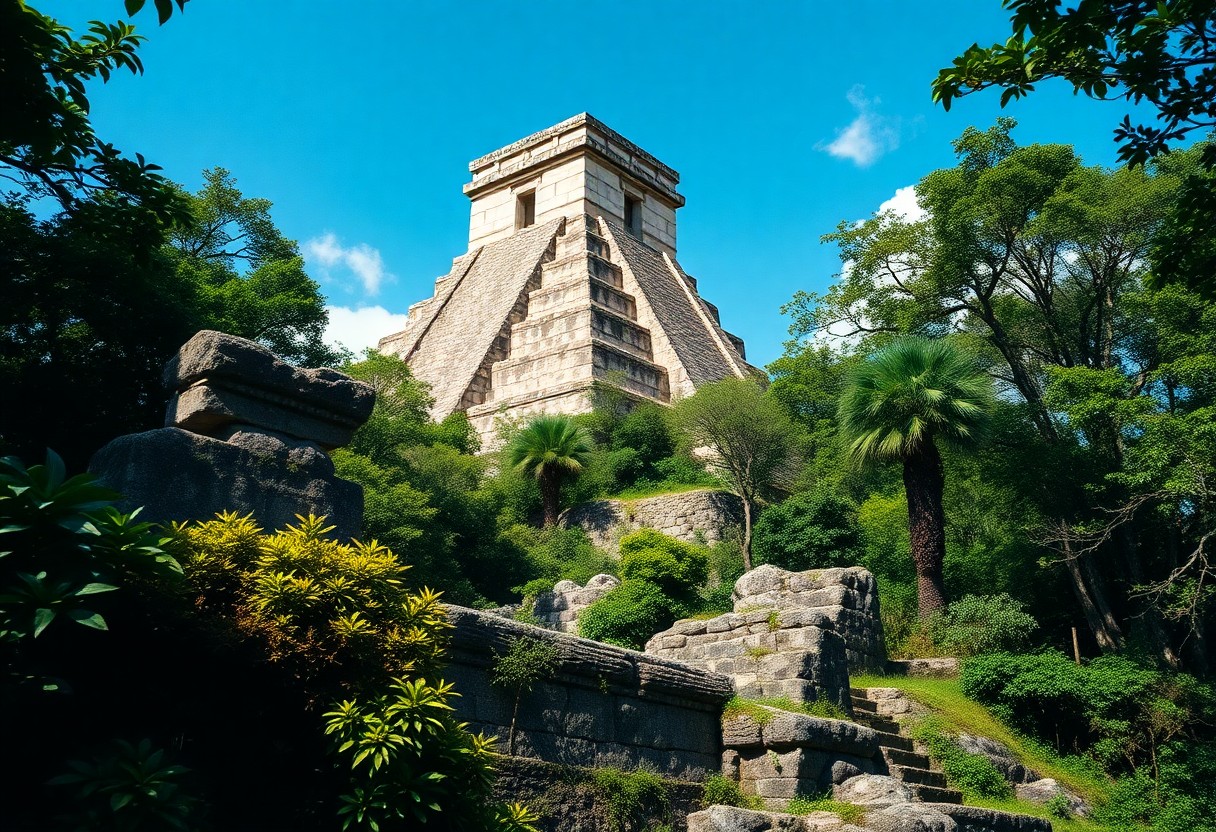
The skyline is dominated by Caana (“Sky Place”), the multi‑tiered pyramid rising roughly 43 meters; climbing it offers the best sense of the site’s footprint. The city is organized around large plazas, ceremonial complexes, and causeways that linked neighborhoods—clear evidence of strong central planning and ritual life.
Sacred Spaces And Social Order
Temples, stelae and ballcourts anchored political and religious authority. Inscriptions and carved monuments found at Caracol record rulers, alliances and military victories—signals that Caracol was not only populous but influential regionally. Sacred architecture also anchored social cohesion and agricultural cycles through ritual practice.
Economy, Engineering And The Decline
Caracol’s urban scale depended on intensive agriculture, engineered water systems and extensive trade. Archaeological evidence shows terrace farming and water management adapted to hilly terrain, enabling dense settlement.
Trade And Resources
Caracol lay on trade routes that carried commodities such as jade, obsidian and cacao. Access to resources and trade partners reinforced the city’s wealth and political reach across the southern lowlands.
Why Decline Occurred
The Classic‑period contraction of Caracol appears linked to multiple stresses: resource depletion and deforestation, regional drought episodes, and shifting political networks. These combined pressures undermined agricultural productivity and trade—factors echoed at other major lowland sites.
Planning Your Visit: Logistics, Tours And Timing
Caracol is remote and surrounded by dense forest, so planning is central to a smooth visit. Most travelers use San Ignacio as a base; from there guided day tours or private transfers are the most common options.
How To Get There (Practical Options)
- Guided Day Tour Pickup from San Ignacio, 4×4 transfer, guided site walk and lunch—recommended for first visits.
- Private Transfer Or Self‑drive Possible for confident drivers; roads include long gravel stretches and are poorly signposted near the park entrance. See our transportation guide for route advice.
- Overnight Options There are no on‑site accommodations; most visitors return to San Ignacio the same day.
When To Go And Booking Windows
The dry season (late November–April) is the most comfortable for road travel and hiking. If you want fewer people, travel in November or late April/May. Book guided tours at least 2–4 weeks ahead during peak winter season; shoulder months often allow shorter notice.
Entry Fees And Guided Tours
Entrance fees support conservation and local guides—confirm the current price with your operator before travel. A guided tour adds archaeological context and local knowledge that dramatically improves the experience; guides point out stelae, alignments and features you could miss alone.
Responsible Visiting And Community Impact
Tourism funds conservation and local employment, but it must be managed thoughtfully. Stick to marked trails, heed guide instructions, and avoid touching fragile carvings. Your ticket and tour fees help support preservation and local outreach programs that maintain Caracol and promote heritage education.
Short checklist before you go
- Confirm tour operator and meet time; insist on an experienced licensed guide.
- Carry at least 1.5–2 liters of water per person and snacks if your tour doesn’t provide lunch.
- Wear closed shoes with grip; stone surfaces can be uneven and slippery after rain.
- Bring insect repellent, sunscreen, a hat and a light rain jacket.
- Respect signs and protected areas—no climbing on fragile sculptures or loose masonry.
Where To Read More And Plan The Rest Of Your Trip
For broader trip planning—flights, where to stay, and how many days to allocate—our first‑time Belize planning guide is a useful companion. For local context and suggested day excursions from San Ignacio, see why San Ignacio deserves your visit.
Ready to plan a visit?
Start with the full Maya ruins guide for comparative context, then book a guided Caracol tour from San Ignacio; for transport options check our transportation guide.
Frequently Asked Questions
Can You Visit Caracol On Your Own?
Yes, you can visit independently if you arrange your own transport, but guided tours are recommended: guides provide archaeological context and navigation through a large, remote site that can be confusing to solo visitors.
Is Caracol Bigger Than Tikal?
Caracol is the largest Maya site in Belize by area and number of structures; Tikal (in Guatemala) is larger overall in monument scale and international recognition, but the two sites played different regional roles—Tikal was a major political center, while Caracol’s footprint across Belize is uniquely extensive.
How Long Should I Allow To Visit?
Allocate at least a half‑day (3–4 hours) to climb Caana and see the main plaza; choose a full day (6–8 hours) to explore secondary groups, stelae fields and to travel from San Ignacio without rushing.
When Should I Book A Guided Tour?
Book tours 2–4 weeks ahead in high season (Dec–Mar). In shoulder months shorter notice may be possible, but confirm transport and guide availability before arrival.
See also our articles on Belize travel logistics and nearby attractions to build an itinerary: the trip planning guide and the Belize City & districts guide are good next reads.

Emma Sterling is a passionate travel writer specializing in exploring the vibrant culture, stunning landscapes, and hidden gems of Belize. With a keen eye for detail and a love for adventure, she brings her experiences to life in her engaging Belize Travel Guide. Emma’s insightful tips and local recommendations inspire fellow travelers to discover the beauty and uniqueness of this Central American paradise. Through her writing, she aims to foster a deeper appreciation for Belize’s diverse ecosystems and rich heritage.
The exploration of Caracol certainly ignites a sense of admiration for the Maya civilization and its remarkable achievements. As I read your description of the expansive ruins and the engineering marvels such as the towering Caana, I couldn’t help but reflect on how these ancient structures not only served functional purposes but also shaped the cultural identity of a society that thrived in such a challenging environment.
Your description of Caracol truly resonates with me—there’s something about the way ancient sites like this can transport us to another time, isn’t there? The idea that a civilization could thrive so dynamically in this dense jungle, with such sophisticated engineering and urban planning, is a testament to their ingenuity and adaptability. It makes you ponder what life was like for the people who walked those paths thousands of years ago.
You hit the nail on the head about Caracol. It’s fascinating to think about the vibrant life that must have thrived there, weaving through the trees and towering structures. The way they utilized the jungle, crafting a world that thrived in such an environment, speaks volumes about their creativity and resilience.
Your exploration of Caracol deeply resonates with me, particularly in how it illustrates the remarkable achievements of the Maya civilization. The juxtaposition of towering structures like Caana against the backdrop of the dense jungle captures an almost poetic essence of how nature and human ingenuity intertwine. As I reflect on this site, I am reminded of how spaces like Caracol are rarely just remnants of a past society but are living archives that offer insights into the cultural and social frameworks of ancient peoples.
Your exploration of Caracol brings to light the remarkable achievements of the Maya, particularly their architectural and engineering prowess. It’s fascinating to think about how these innovations not only served practical purposes, like the water management systems you mentioned, but also reflected the Maya’s relationship with their environment and the significant role of communal life in urban settings.
You bring up a great point about the Maya’s water management systems—it’s incredible how they engineered these solutions to navigate their environment. What really strikes me is how those systems weren’t just utilitarian; they were also a community project. The way they worked together to keep their cities thriving shows how intertwined their daily lives were with the land around them.
Your exploration of Caracol beautifully encapsulates the awe inspiring nature of the Maya civilization’s achievements. The site not only represents architectural grandeur but also serves as a testament to the advanced societal structures and environmental adaptability of its inhabitants.
It’s fascinating to consider how Caracol not only showcases the Maya’s architectural prowess but also their deep connection to the environment. The sophisticated water management systems imply a society that understood sustainability long before it became a modern concern. It’s remarkable how they adapted to their jungle surroundings, which speaks volumes about their resilience and innovation.
Your exploration of Caracol captures the awe-inspiring essence of the Maya civilization brilliantly. It’s fascinating to think about how the advancements in engineering, particularly the water management systems, reveal not just a survival tactic but an intricate relationship with the environment. This reminds me of current sustainable practices where we strive to harmonize modern living with nature, much like the Maya did thousands of years ago.
Exploring Caracol sounds like a truly immersive experience! The scale of it really puts into perspective how advanced the Maya civilization was—68 square kilometers is mind-boggling! I love how you mentioned the sophisticated water management system; it’s fascinating to think about how they thrived in such a dense jungle environment. It makes me wonder about the community aspect too. How did they organize themselves to build and maintain such massive structures? I’ve always felt that monumental architecture reflects not just engineering skill but also the culture and social dynamics of the time. Have you come across any interpretations of how these buildings influenced everyday life for the Maya people? I’d love to dive deeper into that!
Your description of Caracol truly captures the enchanting essence of this extraordinary site. I’ve always found it fascinating how the Maya civilization managed to create such complex urban centers amidst the dense jungle, utilizing their environment so wisely. The advanced water management systems you mentioned remind me of how vital resource management is in sustaining large populations, not just in the past but also in modern times as cities face challenges with climate change and water scarcity.
Exploring Caracol sounds like an incredible experience! I’ve always been fascinated by how urban planning in ancient civilizations like the Maya reflects not just their engineering prowess but also their cultural values. The sophisticated water management system you mentioned really highlights their understanding of sustainability, doesn’t it? It’s interesting to think about how these ancient solutions could inform modern challenges, especially in places facing water scarcity today. I’d love to hear more about any personal experiences or insights others have had while visiting Maya sites—did any specific structures or stories stand out to them?
You’ve brought up some fascinating points about the Maya’s urban planning and sustainable practices. The way they built their cities, especially the water management systems, really does show their deep-rooted understanding of the environment and community needs. Visiting Caracol, I was struck by how they integrated nature into their daily lives—like those reservoirs that didn’t just store water but also helped manage storm runoff and prevent flooding.
Absolutely, the ingenuity of the Maya in urban planning is truly inspiring! If you’re curious about exploring these amazing sites and experiencing their rich history yourself, check out this link for some incredible tours and insights!
https://xamanekbelize.com/belize-vs-costa-rica-which-paradise-suits-you
Your exploration of Caracol truly captures the awe-inspiring nature of this ancient site. As I reflect on the impressive scale and architectural prowess of the Maya, I am reminded of how their civilization was marked not only by monumental structures like Caana but also by advanced societal organization and agricultural systems that supported large populations.
It’s fascinating how the Maya’s architectural achievements often draw attention, but you’re right to highlight their societal organization and agricultural innovations as well. The scale of their cities like Caracol and the intricate networks of trade and communication they developed are just as remarkable as their structures.
You’ve touched on something really important with your observation about the Maya. When we think of ancient civilizations, it’s easy to gravitate toward the grandeur of their architectural feats, like the towering temples or expansive pyramids. These structures certainly evoke awe, but diving into how the Maya organized their societies and developed their agricultural practices reveals just how sophisticated their culture was.
You bring up an interesting point about the Maya’s societal organization and agricultural innovations. It’s easy to get lost in the grandeur of their pyramids and temples, but when you dig deeper into how they managed to sustain such vast populations, it’s truly impressive. The way they adapted their agricultural practices to handle varying climates and terrains—like the ancient methods of terrace farming and the use of raised fields—demonstrates an incredible understanding of their environment.
You make a great observation about the Maya’s ability to adapt and innovate in their agricultural practices. It’s so easy to overlook those aspects when we’re dazzled by their iconic architecture or the fascinating mythology that surrounds them. When you think about it, their society’s durability hinged on their deep understanding of the land around them.
“I’m glad you found that aspect compelling! If you’re interested in exploring more about the Maya’s incredible agricultural techniques and societal innovations, check out this resource for a deeper dive.”
https://xamanekbelize.com/lamanai
I’m really glad you resonated with that aspect of Maya civilization. Their innovative agricultural practices are indeed a crucial piece of the puzzle when considering their long-term success. It’s fascinating how much they adapted to their environment, using techniques like slash-and-burn agriculture and terracing to maximize crop yields. This deep understanding of the land wasn’t just about food production; it was intertwined with their entire way of life, allowing for population growth and the development of their complex society.
Your exploration of Caracol truly captures its magnificence and the profound impact it had on the Maya civilization. The details about the engineering prowess, especially the water management systems, highlight how advanced their society was in terms of sustainability. It reminds me of how contemporary cultures can often learn from ancient practices.
Reading about Caracol truly captivates my imagination, as it invites us to step back into a time when the Maya civilization flourished with remarkable creativity and complexity. The vastness of the site, spanning over 68 square kilometers, seems like a hidden world bursting with stories waiting to be uncovered. It’s intriguing to think about how this monumental site once buzzed with the activities of a thriving community, demonstrating not just their architectural prowess but also a deep connection to their environment and each other.
It’s fascinating to think about how Caracol encapsulates not just architectural accomplishments but also daily life in a thriving society. The intricate designs and layout suggest a complex social structure and a deep understanding of their environment—something that often gets overshadowed by the grandeur of the buildings. Looking at Caracol from a different angle, it’s worth considering the challenges the Maya faced, like resource management and environmental shifts. These struggles are just as telling of their ingenuity and adaptability as their majestic structures. Exploring that balance between creativity and survival can really enrich our understanding of their civilization. How do you see that interplay between their achievements and the challenges they dealt with?
Your exploration of Caracol beautifully captures the wonder of this ancient site, but I can’t help but reflect on how often we look at such marvels without fully considering the societal context in which they were built. The architectural achievements of the Maya are indeed impressive, yet they raise intriguing questions about the complexities of their society. For instance, the impressive scale of Caracol could indicate a thriving population and perhaps a reliance on surrounding natural resources, but it also implies a significant social hierarchy.
You’ve highlighted a crucial aspect of Caracol that often gets overshadowed by the grandeur of its architecture. It’s so easy to get swept up in the awe of the structures without digging deeper into the stories they tell about the people who built them. The scale of Caracol does point to a thriving civilization with a complex social hierarchy, and that raises fascinating questions about how they organized their society and resources.
“To delve deeper into the fascinating societal dynamics of the Maya and their architectural prowess, check out this insightful resource that sheds light on their complex world.”
https://xamanekbelize.com/book-a-hotel-belize
The description of Caracol resonates deeply with the significance of ancient architecture not just as a testament to human ingenuity, but also as a reflection of societal priorities and cultural values. The advanced water management system you mentioned is particularly fascinating, as it illustrates how the Maya adapted to their environment and tackled challenges essential for sustaining a large population. This makes me wonder how modern societies can learn from ancient methods of sustainability as we face our own environmental challenges.
It’s interesting how ancient architectures like Caracol can really open our eyes to the complexities of sustainability and societal values. The Maya’s approach to water management indeed provides a fascinating blueprint. They not only mastered rainwater harvesting but also developed techniques to mitigate runoff and prevent erosion, which seems especially relevant today as we grapple with issues like climate change and urbanization.
Your exploration of Caracol truly captures its essence, highlighting the intersection of history and advanced engineering. The Maya’s ingenuity in water management, particularly, fascinates me—it’s remarkable to consider how they navigated their environment, especially in such a challenging climate. This ingenuity parallels other ancient civilizations that adapted to their surroundings, such as the Romans with their aqueducts.
Your exploration of Caracol truly captures the essence of the Maya civilization’s remarkable achievements. The sophisticated water management systems you mentioned are indeed a testament to their understanding of environmental engineering—a skill that resonates even today in discussions about sustainable urban development.
I appreciate your thoughts on Caracol and the Maya civilization. It’s fascinating how their water management systems integrated into the urban landscape—not just for practical purposes, but as a reflection of their connection with the environment. It makes me think about how, today, we’re still grappling with similar challenges, especially in terms of sustainable urban development.
Your exploration of Caracol truly captures the profound sense of history and ingenuity that this ancient site embodies. It’s fascinating to consider how the Maya civilization managed such an extensive urban landscape without the technological conveniences we take for granted today. The sophisticated water management system you mentioned is a remarkable testament to their engineering prowess, demonstrating a deep understanding of sustainable living in harmony with nature.
Exploring Caracol sounds like an incredible experience! The way the Maya integrated their architecture with the environment is fascinating. It makes you think about how advanced their urban planning really was—especially with the water management system you mentioned. I wonder how those engineering techniques might compare to modern sustainable practices today. Sort of like how we’re trying to learn from ancient civilizations to tackle current environmental challenges. Have you come across any specific examples of how the Maya’s techniques have influenced modern architecture or urban planning? I’d love to hear more insights from others on this!
Your exploration of Caracol truly captures the essence of this remarkable site, and it resonates deeply with anyone who has ever felt that inexplicable connection to ancient civilizations. As I reflect on the sophistication of the Maya, particularly their architectural and engineering prowess, I find myself drawn to how such ingenuity reflects not just technical skills but a profound understanding of their environment and community needs.
The intricate design and engineering prowess of Caracol truly fascinate me, especially when considering how these ancient people navigated their complex environment. The sophisticated water management system you mentioned is particularly striking; it’s a testament not only to their technical skills but also to their deep understanding of sustainability and resource management.
It’s interesting to think about the challenges faced by the people of Caracol as they designed such an intricate system for managing water. You mentioned their deep understanding of sustainability, and it’s a remarkable point. Imagine living in a lush environment where rainwater was not just a seasonal gift but a resource that directly impacted daily life and agricultural practices. The way they harnessed that water not only reflected their ingenuity but also showed a profound respect for their surroundings.
Isn’t it wild to think that thousands of years ago, the Maya were crafting these colossal structures while we sometimes struggle with assembling IKEA furniture? I can only imagine a group of Maya engineers sitting around a table, debating the most efficient water management system while snacking on some ancient corn tortilla chips.
It really is fascinating to think about how the Maya balanced complex engineering with their everyday lives. Picture those engineers diving into discussions on architecture and water management, all while enjoying those corn tortilla chips. It’s a reminder that intelligence isn’t just about building monumental temples; it’s about crafting solutions to everyday problems—that same spirit of innovation is what makes these ancient cultures feel so relatable.