Both — Belizean identity draws from Hispanic, Indigenous and Caribbean roots, so labeling the nation as solely Hispanic or solely Caribbean misses the full picture. See how Belize fits regionally while you read the summary below.
- Who Mestizo, Creole, Maya, Garifuna, Mennonite and smaller groups all contribute.
- Language English (official) coexists with Spanish, Kriol, Garifuna, and Mayan languages.
- Cultural Ties Strong Caribbean influence through Creole and Garifuna traditions plus Hispanic links via Mestizo communities.
A Compact Decision Table
| Question | Short answer | Why it matters |
|---|---|---|
| Are Belizeans Hispanic? | Partly — many Mestizo communities have Hispanic roots and speak Spanish. | Explains linguistic and cultural links with Mexico and Guatemala. |
| Are Belizeans Caribbean? | Partly — Creole and Garifuna cultures connect Belize to the Caribbean basin. | Shows shared music, food, and social customs with Caribbean neighbors. |
| Best single label? | No single label fits; “Belizean” is the most accurate short answer. | Encourages using national identity rather than forcing a regional box. |
Who Makes Up Belizean Society?
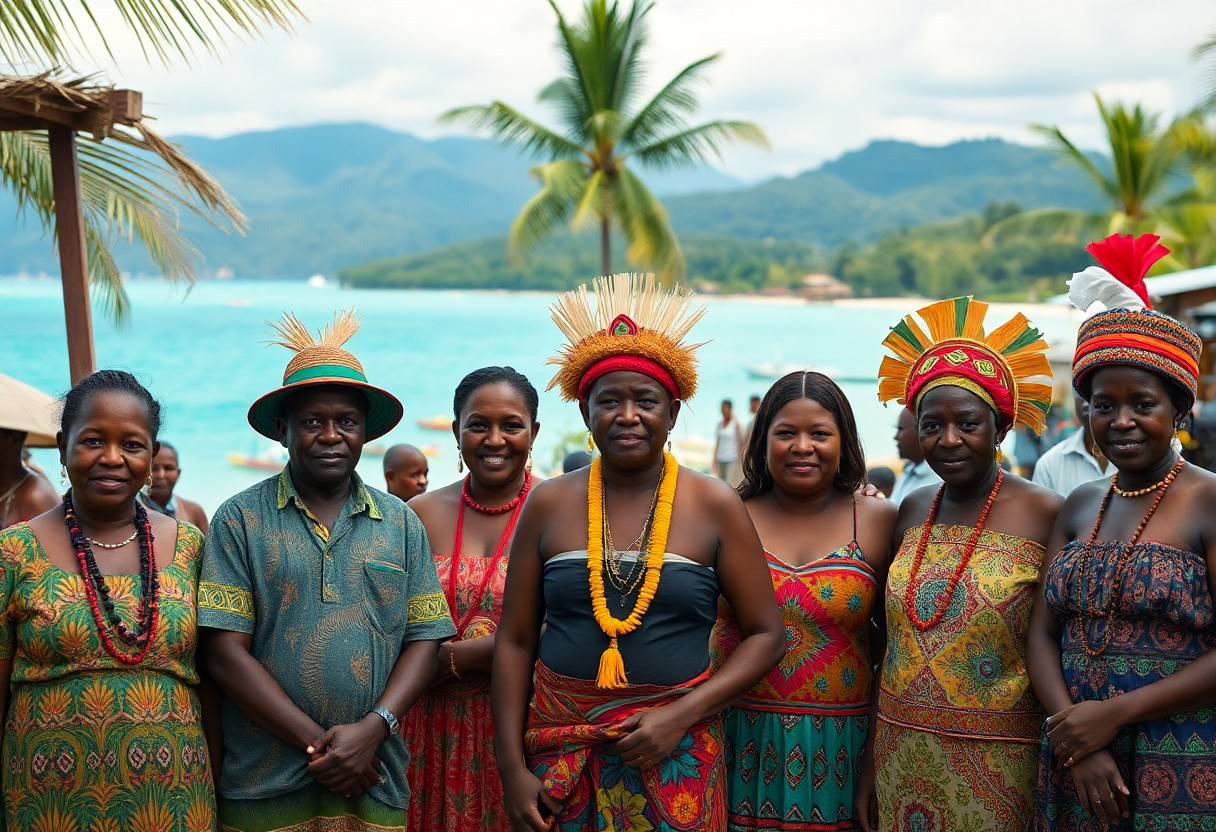
Belize’s population is an interwoven mix of groups; below are the main communities and what each contributes to national identity.
Mestizo
Making up roughly half the population, Mestizos are of mixed Indigenous and Spanish descent; they bring Spanish language, cuisine and customs from neighboring Mexico and Guatemala.
Creole
Creoles—descendants of Afro-Caribbean enslaved people and British settlers—are central to Belizean urban culture and to Kriol language, music and food traditions.
Maya
Yucatec, Mopan and Q’eqchi’ Maya communities preserve Indigenous languages, ancestral agriculture and ceremonial life that predate colonial boundaries.
Garifuna
The Garifuna people—of Afro-Indigenous Caribbean origin—enrich Belize with distinct music, dance and language, especially along southern coastal towns; see a local cultural guide for places to experience Garifuna culture firsthand: Hopkins village: Garifuna culture.
Mennonites And Others
Mennonite settlements contribute a strong agricultural economy and a distinct cultural presence, and smaller immigrant groups add further layers to the social fabric.
How History And Language Shaped Identity
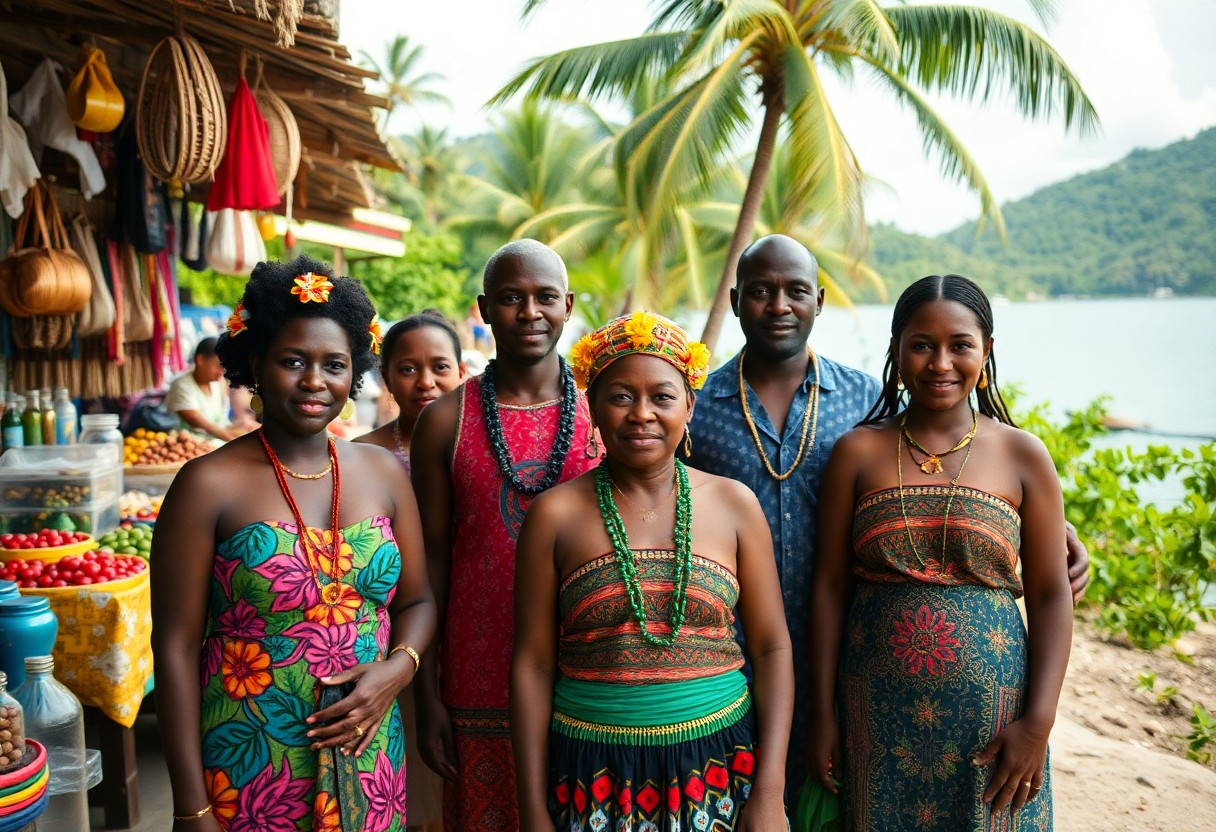
Belize’s British colonial past made English the official language, but centuries of contact with Spanish-speaking neighbors and the sustained presence of Kriol, Garifuna and Mayan languages create a multilingual reality. That combination explains why Belize is regionally linked to both Central America and the Caribbean; for a fuller geopolitical view, read Is Belize Central American or Caribbean?
Quick Facts Table: Population Mix (Approx.)
| Mestizo | ~52% |
| Creole | ~25% |
| Maya, Garifuna, Mennonite, other | Remaining ~23% |
What This Means For Visitors And Researchers
If you’re visiting Belize or studying its culture, expect regional diversity within short distances: Spanish may dominate northern towns, Garifuna traditions thrive along the southern coast, and Kriol customs shape urban life. For curated ways to experience these traditions, start with our Local Cultural Experiences listings.
Want a deeper cultural itinerary? Explore Belize’s wider cultural history and ethnic heritage in our companion piece: Belize’s diverse ethnic heritage and society.
Frequently Asked Questions
Are Belizeans Latino Or Hispanic?
Some Belizeans—especially Mestizos and Spanish-speaking communities—identify as Hispanic or Latino, but many Belizeans prefer the national identifier “Belizean,” which better captures the country’s multicultural reality.
What Race Are Most Belizeans?
Race in Belize is mixed and socially constructed; the largest self-identified group is Mestizo, followed by Creole, with Maya, Garifuna and other communities present across the country.
Is Belize Considered Caribbean Culturally?
Culturally, Belize has strong Caribbean ties—particularly via Creole and Garifuna music, food and customs—yet its official language and continental location also tie it to Central America.
What Languages Will I Hear In Belize?
English is official; expect Spanish, Belizean Kriol, Garifuna and several Mayan languages throughout different regions.
For a deeper cultural primer and suggested itineraries centered on ethnic communities, see our full cultural overview and curated experiences.

Liam Cartwright is an avid traveler and author specializing in Belize travel guides. With a passion for uncovering hidden gems and sharing local insights, he captures the essence of Belize’s vibrant culture, stunning landscapes, and diverse activities. Through his writing, Liam aims to inspire adventure seekers and empower travelers to explore the beauty of Belize with confidence and curiosity.
Your exploration of Belizean identity through the lens of its diverse ethnic composition is both enlightening and essential in appreciating the nuanced realities of contemporary societies. The interplay of Creole, Garifuna, Maya, Mestizo, and other groups indeed paints a portrait of a nation that is rich in cultural heritage and historical complexities.
I love how you captured the essence of Belizean identity! It’s fascinating to think about how the intermingling of different cultures has shaped not just the food and music there but also the everyday lives of the people. I remember when I visited Belize, I was struck by how the Garifuna rhythms influenced so much of the local music scene—like you can feel the history in every beat.
The idea that Belize’s identity transcends traditional categories really resonates with me. It’s fascinating to see how the nation embraces such a rich mix of ethnicities, each contributing to a dynamic culture. This interplay not only shapes the everyday lives of Belizeans but also highlights the importance of inclusivity in our understanding of national identities.
Your exploration of Belizean identity truly highlights the intricacies of its diverse population. The intertwining of Creole, Garifuna, Maya, and Mestizo backgrounds not only enriches the cultural landscape but also raises important questions about how these identities inform the community’s collective sense of belonging.
The intricate cultural landscape of Belize certainly prompts a deeper reflection on identity and belonging, particularly in today’s globalized world where ethnic blending is increasingly common yet often complex. Your exploration of how Belizean identity defies simple categorization resonates with me, particularly given the historical context you described—colonization, migration, and cultural intermingling that shape not just a nation, but individual experiences as well.
Your exploration of Belize’s unique cultural identity resonates deeply, particularly in how it challenges conventional categorizations of ethnicity. The complexities you mention, such as the interplay of Creole, Garifuna, Maya, and Mestizo communities, highlight a broader theme that extends beyond Belize and into many places in the Caribbean and Latin America.
Your exploration of Belize’s unique ethnic composition sheds light on how identity can be fluid and multi-layered, reflecting centuries of interaction among various groups. It reminds me of how often we try to fit cultures into neat boxes, yet the reality is far more intricate. In Belize, the historical context of colonization and migration has indeed made cultural identity a living, evolving concept rather than a static label.
You’re spot on about the complexity of cultural identity in Belize. It’s fascinating how the story of this country is layered with threads from so many different groups coming together. It’s like a vibrant tapestry, with each thread carrying its own history, but all contributing to a bigger picture.
Your exploration of Belize’s intricate cultural identity highlights how history and migration have sculpted a society where boundaries are not just blurred, but nearly invisible. This complexity is also evident in how Belizeans navigate their identities in a modern context. I’ve observed that many Belizeans embrace their multifaceted heritage, often celebrating various cultural festivals that reflect this diversity, such as Garifuna Settlement Day or the Mestizo Celebrations.
I find it fascinating how the intricate blend of ethnicities in Belize really captures the essence of what it means to have a multicultural identity. The way you described the intertwining of Hispanic heritage with Caribbean roots offers such a compelling lens through which to view not only Belize but also the wider context of how cultural identities can develop through history and movement.
Your post presents a compelling overview of the complex identity of Belize, and I appreciate how you emphasize the multifaceted nature of its cultural tapestry. The intertwining of Hispanic and Caribbean roots indeed creates a unique context that complicates any attempts at simple categorization. This complexity is a critical lens through which we should understand not only Belizean society but also many countries with similarly blended identities.
The exploration of Belizean identity through its rich cultural tapestry is truly captivating. You’ve highlighted how the history of colonization and migration has played a significant role in shaping Belize into the vibrant mosaic it is today. I find it particularly intriguing how this complexity allows for a form of identity that challenges traditional understandings of ethnicity and nationality.
I really appreciate how you delved into the intricate identity of Belize and its rich tapestry of cultures. It’s fascinating to think about how Belize stands as a microcosm of the wider Caribbean and Latino experiences. The blend of Creole, Garifuna, Maya, and Mestizo populations really does highlight how interconnected our histories are, especially given how migration and colonization have fueled cultural exchanges throughout the region.
It’s fascinating how you’ve framed the identity of Belize as a unique blend of cultures that challenges traditional categories. Growing up in a multicultural environment myself, I can relate to the complexities you’re highlighting. Belize truly reflects the beauty of hybrid identities shaped by historical migrations and the continuous exchange of cultural influences.
It’s interesting to hear how your own experiences in a multicultural environment resonate with the complexities of Belize’s identity. I often think about how these hybrid identities can lead to unique perspectives that challenge conventional norms. Belize, in particular, showcases how cultures can intertwine and create something completely new.
Your exploration of Belize’s unique cultural tapestry truly resonates with me, especially as it highlights the rich intertwining of identities that can often be overlooked. It’s fascinating to think about how Belize serves as a microcosm of broader themes related to migration and cultural exchange that we see unfolding worldwide. In many ways, the narrative of Belize reflects the dynamic nature of identity in today’s globalized world, where people often find themselves navigating multiple cultural affiliations.
The intricate tapestry of Belizean identity indeed paints a vivid picture of cultural dynamics that are often overlooked. It’s fascinating to consider how the historical migrations and interactions among Creole, Garifuna, Maya, and Mestizo have shaped not just the demographics, but also social customs and community relationships.
The discussion around Belize’s multicultural identity is indeed a compelling one. As someone who has always been fascinated by how various ethnicities forge unique identities, I appreciate the emphasis on Belize as a vibrant fusion of cultures. This complexity is not just fascinating; it is a critical lens through which we can examine larger discussions about identity in an increasingly globalized world.
It’s interesting how you framed Belize’s multicultural identity as a lens for broader discussions about identity in our globalized world. It seems like in many places, particularly in the context of globalization, cultures are blending in ways that can be both enriching and challenging.
I absolutely love your take on the rich cultural tapestry of Belize! It’s like a cultural smoothie—blend a little Creole, sprinkle in some Garifuna, add a dash of Maya, and voila! You’ve got a delicious concoction that defies clear labeling. Speaking of blending, how do you think Belize’s identity shapes its cuisine? I mean, have you tried the fusion of flavors that comes from such a diverse populace?
This exploration of Belizean identity is truly intriguing, especially as it highlights the intricate nature of belonging in a multicultural society. I find that the notion of identity being a tapestry rather than a single thread resonates deeply, not only in Belize but in many parts of the world that wrestle with the legacies of colonization and migration.
It’s great to hear that the idea of identity as a tapestry resonates with you. This metaphor really captures the fluidity and complexity of belonging, especially in places like Belize, where multiple cultures intersect and coexist. It’s interesting to consider how personal and collective histories shape our understanding of ourselves and our communities.
I really appreciate your thoughts on the concept of identity as a tapestry. It reflects such a nuanced understanding of how our individual experiences interweave with broader cultural narratives. This idea resonates with me on many levels, especially when I think about how different aspects of our identities can come into play during significant events, like family gatherings or cultural festivals.
Your exploration of Belizean identity really resonates with me, especially the way you describe its multifaceted nature. I’ve always found it fascinating how countries like Belize serve as melting pots for different cultures, resulting in identities that cannot be easily classified into singular categories. It reminds me of my time spent in the Caribbean and Central America, where I encountered a similar blending of cultures and traditions.